
Table of Contents
- Where the Melbourne Property Market Stands in 2026
- Interest Rates, Affordability and Buyer Sentiment
- Best Suburbs to Invest in Melbourne 2026
- Melbourne Property Auction Clearance Rates in 2026
- Off-Market Property Opportunities Melbourne Buyers Overlook
- How to Negotiate Property Price in Melbourne Right Now
- Melbourne Property Market 2026: What First-Home Buyers Need to Know
- Conclusion: Control the Process or the Market Controls You
Last Updated: August 6, 2026
Where the Melbourne Property Market Stands in 2026
The Melbourne property market in 2026 tells a story of two speeds: a city finding its footing after years of rate pressure, and buyers still making expensive decisions based on incomplete information. At Your Australian Property Buyers Agents, we track this market daily across every precinct, and what we see on the ground often contradicts the headlines.
After elevated interest rates and inflationary pressure, buyer sentiment has begun to stabilise. Demand-supply imbalance remains a defining feature, particularly in inner and middle rings where housing shortage continues to push competition above what most buyers expect.
This guide breaks down where the Melbourne property market genuinely stands: median dwelling values, house versus unit dynamics, suburbs worth watching, and negotiation tactics that actually work. According to CoreLogic’s residential property data, Melbourne has tracked a more moderate recovery trajectory compared to Sydney and Brisbane, which creates genuine opportunity for buyers who understand the nuance.
Median Dwelling Values Across Melbourne
Median dwelling value is the midpoint price in a given market: half of all sales fall above it, half below. It’s the most reliable single metric for tracking market direction.
Melbourne’s median dwelling value has experienced modest recovery in 2026 after the preceding correction. House prices in inner suburbs have rebounded more strongly than units, while outer precincts show early appreciation driven by affordability migration.
Here’s where buyers get it wrong: they treat the city-wide median as a proxy for their target suburb. It isn’t. Suburb-level valuations can diverge substantially from the city median.
House vs. Unit Price Growth: What the Numbers Show
House price appreciation has outpaced unit growth across most Melbourne precincts in 2026. Unit price growth is accelerating in inner-city corridors where rental yield is attractive and vacancy rates are tightening.
| Property Type | Market Trend | Best For | Key Consideration |
|---|---|---|---|
| Inner suburban house | Moderate appreciation | Owner-occupiers, long-term investors | High entry cost, low vacancy |
| Middle ring house | Strongest growth signal | Families, upsizers | Infrastructure proximity matters |
| Inner city unit | Improving yield | Investors, downsizers | Oversupply risk in some pockets |
| Outer suburban unit | Flat to modest growth | First-home buyers | Longer capital growth horizon |
The real difference between a good unit purchase and a poor one comes down to precinct selection, not property type. We see this all the time: buyers fixate on the category when they should be interrogating the location.
Interest Rates, Affordability and Buyer Sentiment
Mortgage serviceability is the single biggest lever on Melbourne property demand right now. The Reserve Bank of Australia has moved through its rate cycle, and many buyers are recalibrating what they can borrow and what they’re willing to pay.
According to Reserve Bank of Australia monetary policy updates, the interest rate trajectory through 2026 has provided modest relief to borrowers. This has translated into improved buyer sentiment, with more active participants returning to the market.
Housing affordability remains a genuine constraint. The gap between median dwelling values and median household incomes in Melbourne is wide by historical standards. First-home buyers in particular feel the pressure of deposit requirements alongside ongoing rental costs.
Market volatility has eased compared to 2022-2023, but it hasn’t disappeared. Buyers who interpret stability as certainty tend to overpay.
When buyer sentiment improves quickly, competition at auction intensifies faster than most buyers expect. The window between “quiet” and “competitive” is shorter than it looks from the outside.
Best Suburbs to Invest in Melbourne 2026
The best suburbs to invest in Melbourne 2026 share common characteristics: proximity to employment nodes, infrastructure investment, tightening rental vacancy rates, and demand-supply imbalance that favours long-term capital growth.
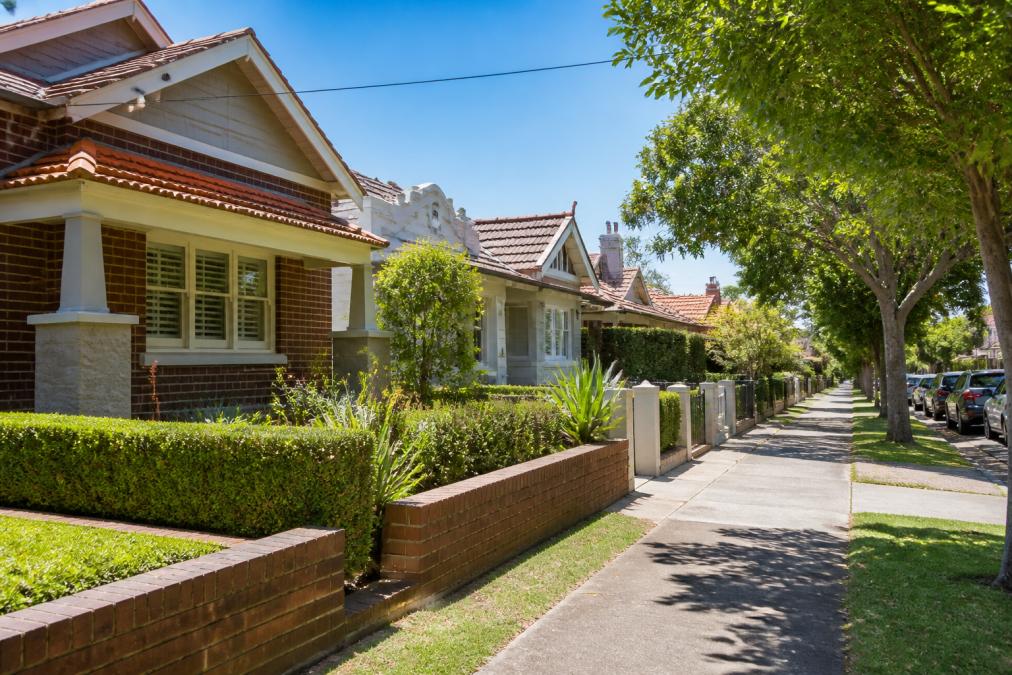
Precincts generating the most interest fall into three categories: inner north and west corridors where gentrification is still running, middle ring suburbs with strong school catchments, and outer growth corridors where infrastructure spending is reshaping accessibility.
The inner north, including Brunswick, Northcote and Preston, continues to attract strong demand. The middle ring, including Reservoir, Coburg and Thornbury, offers better relative value with similar fundamentals. In the west, the Footscray-Yarraville-Seddon corridor is seeing sustained interest from buyers priced out of the inner north.
This is where experience matters. Suburb profiles in Melbourne can shift dramatically street by street. A single infrastructure announcement or zoning change can revalue a pocket overnight.
Infrastructure Projects Driving Localised Growth
Infrastructure project impact is one of the most underappreciated drivers of localised property growth. The Suburban Rail Loop, the North East Link and ongoing tram and bus network upgrades are reshaping accessibility across multiple precincts.
The Suburban Rail Loop will fundamentally alter the investment case for several middle ring suburbs. Precincts that currently require a CBD commute will gain direct orbital connectivity, which historically compresses price gaps between those areas and more established inner suburbs.
Buyers who identify the right suburb before infrastructure delivery capture capital gains that late movers pay a premium for. This is not speculation. It’s a pattern that has repeated across Melbourne’s growth cycles.
Rental Yield and Vacancy Rates by Precinct
Rental yield and vacancy rates are the twin metrics that determine whether an investment property performs.
Melbourne’s rental market vacancy rates have tightened considerably over the past two years. According to SQM Research rental vacancy data, vacancy rates across inner Melbourne precincts have remained well below the long-term average, sustaining upward pressure on rents and improving gross rental yields.
For investors, the current environment offers a more favourable yield profile than the low-rate era when prices were inflated and yields compressed. The inner north and inner west show the strongest yield metrics. Outer suburbs offer higher gross yields but longer vacancy periods in softer patches. Our Investment Property Advisory service helps buyers model these metrics accurately before committing capital.
Gross rental yield does not account for land tax, maintenance, management fees or vacancy periods. A property yielding well on paper can underperform badly in practice. Always model net yield before committing.
Melbourne Property Auction Clearance Rates in 2026
Melbourne property auction clearance rates are one of the most closely watched indicators of market health. A clearance rate above roughly 70% signals strong demand relative to supply. Below 60%, the market gives buyers more power.
Melbourne auction clearance rates in 2026 have been running in a moderate range, reflecting a market that is neither overheated nor distressed. This is useful for buyers who are prepared. In a high-clearance market, you’re bidding against multiple motivated buyers. In a moderate market, you have more room to negotiate terms, conditions and price.
Here’s where buyers get it wrong at auction: they treat the clearance rate as a sentiment indicator but ignore how it varies by suburb, property type and price bracket. A city-wide clearance rate of 68% might mask a 55% clearance in your target suburb or an 82% clearance in a competing one.
Auction strategy is not just about having a budget. It’s about reading the room, knowing the vendor’s position, and knowing when to push and when to let the property go. That’s a skill built over hundreds of auctions, not a few weekends of open-home research. Our Auction Bidding Service Melbourne gives buyers the strategic advantage they need when competing in the room.
Off-Market Property Opportunities Melbourne Buyers Overlook
Off-market property opportunities in Melbourne represent a meaningful share of quality transactions, particularly at the top end and in tightly held precincts where vendors prefer discretion.
Off-market properties are residential real estate transactions conducted without public advertising. Vendors typically seek privacy, certainty of sale, or prefer dealing with a known buyer network rather than running a full campaign.
Most buyers never see these properties. They’re not on the major portals. They’re not advertised in the local paper. They move through professional networks, and access depends entirely on the relationships a buyer advocate has built over years of active market participation.
At Your Australian Property Buyers Agents, our 500-plus connections across Melbourne’s real estate industry mean we’re regularly briefed on Off-Market Properties Melbourne before they reach the open market. For buyers in competitive precincts, this is not a nice-to-have. It’s often the difference between securing the right property and missing it.
This is how you avoid overpaying: you compete in a smaller pool, with more information, and without the artificial urgency that a public campaign creates.
How to Negotiate Property Price in Melbourne Right Now
Negotiating property price in Melbourne in 2026 requires a clear understanding of vendor motivation, market context and your own position as a buyer. The days of simply offering less and hoping for the best are over in competitive precincts.

Effective negotiation comes down to five practical steps:
- Establish comparable sales data before making any offer. Valuation metrics from recent comparable transactions give you a credible anchor.
- Understand the vendor’s timeline. A vendor who has already purchased elsewhere is motivated by certainty and speed.
- Make your first offer credibly, not insultingly low. A low-ball offer in a moderate-clearance market signals inexperience and can close negotiation before it starts.
- Negotiate terms alongside price. Settlement date, deposit amount and conditions can be as valuable to a vendor as extra money on the price.
- Know your walk-away number before you start. Buyers who decide their limit at the negotiating table tend to exceed it.
Most buyers focus on the property. We focus on everything that determines whether it becomes a successful purchase. Our Property Negotiation Service Melbourne handles the entire negotiation process on your behalf, ensuring you stay disciplined and strategic throughout.
Real-World Example: Interstate Buyer, Inner North Melbourne
The buyer: A professional relocating from Brisbane, purchasing remotely with a target budget and firm timeline.
The problem: Unable to attend inspections, unfamiliar with Melbourne’s inner north micro-markets, and concerned about overpaying in a suburb she couldn’t physically assess.
The strategy: We conducted all due diligence on her behalf, including building and pest inspections, comparable sales analysis and detailed suburb assessment. We identified an off-market opportunity in Preston before it was listed publicly, negotiated directly with the selling agent and secured the property below her maximum budget.
The outcome: Settlement completed within her timeline. No auction, no competing buyers, no inflated price.
The lesson: Interstate buyers are not disadvantaged if they have the right representation. The disadvantage is trying to navigate an unfamiliar market alone.
Melbourne Property Market 2026: What First-Home Buyers Need to Know
First-home buyers face specific challenges in the Melbourne property market 2026 that general market commentary rarely addresses directly.
The core challenge is not just affordability. It’s information asymmetry. Selling agents work in this market every day. Most first-home buyers are making the largest financial decision of their lives with limited experience and significant emotional pressure.
The Victorian Government’s first home buyer support schemes, including stamp duty concessions and the First Home Owner Grant for eligible new builds, can meaningfully reduce upfront entry costs. For current eligibility criteria and thresholds, check the State Revenue Office Victoria first home buyer information directly, as thresholds are updated regularly.
First-home buyers need a clear framework:
- Set a realistic borrowing limit with a broker before inspecting anything
- Identify two or three target suburbs rather than searching the entire city
- Attend at least ten auctions before bidding at one
- Get independent legal and building advice on every property you seriously consider
- Understand the difference between a property you love and a property that will perform
The biggest mistake we see first-home buyers make is letting emotion override analysis. The second biggest is competing at auction without a strategy.
First-home buyers who engage a buyer advocate before they start inspecting, rather than after they’ve fallen in love with a property, consistently make better decisions. The process works best when emotion hasn’t already set the price ceiling.
Conclusion: Control the Process or the Market Controls You
The Melbourne property market in 2026 rewards preparation, local knowledge and disciplined execution. It punishes buyers who rely on portal data, follow the crowd at auction and make decisions under pressure.
Most buyers only see five steps. We control the other thirty. That’s the difference between securing the right property at the right price and overpaying for the wrong one.
Your Australian Property Buyers Agents has spent over 30 years building the networks, market intelligence and negotiation capability that Melbourne buyers need to compete effectively. Whether you’re a first-home buyer navigating your first auction, an investor adding to your portfolio, or an interstate professional who cannot be on the ground for every inspection, the process is the same: independent advice, no conflicts, and a focus on outcome.
Book a free strategy session and find out exactly how we would approach your purchase.
Frequently Asked Questions
Is the Melbourne property market going to boom in 2026?
A full boom is unlikely given ongoing mortgage serviceability pressures and elevated interest rates, but Melbourne's long-term growth potential remains intact. Demand-supply imbalance, population growth and undersupply of quality stock are all supportive of steady house price appreciation. Certain inner and middle-ring suburbs are outperforming the broader market. The key is identifying those pockets early, which is where 30+ years of on-the-ground Melbourne experience makes a real difference.
Where is the best place to buy investment property in Melbourne 2026?
The best suburbs to invest in Melbourne in 2026 are those with strong rental yield, low vacancy rates and confirmed infrastructure investment nearby. Inner north, inner west and select middle-ring corridors along the Suburban Rail Loop alignment are showing genuine long-term growth potential. Avoid chasing recent price growth alone, the opportunity is often in suburbs one step behind the headline performers. Off-market property opportunities in Melbourne also tend to surface first in these transitional areas.
How do interest rates impact Melbourne property values in 2026?
Interest rate movements directly affect mortgage serviceability, which shapes how much buyers can borrow and therefore what they will pay. When rates ease, buyer sentiment typically improves quickly and competition at auction increases, pushing dwelling values upward. In 2026, any RBA rate reductions are expected to release pent-up demand that has been sitting on the sidelines. Melbourne property auction clearance rates tend to rise within weeks of a rate cut, tightening conditions for unprepared buyers.
What are the risks of buying property in Melbourne right now?
The main risks include overpaying at auction due to emotional bidding, buying in a suburb with weak demand-supply fundamentals, and underestimating holding costs including land tax and maintenance. Market volatility and macroeconomic factors like inflationary pressure can also affect short-term capital gains. Here's where buyers get it wrong: they focus entirely on the property and ignore the process. Thorough property due diligence, independent valuation metrics and disciplined negotiation are what separate a successful purchase from a costly one.
The Melbourne property market does not wait for buyers who are still getting ready. If you are serious about securing the right property in 2026, the time to put a strategy in place is before you find the property, not after. Contact Your Australian Property Buyers Agents to start the conversation.
This article was written using GrandRanker