We see this all the time: buyers fall in love with a property and skip the hard work. They glance at a few comparable sales, maybe check the suburb profile on Domain, then make an offer. This is how you overpay.
Proper due diligence separates buyers who win from those who lose. According to API Magazine’s [property investment(/property-investment-melbourne/) analysis | apimag.com.au], 80% of a property’s performance depends on its location and neighbourhood. Get the location wrong, and no amount of negotiation skill saves you.
What a proper due diligence checklist includes
Start with comparable sales data from the past 12 months, not asking prices. Look at 15-20 comparable properties, not three. Check whether prices are trending up or down.
Next, understand the rental market. In Melbourne, overall rental vacancy sits at 1.4%, but inner-ring suburbs typically sit between 0.8% and 1.2%, while outer suburbs range from 1.5% to 2.5%. A tight vacancy rate means consistent income. A loose one means void periods will eat your returns.
Body corporate fees and special levies (for apartments)
Local infrastructure plans and upcoming developments
School catchment areas and ratings (if relevant)
Transport accessibility and commute times
Flood risk and natural disaster exposure
Council rates and water usage history
Property condition and maintenance backlog
Zoning and planning restrictions
Property buyer reviewing documents and market reports at a desk with a laptop and property inspection checklist visible, natural office lighting
How to research market fundamentals
Pull 12 months of sold prices for your target suburb and plot them on a timeline. Are they moving up, down, or flat? This tells you whether you’re buying into momentum or catching a falling knife.
Then look at the rental side. What are similar properties renting for? Divide annual rent by purchase price for your gross yield. This is where experience matters. Most buyers see a 5% or 6% headline yield and think they’ve found gold. They don’t realise that areas offering yields above 7-8% often experience limited capital growth, meaning overall returns stay flat over time. Conversely, locations with yields closer to 4-5% may deliver stronger long-term appreciation.
Pro Tip Pull three years of rental data, not one. A single year can be skewed by one expensive tenant or a temporary market spike. Three years shows the real trend.
2. Letting Emotions Drive Your Investment Strategy
Here’s where buyers get it wrong: they decide emotionally, then justify logically. They walk into a property, fall in love with the kitchen or the garden, and suddenly the numbers don’t matter. They convince themselves the suburb is about to boom.
Investment property isn’t your home. It’s a financial asset. The moment you start making decisions based on how a property makes you feel, you’ve lost the game.
According to James Fitzgerald, Managing Director at Custodian, "The truth is, you can have the best capital growth strategy in the world, but if you can’t afford to hold the property, it is a moot point." You might buy a property expecting 5% capital growth. If the market corrects 10%, you’re underwater. If you can’t service the loan during that period, you’re forced to sell at a loss.
A clear investment strategy removes emotion from the equation. You define your goal upfront: are you chasing capital growth or rental yield? You set your maximum price based on your financial capacity, not your desire to win the auction. You walk away from deals that don’t fit your criteria, even if they feel like opportunities.
Watch Out Mixing capital growth and rental yield strategies is a common mistake. Capital growth prioritises appreciation over income, accepting lower rental yields (3-4%) for higher annual capital growth (6-7%). Rental yield strategy prioritises income (5-7%) over appreciation, accepting slower capital growth (3-4%). Trying to do both with a single property almost always fails.
3. Confusing Capital Growth With Rental Yield
Most investors don’t understand this distinction. A 4% rental yield can quickly become 3.7% if a property sits empty for a month each year. Add maintenance, rates, insurance, and body corporate fees, and your real return shrinks further. Capital growth, meanwhile, is invisible until you sell. If the market corrects, it evaporates.
The two strategies require different properties in different locations. A high-growth suburb typically offers lower rental yields because investors are paying for future appreciation. A stable, established suburb with strong tenant demand offers higher yields but slower growth. You can’t have both.
Trying to chase both with one property is how you end up with a property that does neither well. This is where experience matters. You need to define your strategy first, then find properties that match it. Our Investment Property Advisory service helps investors clarify their strategy and identify properties that genuinely align with their goals, rather than chasing deals that promise both growth and yield.
Key Takeaway The strongest investment portfolios contain properties with different strategies. One property chasing growth in an emerging suburb. Another delivering steady yield in an established area. Together, they balance risk and return across your portfolio.
4. Underestimating Holding Costs and Negative Gearing
Buyers often calculate their investment return based on rent received and purchase price. Then they get the bill for rates, insurance, maintenance, and body corporate fees, and the numbers fall apart.
Holding costs are relentless. They don’t stop when the tenant leaves. They don’t pause during market downturns. They compound year after year.
A property purchased for $800,000 in Melbourne might have council rates, water and sewerage, building and contents insurance, maintenance reserves, body corporate fees, and property management totalling roughly $25,000-$42,000 per year. That’s $2,100-$3,500 per month before the property generates a single dollar of rental income.
If the property rents for $32,000 per year (4% gross yield), and holding costs are $32,000, you’re breaking even on cash flow. You’re relying entirely on capital growth to justify the investment. If the market corrects, you’re negative gearing, paying money each month to hold an asset that’s falling in value.
Most buyers don’t model this scenario. They assume rents will rise, holding costs won’t, and the market will keep climbing. When reality hits, they panic.
Negative gearing isn’t always bad. If you’re confident in long-term capital growth and can afford the cash outflow, it’s a valid strategy. But you need to go in with eyes open. Model worst-case scenarios: a 10% market correction, a three-month vacancy, a major repair bill. If you can’t afford to hold the property through those scenarios, you don’t have a strategy, you have a gamble.
5. Understanding the Risks of Buying Off-Market Property
Off-market deals attract buyers for a reason: they feel like insider opportunities. No competition. No auction. A chance to negotiate directly with the seller. The reality is more complicated.
Off-market properties are often off-market for a reason. The seller might be motivated to sell quietly. The property might have issues that would surface in a public campaign. This doesn’t mean all off-market deals are bad. But they require deeper due diligence, not less.
Why off-market deals attract buyers
In a competitive market where good properties attract 20+ offers, an off-market deal feels like a shortcut. You negotiate directly. You avoid the auction room. You control the timeline.
For investors, Off-Market Properties Melbourne can offer access to properties before they hit the market. This can be valuable if you have a strong network and understand what you’re looking for. It can also be dangerous if you’re chasing deals because they feel exclusive.
Red flags and hidden costs
Here’s where buyers get it wrong: they treat off-market deals as pre-vetted opportunities. They’re not. They’re often properties that didn’t sell publicly for a reason.
The seller is pushing for a quick decision without inspection time
The property hasn’t been professionally valued or inspected
The price feels too good to be true (it usually is)
The seller won’t disclose why they’re selling off-market
There are restrictions on your due diligence or inspection access
The property has been listed privately for months without selling
Off-market doesn’t mean better. It means less transparent. You need to run the same due diligence, the same comparable analysis, the same rental demand checks, plus additional scrutiny around why the property is being sold this way. This is where Property Due Diligence becomes essential, ensuring you’ve uncovered everything before committing.
Watch Out Buying off-market without proper inspection and due diligence is how you inherit hidden problems. Always insist on a full building inspection and pest report, regardless of how exclusive the deal feels.
6. Poor Negotiation and Weak Deal Structure
Most buyers negotiate like they’re buying a car. They focus on price and ignore everything else. This is a mistake.
The deal structure, terms, conditions, settlement timeline, and contingencies, often matters more than the purchase price. A $50,000 discount with unfavourable terms can leave you worse off than paying full price with strong protections.
Professional negotiation meeting between buyer's advocate and property seller's agent in a modern office setting, natural lighting
Weak negotiation looks like offering full asking price to appear serious, accepting the seller’s settlement timeline without flexibility, waiving building inspections to strengthen your offer, or not negotiating on chattels. Each decision costs you money or control.
Strong negotiation is about data and information. If you know the seller is motivated, you negotiate harder on price. If the property has been on market for months, you push for a longer settlement to reduce your finance risk. If the building inspection reveals issues, you use that data to renegotiate or walk away.
This is how you control the outcome. Most buyers focus on winning the negotiation. We focus on winning the deal, which means price, terms, and everything in between.
7. Ignoring Exit Strategy and the Sunk Cost Fallacy
Buyers rarely think about how they’ll exit the investment. They focus on entry: finding the property, negotiating the price, securing the loan. Exit is a problem for future-them.
This is backwards. Your exit strategy determines whether the investment works. If you can’t sell profitably, or if you’re forced to hold through a market downturn, the entire investment fails.
The sunk cost fallacy makes this worse. Investors hold onto underperforming properties because they’ve already invested time, money, and emotion. They tell themselves the market will recover. They can’t bring themselves to sell at a loss, even when that loss is smaller than the cost of holding further.
A clear exit strategy removes this emotional trap. You define upfront: how long will you hold? What capital growth or rental income do you need to justify the investment? At what point do you sell if the property underperforms?
The best investors plan their exit before they buy. They know their hold period. They know their target returns. They know the conditions that trigger a sale. This removes emotion from the decision and ensures you’re making choices based on data, not hope.
Real-World Example: How One Investor Avoided Overpaying
A Melbourne investor was looking to add a second property to their portfolio. They’d found a townhouse in a growth suburb and were ready to offer. Before proceeding, they brought in our team to stress-test the investment. We pulled three years of comparable sales data and found prices in the suburb had plateaued for 18 months. We checked rental demand and discovered a higher-than-average vacancy rate. We modelled holding costs and discovered that the actual cash-on-cash return was significantly lower than the headline yield.
We recommended an offer $60,000 below asking with a 60-day settlement. The seller accepted. The building inspection revealed maintenance work needed within two years. We negotiated a further $25,000 off based on the inspection findings. The investor avoided overpaying by $85,000 and uncovered maintenance costs they’d have inherited otherwise.
The lesson: the difference between a good investment and a bad one happens behind the scenes. Most buyers see the property. We see everything that determines whether it becomes a successful purchase.
Avoiding common property investment mistakes starts with discipline: rigorous due diligence, a clear strategy, and disciplined negotiation. Most buyers focus on the property. We focus on everything else, the market research, the deal structure, the exit plan, the holding costs that most investors overlook.
If you’re planning to invest in Melbourne property and want to ensure you’re not making costly errors, our team at Your Australian Property Buyers Agents can help stress-test your strategy and guide you through the process. We’ve spent 30+ years learning how buyers win and lose. We control the process, the negotiation, and the outcome. Book a free strategy session to discuss your investment goals and how we can help you avoid overpaying.
=== FAQ ANSWERS (audit these too, same rules) ===
[1] Q: What are the most common property investment mistakes in Melbourne?
A: The most costly mistakes include skipping due diligence, mixing capital growth with rental yield strategies, underestimating holding costs, and emotional decision-making. Investors often chase yield without considering the property cycle, ignore market research on vacancy rates and rental demand, and over-leverage without proper cash flow planning. With Melbourne’s median house prices and a rental vacancy rate of 1.4%, getting these fundamentals right determines whether you build wealth or drain cash reserves.
[2] Q: How can a property investment due diligence checklist help me avoid overpaying?
A: A thorough checklist forces you to examine valuation, comparable sales, rental yields, holding costs, body corporate fees, and local market dynamics before committing. Most buyers skip this step and rely on the agent’s valuation or emotional attachment to the property. A proper checklist reveals whether you’re paying above market value, whether the yield is sustainable after vacancy and maintenance, and whether the location supports long-term capital growth. This is where experience matters, we’ve seen buyers identify overpriced properties before they bid.
[3] Q: What are the main risks of buying off-market property?
A: Off-market deals bypass public competition, which sounds ideal but often masks problems. Without market exposure, you lack comparable sales data to verify the price is fair. Off-market vendors may be motivated by urgency or distress, but the property itself might have undisclosed issues, poor rental demand, or structural defects. You also miss the opportunity to negotiate openly with multiple interested parties. The biggest risk is overpaying in isolation. Always demand a professional valuation and compare to recent sales in the same suburb before proceeding.
[4] Q: How should investors use property negotiation tactics to secure better terms?
A: Effective negotiation starts with data: know the property’s true market value, understand the vendor’s motivation, and identify what matters most to them beyond price. Use comparable sales, rental data, and inspection findings as leverage. Structure deals creatively, sometimes a lower price with flexible settlement terms or rent-back clauses works better than fighting on price alone. An experienced advocate controls the negotiation, manages emotions, and secures terms that protect your cash flow and exit strategy.
Frequently Asked Questions
What are the most common property investment mistakes in Melbourne?
The most costly mistakes include skipping due diligence, mixing capital growth with rental yield strategies, underestimating holding costs, and emotional decision-making. Investors often chase yield without considering the property cycle, ignore market research on vacancy rates and rental demand, and over-leverage without proper cash flow planning. With Melbourne's median house prices and a rental vacancy rate of 1.4%, getting these fundamentals right determines whether you build wealth or drain cash reserves.
How can a property investment due diligence checklist help me avoid overpaying?
A thorough checklist forces you to examine valuation, comparable sales, rental yields, holding costs, body corporate fees, and local market dynamics before committing. Most buyers skip this step and rely on the agent's valuation or emotional attachment to the property. A proper checklist reveals whether you're paying above market value, whether the yield is sustainable after vacancy and maintenance, and whether the location supports long-term capital growth. This is where experience matters, we've seen buyers identify overpriced properties before they bid.
What are the main risks of buying off-market property?
Off-market deals bypass public competition, which sounds ideal but often masks problems. Without market exposure, you lack comparable sales data to verify the price is fair. Off-market vendors may be motivated by urgency or distress, but the property itself might have undisclosed issues, poor rental demand, or structural defects. You also miss the opportunity to negotiate openly with multiple interested parties. The biggest risk is overpaying in isolation. Always demand a professional valuation and compare to recent sales in the same suburb before proceeding.
How should investors use property negotiation tactics to secure better terms?
Effective negotiation starts with data: know the property's true market value, understand the vendor's motivation, and identify what matters most to them beyond price. Use comparable sales, rental data, and inspection findings as leverage. Structure deals creatively, sometimes a lower price with flexible settlement terms or rent-back clauses works better than fighting on price alone. An experienced advocate controls the negotiation, manages emotions, and secures terms that protect your cash flow and exit strategy.
A property due diligence checklist isn’t just a tick-box exercise. It’s the difference between securing a property at the right price and overpaying for hidden problems. According to Property Due Diligence Checklist data from InvestorKit, 26% of homebuyers faced post-purchase issues they could have avoided with better due diligence. That’s one in four buyers discovering expensive surprises after settlement.
Here’s where buyers get it wrong: they focus on the property itself. They see the kitchen, the views, the location. We focus on everything that determines whether it becomes a successful purchase. The market conditions. The negotiating position. The legal risks buried in the fine print. The structural issues that won’t show up on a quick walk-through.
This guide covers the complete due diligence process that separates buyers who win from those who overpay. We’ll walk you through market research, property inspections, legal reviews, and risk assessment. By the end, you’ll know exactly what to check, and more importantly, what most buyers miss.
Pro Tip Due diligence typically takes 5 to 10 business days after exchange of contracts, aligning with most state cooling-off periods. Plan your inspections and reviews accordingly, rushing this phase is how costly mistakes happen.
How a Buyers Agent Can Help with Negotiations
This is where experience matters. Negotiations don’t start when you make an offer. They start months earlier, during due diligence.
When you understand the property’s true condition, the market position, and the seller’s motivation, you negotiate from strength. You know what to push on. You know what to concede. You know when to walk away.
A buyers agent controls the negotiation process by controlling the information. We conduct deeper due diligence than most buyers attempt alone. We identify issues that give you use. We spot opportunities in the market data that suggest timing or pricing pressure. We review contracts with a decade of experience spotting clauses that favour the seller.
The result? Better terms. Lower prices. Fewer surprises after settlement.
We see this all the time: a buyer finds a property they love and makes an offer without understanding the market. The seller knows they’ve got an emotional buyer. The negotiation is over before it starts. By contrast, a buyer who’s done thorough due diligence approaches with confidence. They know the property’s condition. They know comparable sales. They know their walk-away price. That buyer negotiates differently. They win differently.
Key Takeaway Negotiations are won or lost during due diligence, not during the offer phase. The deeper your investigation, the stronger your position.
Reviewing a Section 32 Statement: What Sellers Must Disclose
The Section 32 statement is the seller’s formal disclosure document. It’s mandatory in Victoria. It should tell you everything material about the property.
Should. Doesn’t always.
Sellers must disclose known defects, planning permits, council orders, body corporate issues, and other matters that might affect the property’s value or use. But "known" is the operative word. If the seller doesn’t know about a problem, they don’t have to disclose it. That’s why your own inspections matter.
Review the Section 32 carefully. Look for what’s disclosed, and what isn’t. Check whether planning permits are mentioned. Look for references to council orders or notices. If the property has a pool, spa, or granny flat, verify it was built with proper approval. Many buyers skip this step. They assume the Section 32 is complete.
We’ve seen properties where undisclosed planning permits on neighbouring land created development risk. We’ve seen pools built without council approval. We’ve seen granny flats that don’t comply with regulations. A buyer in the eastern suburbs discovered a planning permit issued the previous year that wasn’t disclosed in the Section 32. The discovery of that undisclosed permit had a dramatic impact on the property’s value, allowing the buyer to renegotiate the contract.
Consumer Affairs Victoria’s due diligence checklist requirements mandate that sellers provide this disclosure. Cross-reference it with your own research. Check the council website for any orders or notices. Search for planning permits. Don’t assume the Section 32 tells the whole story.
Watch Out An incomplete or misleading Section 32 statement is grounds for contract termination or renegotiation. If something doesn’t add up, investigate before exchange of contracts.
Conveyancer and buyer reviewing property contract documents and Section 32 statement at desk with coffee, natural office lighting
Building and Pest Inspection Checklist: Physical Due Diligence
A building and pest inspection reveals structural issues, roof condition, plumbing, electrical systems, asbestos, termites, and other defects. But not all inspections are equal. A thorough inspection takes time. It includes the roof, subfloor, walls, and all major systems. A rushed inspection misses problems.
Here’s what to check during a building inspection:
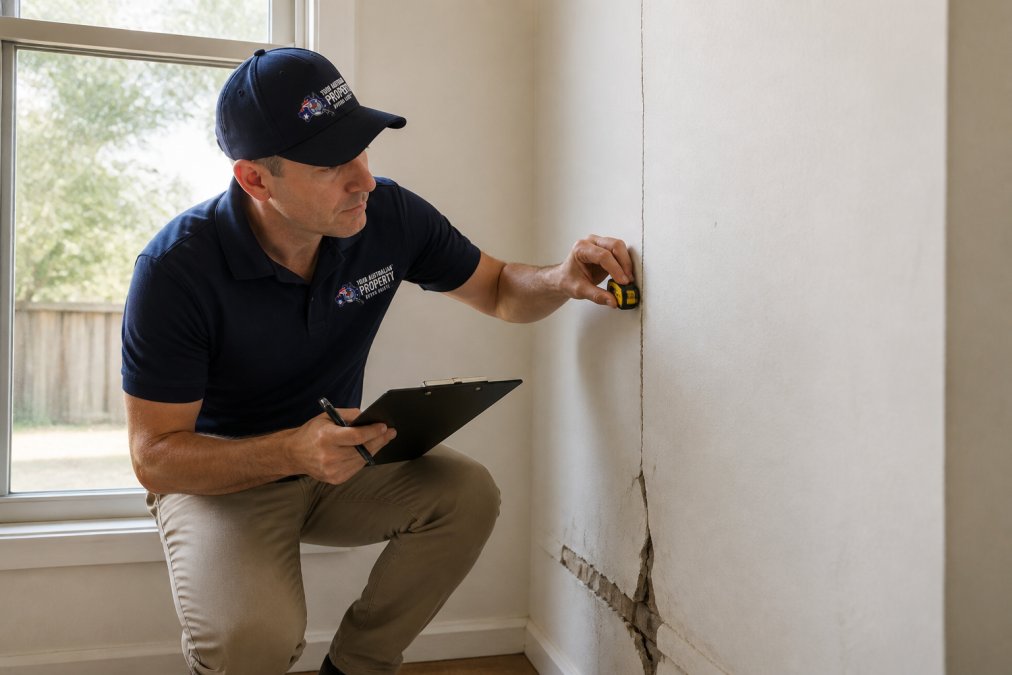
Structural integrity. Cracks in walls or foundations, sagging floors, uneven ceilings. These are expensive to fix.
Asbestos. Common in homes built before 1990. Removal is expensive and regulated.
Termites and pests. Active infestations or previous damage. Termite treatment and repairs can cost thousands.
Dampness and ventilation. Moisture in walls or subfloor. This leads to mould and structural decay.
Windows and doors. Condition, sealing, functionality. Replacement costs add up quickly.
Professional property inspector examining foundation cracks and structural damage on interior wall with clipboard and measuring tape, natural daylight
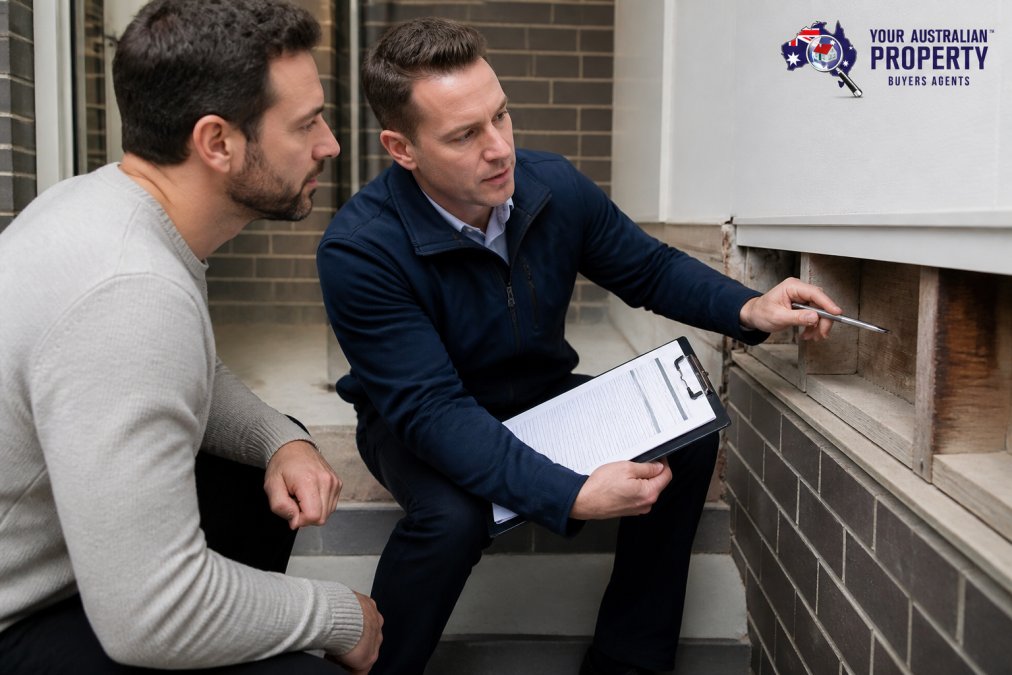
Don’t just rely on the inspector’s written report. Attend the inspection. Ask questions. Understand what’s been identified and what it means for repairs or maintenance. An inspector might note "minor roof wear" in the report. You need to understand whether that means five years of life left or twenty.
Pro Tip Attend the building inspection in person. A written report alone won’t tell you how serious the issues are or what repair costs might look like. Ask your inspector to explain findings in detail.
Understanding Zoning and Planning Overlays
Zoning determines what you can do with the property. Planning overlays add restrictions on top of that.
A property might be zoned residential, but if it’s in a bushfire management overlay, you’ll face building restrictions and maintenance obligations. If it’s in a flood zone, you’ll struggle to get insurance and finance. If it’s near a heritage area, you might not be able to renovate freely.
Check the planning scheme for the property’s zone and any overlays. Look for:
Zoning. Residential, commercial, mixed-use. This determines permitted uses.
Bushfire management overlay. Requires specific building standards and vegetation management.
Flood overlay. Affects insurance, finance, and future development.
Heritage overlay. Restricts external changes and renovations.
Development plan overlays. May require planning approval for certain works.
Environmental significance overlays. Protect native vegetation or waterways.
Planning overlays aren’t deal-breakers, but they affect value and your ability to develop the property. A property in a bushfire zone might be cheaper, but you’ll pay more for insurance and face restrictions on building. A flood zone property might be difficult to finance or insure.
Research the planning scheme before making an offer. Understand the restrictions. Factor them into your valuation. Don’t discover zoning issues after you’ve committed to the purchase.
Legal Contract Review: Title, Easements and Encumbrances
The contract of sale is a legal document that binds you to the purchase. It’s not standard. It varies by property and seller.
The conveyancer checks the title for easements, covenants, and encumbrances. These are legal restrictions or rights that affect the property. An easement might give a neighbour the right to cross your land. A covenant might restrict what you can build. An encumbrance might indicate a mortgage or charge on the property.
Here’s what to review:
Title search. Verify clear ownership and identify any registered encumbrances.
Easements. Rights of way, drainage, utilities. These might affect your use of the property.
Covenants. Restrictions on what you can do with the land. Some are outdated and unenforceable; others still apply.
Section 32 statement. Cross-check against the title. Look for discrepancies.
Contract terms. Deposit, settlement date, conditions, cooling-off period, special conditions.
Chattels and fixtures. What’s included in the sale? Curtains, light fittings, garden sheds? Get clarity in writing.
Understanding title, easements and encumbrances in Australian property helps you grasp these concepts, but a conveyancer interprets them for your specific property. Don’t skip this step.
Key Takeaway Easements, covenants, and encumbrances are legal restrictions that affect how you use the property. Identify them before exchange of contracts so you can negotiate or walk away.
Risk Assessment: Flood, Bushfire and Strata Considerations
Risk assessment separates informed buyers from those who discover problems too late.
Check whether the property is in a flood zone or bushfire management area. These carry insurance implications and building restrictions. Get a flood risk report if the property is near waterways or in a historically flood-prone area. Understand what insurance will cost and whether it’s even available.
For strata properties, obtain a strata report. This reveals the body corporate’s financial health, maintenance issues, and any special levies. A strata report might show that the building needs a roof replacement funded through a special levy. That changes the purchase decision.
Check the owners corporation records. Look for:
Financial statements. Is the sinking fund adequate? Are there special levies planned?
Meeting minutes. What issues are the owners discussing? Are there disputes or major works planned?
Maintenance history. What’s been replaced or repaired? What’s aging and likely to need work soon?
By-laws. Restrictions on renovations, pets, noise, or use of common areas.
Strata living comes with shared costs and shared decision-making. If the building is poorly managed or underfunded, your ownership costs will rise unexpectedly.
The Final Steps: Finance, Settlement and Beyond
Pre-approval from your lender is essential before you start looking. It confirms your borrowing capacity and shows sellers you’re a serious buyer.
But pre-approval isn’t unconditional. The lender will conduct their own due diligence before final approval. They’ll order a valuation. They’ll verify your income and employment. They’ll check your credit history. If the valuation comes in lower than the purchase price, you’ll need to renegotiate or increase your deposit.
After exchange of contracts, you enter the cooling-off period. In Victoria, this is typically 14 days for off-the-plan properties or properties purchased at auction, though it can vary. Use this time to complete your final due diligence. Get building and pest inspections done. Arrange finance. Conduct final title searches. If you discover major issues, you can terminate the contract during this period.
Settlement is when ownership transfers. Your conveyancer handles the legal paperwork. Your lender releases the funds. You receive the keys. But settlement doesn’t end the process. You’ll need to arrange building and contents insurance. You might need to update council records. You’ll need to understand maintenance obligations, especially if it’s a strata property.
Here’s the real lesson: due diligence doesn’t end at settlement. It informs every decision you make as an owner. The property’s condition, the zoning restrictions, the strata obligations, these shape your ownership experience and your ability to sell or refinance later.
=== FAQ ANSWERS (audit these too, same rules) ===
[1] Q: What should be included in a property due diligence checklist?
A: A complete property due diligence checklist covers three tiers: market and suburb research (is this the right area?), property-level inspections (building, pest, strata), and legal review (Section 32, title, easements, zoning). Most buyers focus only on the building inspection, missing the critical work that happens before and after. Property-level checks typically take 5 to 10 business days after exchange of contracts.
[2] Q: Why is a building and pest inspection critical before signing a contract?
A: A building and pest inspection reveals structural issues, asbestos, termite damage and code compliance problems that affect value and safety. Skipping this step can lead to significant post-purchase repairs. Eleven per cent of real estate transactions are terminated due to inspection issues alone. We see buyers walk away from properties after discovering undisclosed structural damage that would have been caught with a proper inspection upfront.
[3] Q: What legal documents must be reviewed before purchasing property in Victoria?
A: The Section 32 vendor statement is mandatory and must disclose known defects, planning permits, easements and council notices. Your conveyancer must review the contract of sale, title search, strata report (if applicable), and any planning overlays affecting the property. A thorough legal review protects your ownership interest and confirms the property can be used for its intended purpose without hidden encumbrances or restrictions.
[4] Q: How can a buyer’s agent assist with property due diligence?
A: A buyer’s agent controls the entire due diligence process: they identify properties aligned with your strategy, coordinate inspections, interpret findings, review legal documents with your conveyancer, and negotiate based on discovered issues. With 30+ years of experience, we’ve seen patterns most buyers miss, undisclosed planning permits, neighbour disputes, future infrastructure impact. We guide you through the 30 steps behind the scenes that determine whether a purchase succeeds or becomes a costly mistake.
[5] Q: What risks should I look for when inspecting a property?
A: Look for structural cracks, water damage, roof condition, asbestos, electrical and plumbing safety, pest infestation, and evidence of previous flooding. Check council records for planning permits on neighbouring properties that might affect future value or privacy. Review the strata report for financial health and special levies. Verify zoning and planning overlays, bushfire management overlays, flood zones and development restrictions all impact value and insurability. Most issues are discoverable with the right inspection checklist and expert guidance.
[6] Q: What are the mandatory checks for property buyers in Victoria?
A: Sellers must provide a due diligence checklist available at open inspections or on their website (Consumer Affairs Victoria requirement). You must review the Section 32 vendor statement, conduct a title search for easements and encumbrances, verify zoning and planning permits via council, obtain a building and pest inspection, and review strata records if applicable. A cooling-off period of 5 business days after exchange allows time to complete final due diligence. These checks are non-negotiable to avoid costly post-purchase surprises.
[7] Q: How long does property due diligence typically take?
A: Property-level due diligence takes 5 to 10 business days after exchange of contracts, aligning with Victoria’s cooling-off period. Full market and suburb research, property inspections, and legal review typically span 2-4 weeks before making an unconditional offer. Most buyers complete this process within 60 days when working with an experienced buyer’s agent who coordinates all elements simultaneously. Rushing due diligence is where costly mistakes happen, we see this all the time with first-time buyers under time pressure.
[8] Q: What happens if due diligence reveals a major issue with the property?
A: If inspections or legal review uncover serious defects, structural damage, planning restrictions or title issues, you have options: renegotiate the price downward to reflect repair costs, request the seller fix the issue before settlement, or walk away during the cooling-off period without penalty. This is where experience matters, we’ve helped buyers re-negotiate contracts after discovering undisclosed planning permits, neighbour disputes and structural defects. The discovery process gives you leverage to secure the right price or exit the deal safely.
Frequently Asked Questions
Q: What should be included in a property due diligence checklist?
A: A complete property due diligence checklist covers three tiers: market and suburb research (is this the right area?), property-level inspections (building, pest, strata), and legal review (Section 32, title, easements, zoning). Most buyers focus only on the building inspection, missing the critical work that happens before and after. Property-level checks typically take 5 to 10 business days after exchange of contracts.
Q: Why is a building and pest inspection critical before signing a contract?
A: A building and pest inspection reveals structural issues, asbestos, termite damage and code compliance problems that affect value and safety. Skipping this step can lead to significant post-purchase repairs. Eleven per cent of real estate transactions are terminated due to inspection issues alone. We see buyers walk away from properties after discovering undisclosed structural damage that would have been caught with a proper inspection upfront.
Q: What legal documents must be reviewed before purchasing property in Victoria?
A: The Section 32 vendor statement is mandatory and must disclose known defects, planning permits, easements and council notices. Your conveyancer must review the contract of sale, title search, strata report (if applicable), and any planning overlays affecting the property. A thorough legal review protects your ownership interest and confirms the property can be used for its intended purpose without hidden encumbrances or restrictions.
Q: How can a buyer's agent assist with property due diligence?
A: A buyer's agent controls the entire due diligence process: they identify properties aligned with your strategy, coordinate inspections, interpret findings, review legal documents with your conveyancer, and negotiate based on discovered issues. With 30+ years of experience, we've seen patterns most buyers miss, undisclosed planning permits, neighbour disputes, future infrastructure impact. We guide you through the 30 steps behind the scenes that determine whether a purchase succeeds or becomes a costly mistake.
Q: What risks should I look for when inspecting a property?
A: Look for structural cracks, water damage, roof condition, asbestos, electrical and plumbing safety, pest infestation, and evidence of previous flooding. Check council records for planning permits on neighbouring properties that might affect future value or privacy. Review the strata report for financial health and special levies. Verify zoning and planning overlays, bushfire management overlays, flood zones and development restrictions all impact value and insurability. Most issues are discoverable with the right inspection checklist and expert guidance.
Q: What are the mandatory checks for property buyers in Victoria?
A: Sellers must provide a due diligence checklist available at open inspections or on their website (Consumer Affairs Victoria requirement). You must review the Section 32 vendor statement, conduct a title search for easements and encumbrances, verify zoning and planning permits via council, obtain a building and pest inspection, and review strata records if applicable. A cooling-off period of 5 business days after exchange allows time to complete final due diligence. These checks are non-negotiable to avoid costly post-purchase surprises.
Q: How long does property due diligence typically take?
A: Property-level due diligence takes 5 to 10 business days after exchange of contracts, aligning with Victoria's cooling-off period. Full market and suburb research, property inspections, and legal review typically span 2-4 weeks before making an unconditional offer. Most buyers complete this process within 60 days when working with an experienced buyer's agent who coordinates all elements simultaneously. Rushing due diligence is where costly mistakes happen, we see this all the time with first-time buyers under time pressure.
Q: What happens if due diligence reveals a major issue with the property?
A: If inspections or legal review uncover serious defects, structural damage, planning restrictions or title issues, you have options: renegotiate the price downward to reflect repair costs, request the seller fix the issue before settlement, or walk away during the cooling-off period without penalty. This is where experience matters, we've helped buyers re-negotiate contracts after discovering undisclosed planning permits, neighbour disputes and structural defects. The discovery process gives you leverage to secure the right price or exit the deal safely.
Most buyers focus on finding the right property. We focus on ensuring it’s the right purchase. That’s the difference between a good outcome and a great one. If you’re buying in Melbourne and you want expert guidance through the entire due diligence process, book a strategy session with our team. We’ll walk you through the steps most buyers miss and help you avoid costly mistakes.
Buying off the plan means purchasing a property before it’s built or completed. You’re committing based on architectural plans, floor plans, 3D renderings, and a signed building contract, not a finished structure you can inspect. The developer owns the land and construction risk until practical completion, at which point you settle and take ownership.
This is fundamentally different from buying an established property. You’re buying a promise backed by a contract and a developer’s financial standing. Nearly one-third of new residential purchases in major Australian cities are off-the-plan developments, driven by rising property prices and limited housing supply (Off-the-Plan Property Australia market insights).
Here’s where it gets interesting: the contract locks in the purchase price, but construction timelines, design changes, financing conditions, and market value remain in flux. That’s where most buyers stumble.
Young couple reviewing architectural floor plans and 3D renderings on a tablet in a modern apartment display showroom, natural light streaming through large windows
The Real Advantages of Buying Off the Plan
You’re locking in today’s price in a rising market. If property values climb during construction, you capture that gain before settlement. That’s instant equity without doing anything.
Most developers require only 5%-10% deposit upfront, with the remaining balance due at settlement. This lower entry cost makes it accessible for first-home buyers. Your money stays in a trust account earning interest until completion, which provides financial protection.
Stamp duty concessions are substantial in Victoria. Off-the-plan purchasers can access stamp duty reductions of 70-90% for contracts signed by October 20, 2026. That’s meaningful cash savings at settlement.
New buildings come with modern design, energy-efficient systems, and zero maintenance surprises. Everything’s new, everything works, and the builder’s warranty covers defects for the first six years.
Investors benefit from significant tax advantages under the 2026 Federal Budget. New builds retain full negative gearing eligibility and the 50% Capital Gains Tax discount, regardless of purchase date. Established properties lose these benefits from July 1, 2027. For investors, that’s a material advantage.
Pro Tip The deposit structure matters more than most buyers realise. Negotiate whether your deposit sits in a trust account earning interest or in a bank guarantee. Some developers allow you to substitute a bank guarantee for cash deposit, which frees up capital while you wait for completion.
The Hidden Risks: What Buyers Miss
Here’s where experience matters. Construction delays have become the norm. Building approval rates don’t correlate with market performance (InvestorKit analysis of building risks), but delays absolutely correlate with cash flow pain. Construction time increased by 34% for houses and 17% for townhouses between 2020 and 2023. Your deposit sits idle for months or years longer than planned.
Developer insolvency is at historically high levels. Construction company insolvencies reached 2,832 in FY 2024-25 (Mozo report on building defects). If your developer collapses mid-construction, your deposit may be at risk depending on how it’s held and whether the project gets rescued or abandoned.
Building defects are endemic. NSW Government data shows 53% of apartment buildings registered between 2016 and 2022 had serious defects. Cracks in concrete, waterproofing failures, electrical issues, and structural problems aren’t cosmetic, they’re expensive to fix.
Market value can fall during construction. If the market softens, your bank may value the property lower than your purchase price at settlement. You’re still obligated to complete, but you’re borrowing against a lower valuation. That changes your loan-to-value ratio and may trigger additional lender mortgage insurance costs.
Finance approval isn’t guaranteed. Off-the-plan contracts are almost never conditional on finance. If interest rates rise, your serviceability changes. If your employment situation shifts, your bank may withdraw approval. You’re locked in, but your lender isn’t.
We see this all the time: a buyer signs an off-the-plan contract with a 3% interest rate assumption. Two years later, rates have moved to 5.5%. Their serviceability has deteriorated. One interest rate rise, one job change, one unexpected cost, and they’re in trouble.
Watch Out Off-the-plan contracts are almost never conditional on finance approval. If you can’t secure a loan at settlement, you still must complete the purchase or forfeit your deposit. Get unconditional finance approval in writing before you sign the contract, not after.
Off the Plan Contract Risks You Need to Know
The contract is where the real game is played. Most buyers focus on the property and miss the contract entirely.
Sunset clauses set an expiry date for the developer’s obligation to complete. After that date, if the project isn’t finished, you can walk away and get your deposit back. Developers push for long sunset clauses (sometimes 5+ years). Negotiate shorter ones. A sunset clause of 2-3 years is reasonable.
Design changes are standard in the contract. The developer reserves the right to modify the design, materials, or specifications if they’re "substantially similar." That’s vague. You might sign up for marble countertops and get laminate instead. Nail down specifics in the contract. List fixtures, finishes, and materials explicitly.
Defects liability is usually capped at 6 years from practical completion. After that, you’re responsible for repairs. But the builder’s warranty is only as good as the builder’s solvency. Get a pre-settlement building inspection from a professional) to identify defects before you settle.
Cooling-off periods are shorter for off-the-plan than for established properties. You typically have 5 business days to withdraw without penalty. Use those 5 days aggressively to get a building inspector or lawyer to review the contract.
Deposit forfeiture is the nuclear option. If you breach the contract, fail to pay the deposit, miss a settlement date, or pull out after the cooling-off period, the developer can keep your deposit. Understand the payment schedule and settlement timeline before you commit.
Here’s where buyers get it wrong: they focus on the property, the location, the views, the finishes, and treat the contract as a formality. The contract is where you win or lose. We control the process by controlling the contract.
Key Takeaway The contract terms matter more than the property features. A mediocre property with strong contract protections beats a beautiful property locked into a weak contract. Negotiate sunset clauses, design specifics, and defects liability before you sign.
Finance Approval for Off the Plan: What Changes
Banks lend against the valuation of the finished property, not the contract price. If you sign a contract for $600K and the bank values the completed property at $550K, you’ve got a valuation gap. You’re still obligated to complete at $600K, but the bank will only lend against $550K. You need to find the difference from your own funds.
Valuation gaps are common in oversupplied postcodes or when the market softens during construction. This is why location matters enormously in off-the-plan buying. Postcodes with strong underlying demand hold value better than those relying on new supply to drive growth.
Construction finance is different from standard home loans. During construction, the bank releases funds in stages as construction milestones are reached. This protects the bank but requires you to manage cash flow carefully if you’re an investor.
Interest rates are a moving target. If you sign a contract assuming a 4% rate and rates climb to 5.5% by settlement, your serviceability deteriorates. One rate rise after settlement, and you’re struggling. This is why getting unconditional finance approval early matters.
Lender mortgage insurance (LMI) kicks in if your loan-to-value ratio exceeds 80%. Off-the-plan valuations are often conservative, which pushes more buyers into LMI territory. Budget for this additional cost.
The Reserve Bank of Australia raised the cash rate to 4.35% in Q2 2026. Some economists predict potential rate movements later in 2026. If you’re on a tight serviceability margin, that risk is material.
Pro Tip Get unconditional finance approval in writing before you exchange contracts. Not pre-approval. Unconditional approval. This protects you if the valuation comes in lower than expected or if your circumstances change.
How to Negotiate Off the Plan Property Deals
Professional buyer's agent and client reviewing building contract document at desk with laptop, blueprints and property documents visible
Most buyers don’t negotiate off-the-plan contracts. They assume the terms are fixed. They’re not.
Developers build negotiation room into their asking price and contract terms. They expect pushback on sunset clauses, design specifications, and payment schedules. If you don’t ask, you don’t get.
Price negotiation happens early. Before you exchange contracts, you have leverage. After you exchange, you have almost none. Developers are motivated to exchange contracts quickly. Use that window. In slower markets or if the developer has excess stock, there’s room to negotiate price or incentives.
Sunset clauses are your primary negotiation point. Push for 2-3 years maximum. Compromise at 3 years with a clause that extends if delays are caused by circumstances beyond the developer’s control. That’s reasonable and shows you understand their constraints.
Design and specifications need to be locked down. Get the developer to warrant specific finishes in writing. Don’t accept vague language like "or substantially similar." Specify marble, not stone. Specify stainless steel appliances, not equivalent.
Deposit terms are negotiable. Can you substitute a bank guarantee for cash? Can the interest earned on your deposit offset some of your holding costs? Can you negotiate a staged deposit schedule tied to construction milestones? These are worth asking.
Settlement terms matter. Can you negotiate a longer settlement period after practical completion to allow for inspections and repairs? Can you negotiate a retention amount (money held back until defects are rectified)? These protections cost the developer nothing and cost you everything if you don’t have them.
This is where experience matters. We’ve negotiated hundreds of off-the-plan contracts. We know what’s negotiable and which clauses matter. Most buyers are negotiating for the first time. That’s a disadvantage you don’t have to accept. A Property Negotiation Service Melbourne can guide you through these conversations and ensure you’re not leaving value on the table.
Real-World Example: How One Buyer Avoided Overpaying
A buyer from Sydney was relocating to Melbourne for work. She’d found an off-the-plan apartment in an inner-suburb development at $650K. Construction was scheduled for 2 years.
Her problem: she didn’t know Melbourne, didn’t understand the local market, and was worried about valuation risk.
Her strategy: she brought in a Buyer Agents Melbourne service to analyse the postcode, review the contract, and negotiate terms. The advocate identified that the developer was offering similar apartments at $630K in another tower. The market was softening. The sunset clause was 5 years, excessive.
The outcome: the advocate negotiated the price down to $625K, shortened the sunset clause to 2.5 years, and locked in specific finishes in writing. When the valuation came in lower, she was prepared with unconditional finance approval and market knowledge. She completed confidently.
The lesson: most buyers focus on the property and miss the contract. The real negotiation happens in the terms, not the price. One buyer’s advocate saved significant money and protected against downside risk.
Buying off the plan isn’t inherently good or bad. It’s a strategy that works brilliantly in some markets and some timing, and creates real risk in others. The difference between success and regret isn’t the property, it’s the process.
Most buyers see the property and make an emotional decision. We see the contract, the market cycle, the developer’s track record, and the finance structure. We control the process. We control the negotiation. We control the outcome.
If you’re considering an off-the-plan purchase in Melbourne, don’t navigate this alone. Your Australian Property Buyers Agents has 30+ years of experience negotiating these deals, identifying market risk, and protecting buyers from costly mistakes. We work exclusively for you, no conflicts, no developer relationships, just independent advice on whether this property, at this price, with these terms, makes sense for your situation.
Book a free strategy session to discuss your off-the-plan opportunity. We’ll review the contract, analyse the market, and show you exactly what you’re taking on.
=== FAQ ANSWERS (audit these too, same rules) ===
[1] Q: What are the main risks of buying off the plan in Australia?
A: The biggest risks are construction delays (which have increased by 34% for houses since 2020), valuation shortfalls if the market falls during building, and developer insolvency. With 2,832 construction insolvencies in FY 2024-25 and 53% of apartments registered in NSW between 2016 and 2022 having serious defects, you’re committing money to a property that doesn’t exist yet. Finance approval can also become difficult at settlement if interest rates rise or your circumstances change. We see buyers tie up deposits for years only to find their property worth less than the purchase price.
[2] Q: Can you negotiate the price on an off-the-plan contract?
A: Yes, but it’s different from negotiating established property. Developers embed marketing costs, sales commissions, and profit margins into the asking price. You can negotiate on inclusions (fixtures, fittings, parking), request upgrades, or ask for deposit terms to be stretched. Some developers offer incentives like stamp duty contributions or free upgrades. The key is understanding what’s built into that price and where there’s room to move. This is where experience matters.
[3] Q: What stamp duty concessions apply to off-the-plan purchases?
A: Victoria’s off-the-plan stamp duty concession can reduce duty by 70-90% for contracts signed by 20 October 2026. Other states and territories offer varying concessions. First-home buyers may access additional grants. The savings can be substantial. However, these concessions have expiry dates and eligibility criteria. You need to understand whether your purchase qualifies and plan your settlement timing accordingly. This is one of the genuine financial advantages of buying off the plan, but only if you’re eligible and the timing works.
[4] Q: What happens if property values drop before my off-the-plan settlement?
A: If the property value falls during construction, your bank may lend against a lower valuation, creating a ‘valuation gap’. You’ll need to cover the shortfall at settlement or renegotiate your finance. This is a real risk. Your deposit is at risk if you can’t secure finance at settlement. This is why pre-settlement inspections by a professional building inspector and understanding the sunset clause protections in your contract are critical.
Frequently Asked Questions
What are the main risks of buying off the plan in Australia?
The biggest risks are construction delays (which have increased by 34% for houses since 2020), valuation shortfalls if the market falls during building, and developer insolvency. With 2,832 construction insolvencies in FY 2024-25 and 53% of apartments registered in NSW between 2016 and 2022 having serious defects, you're committing money to a property that doesn't exist yet. Finance approval can also become difficult at settlement if interest rates rise or your circumstances change. We see buyers tie up deposits for years only to find their property worth less than the purchase price.
Can you negotiate the price on an off-the-plan contract?
Yes, but it's different from negotiating established property. Developers embed marketing costs, sales commissions, and profit margins into the asking price. You can negotiate on inclusions (fixtures, fittings, parking), request upgrades, or ask for deposit terms to be stretched. Some developers offer incentives like stamp duty contributions or free upgrades. The key is understanding what's built into that price and where there's room to move. This is where experience matters.
What stamp duty concessions apply to off-the-plan purchases?
Victoria's off-the-plan stamp duty concession can reduce duty by 70-90% for contracts signed by 20 October 2026. Other states and territories offer varying concessions. First-home buyers may access additional grants. The savings can be substantial. However, these concessions have expiry dates and eligibility criteria. You need to understand whether your purchase qualifies and plan your settlement timing accordingly. This is one of the genuine financial advantages of buying off the plan, but only if you're eligible and the timing works.
What happens if property values drop before my off-the-plan settlement?
If the property value falls during construction, your bank may lend against a lower valuation, creating a 'valuation gap'. You'll need to cover the shortfall at settlement or renegotiate your finance. This is a real risk. Your deposit is at risk if you can't secure finance at settlement. This is why pre-settlement inspections by a professional building inspector and understanding the sunset clause protections in your contract are critical.
What Makes the Best Buyers Agent Services Stand Out
The difference between a successful property purchase and an expensive mistake comes down to one thing: who’s controlling the process behind the scenes. Most buyers focus on the property itself. What they don’t see are the 30 other steps that determine whether they win or lose, and whether they overpay or secure genuine value.
According to PIPA’s 2023 property investment survey, 40% of buyers now consider using a buyers agent, up from just 10% a decade ago. That shift reflects growing recognition that the best buyers agent services do far more than show listings. They control the negotiation, the process, and the outcome.
Your Australian Property Buyers Agents has spent over 30 years watching how buyers win and lose in the Melbourne market. The winners aren’t necessarily those with the biggest budgets. They’re the ones with independent advice, strategic negotiation, and access to opportunities most buyers never see.
Key Takeaway The best buyers agent services control the entire acquisition process, from strategy and property sourcing through to settlement, ensuring you avoid costly mistakes and secure genuine value.
Benefits of Using Melbourne Buyers Advocate
Hiring a buyers advocate isn’t a luxury. It’s a strategic advantage that addresses a fundamental problem: buyers and sellers are playing different games, and sellers have professional representation. You don’t.
REBAA’s 2023 buyer satisfaction research found that 85% of buyers believed their buyers agent helped them secure a better deal than they could have negotiated alone. When Azzato Property Group’s 2025 analysis shows buyers agent involvement has risen threefold from 4-5% in 2020 to 14-15% in 2025, you’re not just buying a service. You’re levelling the playing field.
Professional buyer's agent and client reviewing property documents together at a desk with a laptop and Melbourne skyline visible through the window
A Buyer Agents Service brings market intelligence, access to confidential sales data, off-market opportunities, and suburb-specific trends that shape your buying strategy. They handle due diligence: building and pest inspections, contract review, settlement advocacy. They manage the emotional side of purchasing. When you’re emotionally attached to a property, your judgment clouds. An advocate keeps you rational.
We see this all the time: buyers who find the "perfect" property and ignore warning signs because they’re already emotionally invested. A buyers advocate asks the hard questions. Is this genuinely the right property? Will it deliver the capital growth or rental yield you’re targeting? Are you overpaying relative to comparable sales?
For first-home buyers, the benefit is clear: you’re navigating the process for the first time with high stakes. For investors, it’s equally critical. You’re acquiring an asset, not a home. Every percentage point you overpay compounds over decades. For downsizers and upsizers, a buyers advocate cuts through complexity and positions your offer competitively.
Pro Tip Most buyers discover they’ve overpaid only after settlement. A buyers advocate identifies overpriced properties before you commit, saving you five figures or more on a single purchase.
Off-Market Property Access Melbourne: The Hidden Advantage
Here’s where buyers get it wrong: they assume the best properties are listed on major portals. Approximately 20% of all listings are sold off-market. That means one in five quality opportunities never reaches the open market.
Sellers and agents often prefer off-market sales because they’re faster, less disruptive, and attract serious buyers. For you, this creates a problem: you’re competing for the remaining 80% while missing entire opportunities.
A buyers advocate with genuine connections across Melbourne has access to these off-market opportunities before they’re advertised. Your Australian Property Buyers Agents works with 500+ real estate agents across the region. This isn’t insider trading. It’s relationships built over decades of professional transactions.
Off-Market Properties Melbourne access changes your strategy entirely. Instead of reacting to what’s listed, you’re proactive. You’re seeing properties that suit your criteria before competing buyers know they exist. You’re negotiating directly with agents who know your advocate’s track record. You’re often the first offer on the table.
We’ve seen clients secure properties off-market that would have attracted five or six bidders at auction if they’d gone public. That’s not luck. That’s access combined with strategic timing.
Questions to Ask a Buyers Agent Before Hiring
Not all buyers agents operate the same way. Some are transaction-focused. Others prioritise your long-term strategy. Some have conflicts of interest you may not see until it’s too late. Asking the right questions upfront saves you from hiring the wrong advocate.
What’s your experience in my specific suburb or property type? Suburb-specific expertise matters. Capital growth patterns, rental demand, school catchments, and infrastructure development vary dramatically across Melbourne. A buyers advocate who knows your target area intimately will spot opportunities and risks that a generalist misses.
How do you access off-market properties? This separates serious advocates from list-hunters. Ask them to name the agents and networks they work with. Ask for examples of off-market properties they’ve sourced for clients. If they can’t give specifics, they don’t have genuine off-market access.
What’s your fee structure, and how is it aligned with my interests? Some advocates earn commission from selling agents, creating a conflict: they’re incentivised to transact, not necessarily to secure you the best deal. Others work on flat fees or percentage-based models. Understand exactly how they’re paid and whether their interests align with yours.
Can you provide references from recent clients? Ask for references from buyers similar to you. Ask those references specific questions: Did the advocate find properties you wouldn’t have found yourself? Did they save you money? Would you use them again?
What’s your process from initial consultation to settlement? The best buyers agent services have a defined process. They should walk you through property search, shortlisting, due diligence, negotiation strategy, and settlement advocacy.
How do you handle disagreement? You need to trust your advocate, but you also need to maintain control. Ask how they handle situations where you want to proceed with a property they advise against, or vice versa.
Are you accredited, and do you have professional indemnity insurance? Accreditation through REBAA or similar bodies indicates professional standards. Professional indemnity insurance protects you if something goes wrong.
Watch Out Avoid advocates who pressure you to move quickly, won’t explain their fee structure clearly, or claim they can guarantee specific prices or outcomes. These are red flags that their interests may not align with yours.
Understanding Fee Structures and Value Alignment
There are three main fee models: flat-fee, percentage-based, and tiered.
Flat-fee models remove the incentive to inflate your purchase price. You pay a fixed amount regardless of what you pay for the property. This aligns the advocate’s interests with yours: they want you to buy well, not expensively.
Percentage-based models tie the fee to your purchase price. Many advocates argue that percentage-based fees reward them for securing better properties. The catch: you need to trust that your advocate isn’t steering you toward pricier properties to inflate their fee. managing moving logistics.
Tiered models combine elements of both. You might pay an engagement fee upfront, then a smaller percentage on settlement. This covers the advocate’s time during the search phase while tying final compensation to the purchase outcome.
Your Australian Property Buyers Agents operates on a success-based fee structure aligned with securing the right property at the right price. We’re not paid unless you purchase, and our fee reflects the value we deliver, not the price you pay.
When evaluating fee structures, ask yourself: what incentive does this create? There’s no perfect structure, only the one that aligns best with your priorities and the advocate’s values.
Best For First-home buyers often prefer flat-fee structures because they know the exact cost upfront. Investors typically favour percentage-based models because they align with the property value and potential returns.
How the Best Buyers Agent Services Control Negotiation and Outcome
Negotiation isn’t about being aggressive or charming. It’s about controlling information, timing, and psychology. It’s about understanding what the seller and agent actually want, and structuring your offer to deliver it.
The best buyers agent services don’t negotiate in a vacuum. They’ve already controlled the process: they’ve done due diligence, they understand the property’s true value, they’ve identified comparable sales, they know the seller’s situation. By the time an offer is made, the negotiation is already half won.
Confident negotiation moment with buyer's agent shaking hands with real estate agent in front of a Melbourne property, showing successful deal conclusion
Here’s a real example. A client was interested in a period property in Elsternwick listed at $2.5 million. Your Australian Property Buyers Agents analysed comparable sales, identified that similar properties had sold for $2.35-$2.42 million, and discovered the seller was relocating interstate with a tight timeline. The strategy: make a strong offer at $2.46 million with 14-day settlement and no conditions. The result: the client saved money, and the seller got what they actually needed, speed and certainty. That’s negotiation controlled.
Negotiation control comes from information asymmetry, timing, and structure. Your advocate knows the market, comparable sales, and the seller’s motivations. They understand when to make an offer and how to craft offers that appeal to what the seller actually wants, not just price.
At auction, negotiation control looks different. It’s about bidding strategy, reserve positioning, and understanding when to push and when to hold back. The best buyers agents have auction experience; they’ve bid hundreds of times and read the room.
We see this all the time: buyers who negotiate themselves end up overpaying because they lack market context or get emotionally attached mid-negotiation. An advocate stays rational and structures the deal to win.
Red Flags to Avoid When Selecting a Buyers Agent
Not every advocate operates with integrity. Knowing the red flags protects you from hiring someone who’ll cost you money instead of saving it.
Red flag: They pressure you to move quickly. Legitimate advocates want you to find the right property. If they’re pushing you to bid faster or waive conditions, they’re prioritising transaction volume over your outcome.
Red flag: They won’t explain their fee structure clearly. Transparency matters. If they’re vague about how they’re paid or what’s included, you’re likely to face surprises at settlement.
Red flag: They claim they can guarantee specific prices or outcomes. No one can guarantee you’ll secure a specific property or achieve a certain price. If they promise this, they’re either lying or taking risks with your money.
Red flag: They have conflicts of interest they don’t disclose. Some advocates earn commissions from selling agents or developers. They should disclose this. If they’re hiding revenue streams, they’re hiding conflicts.
Red flag: They lack accreditation or professional indemnity insurance. REBAA accreditation and professional indemnity insurance indicate professional standards. Their absence suggests the advocate isn’t serious about accountability.
Red flag: They focus on volume, not strategy. If they’re showing you dozens of properties without understanding your criteria, they’re not thinking strategically.
Red flag: They can’t provide recent references. Ask for references from clients in the past 12 months. If they can’t provide them, ask why.
Red flag: They operate as a solo practitioner with no backup. What happens if your advocate gets sick or leaves during your purchase? You want a team behind you, not a single person.
The best buyers agent services are transparent, strategic, and willing to push back when they think you’re making a mistake. They prioritise your outcome over transaction speed. They have professional credentials and relationships built over decades. They operate with independence, no conflicts of interest, no hidden revenue streams.
Your Next Step: Book a Strategy Session
You now understand what separates the best buyers agent services from the rest. You know what to look for, what questions to ask, and what red flags to avoid.
Your Australian Property Buyers Agents offers a free Strategy Session designed to understand your goals, timeline, and concerns. You’ll learn how our process works, what we’d do differently in your situation, and whether we’re the right fit for you. We’ve spent 30+ years helping buyers avoid costly mistakes and secure genuine value in the Melbourne market. We work exclusively for buyers. No conflicts of interest. No hidden agendas. Just independent advice and proven results.
Book a free call today and discover how we control the process, negotiation, and outcome.
== FAQ ANSWERS (audit these too, same rules) ==
[1] Q: Is it worth paying for a buyers agent in the current Melbourne market?
A: Absolutely. In 2025, 85% of buyers who used a buyers agent reported securing a better deal than they could have alone. With Melbourne’s competitive market and competition intensifying, the difference between a skilled negotiator and going solo often exceeds the cost of professional representation. Most clients recoup their investment through better pricing, fewer costly mistakes, and access to properties never advertised publicly. The real question isn’t whether you can afford a buyers agent, it’s whether you can afford not to have one.
[2] Q: What are the key benefits of using a Melbourne buyer’s advocate?
A: A Melbourne buyer’s advocate controls three things most buyers never see: the process, the negotiation, and the outcome. You gain access to off-market properties (roughly 20% of all sales), expert auction bidding strategy, confidential sales data for smarter offers, and protection from costly contract mistakes. They handle due diligence, building and pest inspections, and post-settlement support. Most clients secure the right property within 60 days while avoiding overpaying. Independent advocates work exclusively for buyers, with no conflicts of interest.
[3] Q: How do buyers agents find off-market properties in Melbourne?
A: The best buyers agents maintain relationships with 50-100+ real estate agents across Melbourne, giving them first access to properties before they hit the market. These off-market opportunities are listed with agents but not advertised publicly, meaning less competition and better negotiating position. Agents share these deals with trusted buyers agents because they know a serious buyer is waiting. Access to this hidden inventory is one of the biggest advantages of professional buyer advocacy and directly impacts your ability to find quality properties faster.
[4] Q: What should I look for when hiring a buyers agent?
A: Look for independence first, no conflicts of interest, no selling side, no developer commissions. Check their Melbourne market experience (30+ years is a strong indicator), accreditation with REBAA or REIV, and their track record helping buyers like you. Ask how they access off-market properties, what their fee structure is, and whether they provide post-settlement support. Request references from recent clients and clarify exactly what’s included in their service. Red flags include vague fee explanations, pressure to transact quickly, or reluctance to discuss their negotiation strategy.
[5] Q: How does a buyers agent help avoid overpaying for property?
A: They use confidential sales data, comparable market analysis, and strategic timing to set realistic offers. They understand vendor psychology, know when to bid and when to walk, and negotiate terms beyond just price, settlement dates, chattels, and inspection contingencies all matter. A skilled buyers agent won’t let emotion drive your decision; they’ll advise you objectively on whether a property represents real value. This discipline alone prevents most buyers from overpaying, especially at auction where competition and adrenaline cloud judgment.
Frequently Asked Questions
Is it worth paying for a buyers agent in the current Melbourne market?
Absolutely. In 2025, 85% of buyers who used a buyers agent reported securing a better deal than they could have alone. With Melbourne's competitive market and competition intensifying, the difference between a skilled negotiator and going solo often exceeds the cost of professional representation. Most clients recoup their investment through better pricing, fewer costly mistakes, and access to properties never advertised publicly. The real question isn't whether you can afford a buyers agent, it's whether you can afford not to have one.
What are the key benefits of using a Melbourne buyer's advocate?
A Melbourne buyer's advocate controls three things most buyers never see: the process, the negotiation, and the outcome. You gain access to off-market properties (roughly 20% of all sales), expert auction bidding strategy, confidential sales data for smarter offers, and protection from costly contract mistakes. They handle due diligence, building and pest inspections, and post-settlement support. Most clients secure the right property within 60 days while avoiding overpaying. Independent advocates work exclusively for buyers, with no conflicts of interest.
How do buyers agents find off-market properties in Melbourne?
The best buyers agents maintain relationships with 50-100+ real estate agents across Melbourne, giving them first access to properties before they hit the market. These off-market opportunities are listed with agents but not advertised publicly, meaning less competition and better negotiating position. Agents share these deals with trusted buyers agents because they know a serious buyer is waiting. Access to this hidden inventory is one of the biggest advantages of professional buyer advocacy and directly impacts your ability to find quality properties faster.
What should I look for when hiring a buyers agent?
Look for independence first, no conflicts of interest, no selling side, no developer commissions. Check their Melbourne market experience (30+ years is a strong indicator), accreditation with REBAA or REIV, and their track record helping buyers like you. Ask how they access off-market properties, what their fee structure is, and whether they provide post-settlement support. Request references from recent clients and clarify exactly what's included in their service. Red flags include vague fee explanations, pressure to transact quickly, or reluctance to discuss their negotiation strategy.
How does a buyers agent help avoid overpaying for property?
They use confidential sales data, comparable market analysis, and strategic timing to set realistic offers. They understand vendor psychology, know when to bid and when to walk, and negotiate terms beyond just price, settlement dates, chattels, and inspection contingencies all matter. A skilled buyers agent won't let emotion drive your decision; they'll advise you objectively on whether a property represents real value. This discipline alone prevents most buyers from overpaying, especially at auction where competition and adrenaline cloud judgment.
The property market rewards preparation, strategy, and independent advice. Most buyers focus on finding the right property. We focus on everything that determines whether it becomes a successful purchase. That difference, the 30 steps most buyers never see, is where real value is created.
Melbourne’s property market has shifted dramatically. Median house prices fell 3.1% in the June quarter to $1.04 million, yet fundamentals for long-term growth remain intact. Most buyers see only headline numbers and panic. They miss what’s happening behind the scenes, where the real opportunity lies.
Melbourne Property Market Analysis 2026
The market isn’t collapsing. It’s correcting. According to Domain’s June Quarter 2026 House Price Report, Melbourne dwelling values fell 1.2% in July 2026 and 3.4% over the quarter, with the citywide median at approximately $797,000. House prices dropped to $1.04 million, the steepest quarterly decline in almost four years.
Victoria’s population grew by more than 183,000 people in the 12 months to March 2024. Housing completions are at a decade-long low. Dwelling approvals are running 14% below the 10-year average. The supply-demand equation favours property owners, not buyers, yet.
Melbourne is currently about 13% undervalued compared to its historical relationship with Sydney. That gap hasn’t existed in over two decades. Leading forecasters expect Melbourne house prices to rise approximately 6.6% and units 7.1% in 2026. The Metro Tunnel, fully operational from February 2026, has transformed accessibility across key investment corridors.
This is the window. Prices are down. Supply is constrained. Demand is rising. The difference between buyers who recognise this and those who don’t will be measured in hundreds of thousands of dollars over the next three to five years.
Pro Tip Most buyers focus on the property itself. We focus on everything that determines whether it becomes a successful purchase: timing, negotiation, [due diligence](/property-due-diligence-melbourne-the-insiders-strategy-to-avoiding-costly-mistakes/), and positioning within the cycle.
Median House and Unit Prices: What You’re Actually Paying
Melbourne’s median house price sits at $1.04 million. The median dwelling price across all property types is approximately $797,000. Units tell a different story.
The rental yield split is critical for investors. Houses deliver approximately 4.2% rental yield, while units average 6.1%. That gap exists because units are more affordable for renters and vacancy rates favour tenant demand.
Melbourne’s rental vacancy rate sits at 1.4%, well below the 3% threshold considered balanced. This creates genuine tension for investors: higher capital growth potential in houses, but stronger rental income in units.
What most guides miss is that median prices obscure real opportunity. The median tells you what the middle property costs. It tells you nothing about whether that property is worth the price or whether you’re buying at the right point in the cycle. We see this all the time, buyers fixate on the number and ignore the fundamentals underneath.
Key Takeaway Units offer higher rental yields (6.1% vs 4.2% for houses), but houses have historically delivered stronger capital growth. Your choice depends on whether you’re prioritising income or long-term appreciation.
Best Suburbs for Investment in Melbourne
Suburb selection determines your outcome. Most buyers choose suburbs based on lifestyle or proximity rather than investment fundamentals.
Property investor reviewing suburb data and growth forecasts on laptop at desk with Melbourne neighbourhood street view through window showing modern townhouses and apartment buildings
Suburbs entering Growth Rate Cycle (GRC) Phase 1 (early recovery) have historically delivered median capital growth of 11.3% in the 12 months following the phase shift. That’s not speculation, it’s 1,400+ Melbourne suburbs analysed over multiple cycles.
The suburbs worth targeting right now share three characteristics: they’re currently undervalued relative to comparable areas, they have strong tenant demand (vacancy rates below 1.5%), and they’re positioned for infrastructure benefits or gentrification.
Growth Rate Cycle Phase 1 Suburbs
Phase 1 suburbs are entering recovery after correction. These suburbs have delivered 11.3% median capital growth within 12 months of entering the phase. The opportunity window is now, before broader market recognition drives prices up.
What separates successful investors from those who break even is timing. Buying in Phase 1 means purchasing when sentiment is still cautious, before the cycle turns. Most buyers wait for confirmation, which means they buy after prices have already risen 20-30%.
The best Phase 1 suburbs combine strong population growth, low housing supply, and rental demand that justifies investor interest. Inner-ring suburbs with improving transport links and outer suburbs with new infrastructure are performing strongest. Here’s where experience matters. The ones that deliver outsized returns aren’t always the ones with the lowest entry prices. They’re the ones where tenant demand is already driving rental growth, where supply constraints are real, and where buyer sentiment hasn’t caught up to fundamentals yet.
Rental Yield and Vacancy Rates by Suburb Type
Vacancy rates determine rental income stability. Melbourne’s overall rate of 1.4% masks significant variation by suburb type. Inner-ring suburbs typically sit between 0.8% and 1.2%. Outer suburbs range from 1.5% to 2.5%. The tighter the vacancy rate, the more confident you can be about rental income.
Rental yields follow a predictable pattern. Inner suburbs with higher capital growth potential offer lower yields (3.5-4.5%). Middle-ring suburbs balance both (4.5-5.5%). Outer suburbs with lower entry prices deliver higher yields (5.5-7.0%).
The mistake most investors make is chasing yield without checking tenant demand. A 6% yield means nothing if vacancy spikes to 5% because the suburb has oversupplied. We see this all the time, investors buy for the yield number without understanding the suburb’s position in its rental cycle. Three years later, they’re holding vacant properties or managing tenant churn.
Suburb Type
Typical Capital Growth
Typical Rental Yield
Vacancy Rate
Best For
Inner-ring
5-7% p.a.
3.5-4.5%
0.8-1.2%
Long-term growth
Middle-ring
4-6% p.a.
4.5-5.5%
1.2-1.8%
Balanced portfolio
Outer suburbs
3-5% p.a.
5.5-7.0%
1.8-2.5%
Income focus
Off-Market Property Opportunities Melbourne: Where Buyers Win
This is where most buyers lose without realising it. They search the public market, see what’s listed, and compete against every other buyer looking at the same properties. They overpay because competition is visible and intense.
Off-market opportunities exist in a different universe. Properties are sourced before listing. Sellers are often motivated but not desperate. Competition is minimal or non-existent. Negotiation happens on a level playing field rather than in an auction room with ten other bidders.
Here’s where buyers get it wrong: they assume off-market means harder to find or more expensive. It’s the opposite. Off-market properties are cheaper because they bypass the marketing machinery that drives prices up. No open homes. No campaigns. No competitive tension. Just a straightforward transaction between a seller and a buyer who’s serious.
We control access to Off-Market Properties Melbourne through our network of agents, accountants, lawyers, and property owners who alert us to sales before they hit the market. That access exists because we’ve built relationships over 30+ years and because we represent buyers exclusively, no conflicts, no selling agenda.
Watch Out Listed properties are marketed to maximise price. Off-market properties are typically priced to sell quickly without marketing costs. The difference is material, but only if you have access.
::: increase property value.
Avoiding Overpaying for Investment Property
Overpaying happens in two ways: paying more than the property is worth, or paying the right price for the wrong property. Most guides focus on the first. We focus on both.
Buyer's agent and investor discussing property details during building inspection, examining structural elements with clipboard and detailed inspection report visible
Due Diligence and Building Inspections
A building inspection is the cheapest insurance against buying a property with hidden defects. Yet most buyers skip it or treat it as a formality.
Here’s where experience matters. A standard building inspection identifies obvious structural issues. A thorough inspection identifies deferred maintenance, compliance risks, and cost trajectories. You learn not just what’s wrong, but what will be wrong in five years if it’s not addressed. We’ve seen investors buy properties with rising damp, failing plumbing, or non-compliant electrical work. The inspection reports were filed and ignored. Three years later, they’re managing significant remediation costs that should have been negotiated into the purchase price.
Our Property Due Diligence process goes beyond standard inspections. We identify not just current defects, but future cost trajectories and remediation priorities. That clarity lets you negotiate with confidence and avoid properties that look cheap but carry hidden expense.
Negotiation Strategy and Offer Structure
Price is one variable. Terms are another. Most buyers focus entirely on price and miss leverage in every other negotiation dimension.
A seller wants certainty of sale. A buyer wants certainty of price. If you can offer certainty faster than other buyers, you have leverage to negotiate price down. The strongest offer structure includes: pre-approval from a mortgage broker, no building inspection condition (because you’ve already had one done privately), and a settlement timeline that suits the seller.
We control the Property Negotiation Service Melbourne process. We structure offers to maximise our leverage. We know what sellers actually care about, and it’s rarely just the headline number. We’ve negotiated hundreds of Melbourne property sales. The difference between a buyer who understands negotiation and one who doesn’t is material.
:::tip
Sellers prioritise certainty of sale over maximum price. An unconditional offer often wins against a conditional offer at a higher price. Understanding what the seller actually wants, and delivering it, is how you avoid overpaying.
Investment Strategies: Capital Growth vs Rental Yield
Your strategy determines which suburbs you target, which property types you buy, and which metrics matter. Most investors blur these together and end up optimising for nothing.
Capital growth strategy prioritises appreciation over income. You’re buying in suburbs where prices are rising faster than the broader market. You’re accepting lower rental yields (3-4%) because you’re expecting 6-7% annual capital growth.
Rental yield strategy prioritises income over appreciation. You’re buying in suburbs where rental demand is strong and yields are 5-7%. You’re accepting slower capital growth (3-4%) because you’re building a portfolio that generates cash flow.
The mistake is mixing strategies. Buying an inner-ring apartment for 3.5% yield while expecting 8% capital growth is optimising for neither. Define your strategy before you start looking. Know whether you’re buying for growth or income. Know your holding period. Know which suburbs fit that strategy. Then stick to it.
Tax, Depreciation and Financial Planning
Investment property comes with tax implications that most buyers don’t understand until their accountant presents the bill. Negative gearing, depreciation schedules, capital gains tax, and land tax all interact in ways that determine your actual return.
Negative gearing happens when your rental income is less than your expenses (mortgage interest, rates, insurance, maintenance). That loss can offset other income, reducing your tax bill. But negative gearing also means you’re paying money out of pocket each year.
Depreciation is more valuable than most investors realise. You can claim depreciation on building components (not land) over their effective life. That’s a non-cash deduction that reduces your taxable income. A property with strong depreciation potential can turn a negatively geared property into a tax-effective investment.
Land tax applies in Victoria depending on your unimproved land value. Capital gains tax applies when you sell. You pay tax on the profit at your marginal rate (after a 50% discount if you’ve held the property for more than 12 months). That’s a material cost that should factor into your purchase decision and holding period.
We work with accountants and tax specialists to ensure our clients understand these implications before they buy. Most investors don’t. They focus on the purchase price and rental yield, then discover later that their actual return is significantly lower than they calculated.
Key Takeaway Negative gearing is a tax benefit, not a cash benefit. Depreciation can turn a negatively geared property into a tax-effective investment. Capital gains tax is a material cost that compounds over time. Understand all three before you commit.
Your Next Step: How to Move Forward
Investing in Melbourne property requires more than picking a suburb and making an offer. It requires understanding the market cycle, positioning yourself correctly within it, accessing opportunities others don’t see, and negotiating with leverage rather than emotion.
Most buyers only see five steps: find a property, get finance, make an offer, settle, and own. We control the other 30. We know how buyers win and lose because we’ve watched both happen across 30+ years and hundreds of transactions.
The market window is open right now. Prices are down. Supply is constrained. Growth forecasts are strong. But that window closes quickly. The buyers who move now, with strategy, with due diligence, with access to off-market opportunities, will look back in five years and wonder why everyone else waited.
Here’s what happens next. You book a call with our team. We listen to your situation, your timeline, your goals. We explain our process. We show you what’s actually possible in the current market. We answer your questions honestly. No pressure. No sales pitch. Just clarity.
If it makes sense to work together, we’ll discuss how we operate and what success looks like. If it doesn’t, we’ll tell you that too. We’d rather have one client who’s genuinely aligned than ten who aren’t.
The difference between buyers who succeed and those who don’t isn’t luck. It’s process. It’s access. It’s negotiation. It’s avoiding the mistakes that cost significant amounts. That’s what Your Australian Property Buyers Agents brings to every transaction.
Frequently Asked Questions
Q: Is it a good time to buy investment property in Melbourne right now?
A: Melbourne is entering a recovery phase in 2026. Recent data shows median house prices fell 3.1% over the June quarter to $1.04 million, but forecasters expect 6.6% growth in houses and 7.1% in units through 2026. Properties are currently undervalued by about 13% compared to their historical relationship with other capitals. The tight rental vacancy rate of 1.4% and strong population growth support long-term demand. However, timing depends on your strategy: capital growth investors benefit from current discounts, while yield investors favour the tight rental market. The difference between winning and losing happens through strategy, due diligence and negotiation, not market timing alone.
Q: What are the best suburbs for investment growth in Melbourne?
A: Suburbs entering Growth Rate Cycle Phase 1 (early recovery) have historically delivered median capital growth of 11.3% in the 12 months following the phase shift, based on analysis of 1,400+ Melbourne suburbs. However, 'best' depends on your investment strategy. Capital growth suburbs differ from high-yield rental suburbs. Infrastructure projects like the Metro Tunnel (fully operational from February 2026) have enhanced accessibility and property values across multiple suburbs. Rather than chase headlines, focus on suburbs with strong tenant demand, population growth drivers, and realistic entry prices. This is where experience matters: we identify suburbs before they move, not after.
Q: How do I avoid overpaying for an investment property?
A: Overpaying happens when buyers skip due diligence, ignore comparable sales data, or rush negotiations. Here's how to avoid it: conduct thorough building inspections and strata audits (for units); analyse 12+ months of comparable sales data, not just one listing; understand the property's rental appraisal and actual yield; negotiate from strength with a pre-approval and clear walk-away price; and always have an independent valuation. Most buyers focus on the property. We focus on everything that determines whether it becomes a successful purchase. Off-market opportunities often offer better pricing because there's less competition and emotion. A strategic negotiation can save tens of thousands.
Q: What's the difference between capital growth and rental yield strategies?
A: Capital growth strategy targets suburbs forecast to increase in value, often in emerging areas with infrastructure development. You hold for appreciation, accept lower current yields, and rely on long-term price increases. Rental yield strategy prioritises high cash flow now, typically in established suburbs with strong tenant demand. Melbourne's average rental yield is approximately 4.2% for houses and 6.1% for units in 2026. Most successful investors use both: buy growth suburbs for long-term wealth, and established suburbs for cash flow. Your strategy depends on your timeline, available capital, and financial goals. This is a critical decision that shapes your entire portfolio.
Q: What tax deductions and depreciation benefits apply to investment property in Victoria?
A: Investment property owners can claim depreciation on building structure and fixtures, interest on investment loans, property management fees, maintenance and repairs, council rates, land tax, and insurance. Depreciation schedules are prepared by quantity surveyors and can significantly reduce taxable income in early years. However, depreciation creates a tax liability when you sell (capital gains tax applies). Land tax thresholds and rates vary by property value and ownership structure. Negative gearing (when expenses exceed rental income) can offset other income, but this strategy has changed with recent tax policy. Consult a tax accountant specialising in property investment to structure your purchase and claims correctly. The numbers matter more than the strategy name.
Q: Can I use a buyer's agent if I'm relocating from interstate or overseas?
A: Yes. Interstate and overseas buyers face unique challenges: unfamiliar suburbs, inability to attend inspections, and uncertainty about fair pricing. A buyer's agent handles inspections, comparative market analysis, due diligence, and negotiation on your behalf. You control the decision; we control the process. Most clients secure the right property within 60 days, even without being physically present. We manage the entire workflow, from property identification through to settlement. This is particularly valuable for investors buying off-market, where speed and local knowledge determine success. Remote buyers often achieve better outcomes because they avoid emotional decisions and rely on data.
Q: What's the impact of Victorian land tax on investment property returns?
A: Land tax is a significant ongoing cost for investment property owners in Victoria. The tax is calculated on the unimproved value of land and applies to properties valued above the threshold. For investors holding multiple properties, land tax can materially reduce cash flow and overall returns. Land tax must be factored into your rental yield calculations and long-term financial planning. A property showing 6% gross yield might deliver only 4.5% after land tax, maintenance, and management fees. This is where analysis separates successful investors from those who chase headlines. Always calculate net yield, not gross yield, and include all holding costs before committing capital.
Q: What happens if I find a property myself but want help with negotiation?
A: It's not too late. Many buyers find a property, realise they need expert support, and bring in a buyer's agent for negotiation and due diligence. This is a common entry point. You've already done the discovery work; we handle the strategy, inspection, valuation, and negotiation to secure the best price and terms. Some buyers negotiate themselves and leave tens of thousands on the table. A skilled negotiation can recover the cost of professional advice many times over. We see this all the time: buyers who thought they'd found a bargain, only to discover through proper analysis that they were about to overpay. Book a call to discuss your specific situation.
Melbourne’s property market rewards buyers who understand it. You now have the data, the strategy, and the framework. The next step is execution. Book a Strategy Session with our team and let’s explore what’s possible for your situation. We work exclusively for buyers. No conflicts. No selling agenda. Just independent advice and proven results across 30+ years in Melbourne’s property market.