

What if the properties currently cluttering your weekend search results are the very assets you should be avoiding? In the current climate, property investment melbourne requires a tactical shift that most retail buyers simply aren’t equipped to make. You’ve likely noticed that rental yields are struggling to keep pace with new holding costs, such as the expanded Vacant Residential Land Tax and the 7.5% short-stay levy. It’s a frustrating position to be in, especially when auction clearance rates have dipped to 52.3% and the fear of overpaying for a low-growth asset is at an all-time high.
We understand the pressure of trying to secure your financial future while the market feels like it’s shifting beneath your feet. This guide will show you how to master the transition from low-yield traps to high-growth assets in Melbourne’s 2026 property market. We’ll reveal the “other 30 steps” of the acquisition process that successful investors use to access silent off-market opportunities and secure investment-grade properties before they ever hit the open market. You either control the deal or get controlled; it’s time to take back the advantage.
Key Takeaways
- Identify why family-oriented suburbs in Melbourne’s south and inner-north are outperforming high-density units in the 2026 market.
- Learn how to apply the land-to-asset ratio and scarcity metrics to secure a high-performance property investment melbourne.
- Uncover the “other 30 steps” of due diligence that protect you from common investment stock traps and low-yield assets.
- Discover how to access silent off-market listings and private opportunities before they ever reach the general public.
- Master the tactical negotiation strategies required to maintain control of the deal and secure the best possible price.
Navigating the 2026 Melbourne Investment Landscape
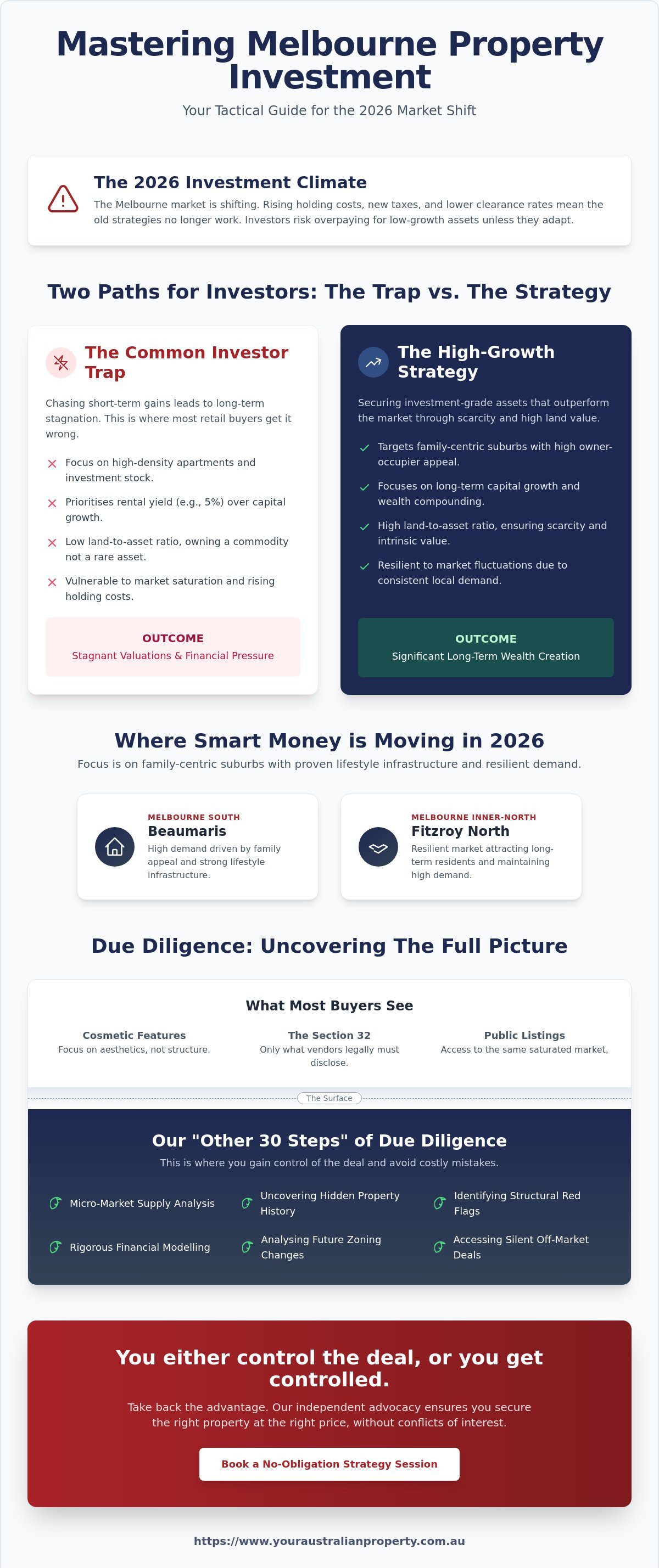
The 2026 market demands a departure from traditional thinking. Successful property investment melbourne isn’t about finding a cheap entry point. It’s about securing investment-grade assets that outperform the market average through scarcity and high land value. We see this all the time. Investors buy high-density apartments because the entry price is lower, only to find the asset stagnant while holding costs like the COVID-19 Debt Levy rise. True investment-grade property focuses on land-to-asset ratios in tightly held pockets where demand eternally outstrips supply. Unlike a traditional real estate agent who works for the vendor, a buyer’s advocate has a fiduciary duty to the buyer to ensure these metrics are met before a single dollar is committed.
The Yield Trap vs. Capital Growth Reality
Many investors get caught in the yield trap often discussed on platforms like Reddit. They chase a 5% rental yield but ignore the fact that the asset itself isn’t growing. In Melbourne, high-yield properties are frequently investment stock. These are mass-produced units with no unique value. Here’s where buyers get it wrong. They prioritise short-term cash flow over long-term wealth building. A blue-chip asset in an established suburb might offer a lower initial yield, but the power of capital compounding creates significantly more wealth over a ten-year horizon. You either control the growth potential of your portfolio or get controlled by rising taxes and flat valuations.
Melbourne Hotspots: Where the Smart Money is Moving
The 2026 pivot is clear. Smart money is moving toward family-centric suburbs in Melbourne’s south and inner-north. Suburbs like Beaumaris and Fitzroy North remain resilient because they offer lifestyle infrastructure that high-density zones lack. These areas attract long-term residents and maintain high demand despite broader market softening. To see the specific data driving these trends, explore our guide on the Best Suburbs to Invest in Melbourne for 2026. Successful property investment melbourne relies on identifying these pockets before the general public catches on.
Selecting Investment-Grade Assets: The Insider’s Tactical Framework
Finding a property is easy; finding an investment-grade asset is where most buyers fail. While the general public focuses on cosmetic features, we analyse the structural bones of the deal. This is why our Property Investment Melbourne service acts as your primary financial shield. We see this all the time. Investors buy into shiny new developments only to realise the land-to-asset ratio is negligible. For a successful Melbourne investment, scarcity and land value are non-negotiable metrics. If there are 100 identical units in the same postcode, you don’t own a rare asset. You own a commodity.
The 5-Step Selection Protocol for 2026
We use a disciplined approach to filter out the ‘investment stock’ traps that plague the 2026 market:
- Step 1: Micro-market analysis. We study local supply and demand cycles to ensure the suburb isn’t about to be flooded with new stock.
- Step 2: Assessing owner-occupier appeal. We prioritise properties that locals actually want to live in, which ensures consistent demand and better resale value.
- Step 3: Financial modelling. This includes rigorous capital growth projections and detailed holding cost analysis for the current tax environment.
Due Diligence: Beyond the Section 32
Here’s where buyers get it wrong. They assume a Section 32 tells the whole story. It doesn’t. It only tells you what the vendor is legally forced to disclose. We control the ‘other 30 steps’ behind the scenes, unearthing hidden property history and identifying zoning changes that could devalue your investment. Following official government guidance is a baseline, but our independent advocacy goes deeper to find structural red flags. This is how you avoid overpaying for a problem property. We even identify ‘off-market’ potential within listed properties by uncovering the vendor’s true motivation. You either control the deal or get controlled by the seller’s agent. If you want to move beyond surface-level searches, book a strategy session with our expert team.
Securing the Deal: Off-Market Access and Masterful Negotiation
The most lucrative property investment melbourne opportunities rarely appear on public portals. These “Silent Listings” are the engine room of the elite market. Selling agents often prefer a quiet sale to avoid marketing costs or to test the waters with qualified buyers. By the time a property hits the major search portals, you’re already competing with the emotional premium of the general public. Accessing Off-Market Properties Melbourne allows you to bypass the noise and negotiate in a vacuum of competition.
Negotiation is a psychological game of chess. You either control the deal or get controlled. Most buyers enter a negotiation focused solely on price, but we use “terms” to win the vendor’s favour. This might mean a shorter settlement or a larger deposit that provides the seller with immediate security. When it comes to auctions, our strategy is about controlling the room. We remove the emotion that leads to overpaying, ensuring you secure the asset at its true investment value without falling into the trap of a bidding war.
Real-World Scenario: The ‘Silent’ Success in Clifton Hill
A client came to us exhausted after six months of auction losses in Melbourne’s inner north. They were constantly outbid by emotional owner-occupiers who were willing to pay far above bank valuations. We leveraged our deep agent networks to identify a deceased estate in Clifton Hill before it was ever listed. By moving quickly and using a 48-hour sunset clause, we secured the property for $85,000 under market value. The lesson is simple. In a competitive market, access and speed are the ultimate currencies. We bypassed the public auction entirely, saving our client time, money, and significant stress.
Negotiation Tactics: Winning Without Overpaying
Here’s where buyers get it wrong. They reveal their hand too early and let the selling agent dictate the tempo. We act as an independent shield, protecting your budget from the tactics of professional negotiators. If you’ve already found a property but dread the high-stakes discussion, our Property Negotiation Service Melbourne provides the professional distance needed to win. We focus on the “other 30 steps” of the transaction, ensuring the final contract reflects your best interests, not the seller’s expectations.
Take Control of Your Melbourne Portfolio
Success in property investment melbourne is no longer about following the crowd. It requires a disciplined pivot toward capital growth and investment-grade assets in tightly held family suburbs. We’ve shown how the “other 30 steps” of due diligence and off-market access protect you from the yield traps and generic stock that compromise long-term wealth. You either control the deal or get controlled by a market that doesn’t share your interests.
Your Australian Property provides the shield you need. With 30+ years of Melbourne market expertise, we offer fiercely independent advocacy with zero seller conflicts. We secure your future by providing exclusive access to ‘silent’ off-market listings that never reach the general public. Our process replaces anxiety with calm confidence; we ensure every acquisition is backed by data and masterful negotiation.
Don’t leave your financial security to chance. Book your Melbourne Property Investment Strategy Session with Zac Newbold to secure an asset that truly performs. We look forward to helping you build a legacy with certainty.
Frequently Asked Questions
Is Melbourne a good place to invest in property in 2026?
Melbourne remains a primary choice for counter-cyclical investors seeking long-term growth. While dwelling values declined by 2.3% in the quarter to May 2026, the extremely tight 1.4% vacancy rate highlights a critical housing shortage. This creates a strategic window to secure high-quality assets before the forecast rebound in 2027. Successful property investment melbourne requires looking past short-term market softening to identify land-rich assets in established suburbs while competition is lower.
What is a good rental yield for a Melbourne investment property?
A typical gross rental yield in the current market ranges between 3% and 5% depending on the specific asset class. However, focusing solely on gross yield is where buyers get it wrong. You must account for the COVID-19 Debt Levy and the expanded land tax threshold of $50,000 when calculating your net position. We prioritise capital growth potential over high yields because long-term wealth is built through asset appreciation; not just rental income.
How do I find off-market investment properties in Melbourne?
Accessing off-market properties requires established relationships with local selling agents who handle “silent listings.” These properties are often sold privately to avoid marketing costs or to ensure a discreet transaction. We leverage our 30 years of industry networks to find these opportunities before they reach public portals. This is how you avoid overpaying at auctions where preliminary clearance rates have recently hovered around 52.3%.
Should I buy an apartment or a house for investment in Melbourne?
Houses generally provide superior capital growth because they possess a higher land-to-asset ratio. While the median house price in Melbourne is approximately $958,361, houses in family-centric suburbs attract more stable tenants and offer better scarcity than high-density units. For a robust property investment melbourne, we recommend avoiding mass-produced apartments. Boutique townhouses or houses in tightly held pockets remain the most resilient assets for building long-term equity.
Article by
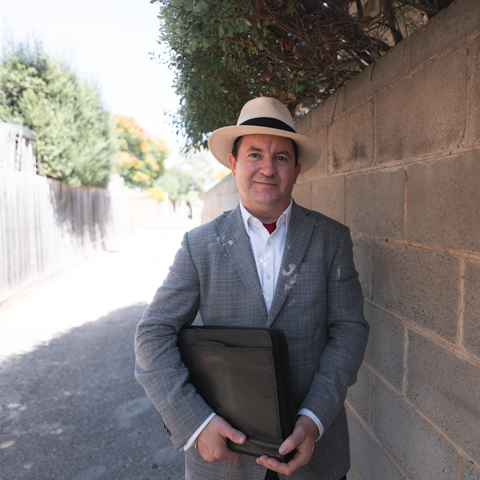
Zac Newbold – Founder & Managing Director – 30+ Years. Real Authority. Proven Results.
Zac Newbold is one of Melbourne’s most experienced Buyer’s Agents and a Fully Licensed Estate Agent since 2001.
With over 30 years inside the property market, Zac has seen exactly how buyers win – and exactly how they get overexposed, overbid, and overpay.
He’s worked across every layer of the industry – residential sales, boutique agencies, large franchise networks, property and asset management, corporate advisory, commercial real estate, and project management. That experience gives him a simple advantage: he knows how every player in the market thinks, moves, and negotiates.
At a certain point, he made a clear decision – stop working the system from all sides, and start working for one side only.
The buyer.
Because that’s where clarity matters. And that’s where deals are actually won.
Today, Zac represents buyers across Melbourne in residential and investment property, using a disciplined, strategy-led approach built on market intelligence, timing, and hard negotiation.
Through Your Australian Property Buyers Agents, Zac and his team give clients a real edge in the market – independent advice, structured strategy, and negotiation that’s designed to protect capital and win the deal.
His philosophy is simple: Treat every purchase like it’s your own money on the line – and never pay more than you have to.
Outside of property, Zac spends time with his wife and family and travels whenever the schedule allows.
If you’re serious about making your next property move, contact Zac Newbold and his team today to organise your confidential and complimentary Property Strategy Session.
Disclaimer
The information provided in this article is general in nature and is intended for educational and informational purposes only. It does not constitute financial, legal, or investment advice and should not be relied upon as such.
All property markets involve risk, and outcomes will vary based on individual circumstances. Readers should conduct their own due diligence and seek independent advice from qualified professionals before making any property or investment decisions.
While every effort has been made to ensure the accuracy of the information at the time of publication, Your Australian Property Buyers Agents makes no guarantees as to its completeness, reliability, or current relevance and accepts no responsibility for any loss or damage arising from reliance on this content.