

What if the 5% rental yield you’re chasing in Melbourne is actually a financial trap in disguise? Finding high yield investment properties melbourne that actually "pencil out" has become significantly harder as rising land taxes and the ongoing COVID Debt Levy eat into investor margins. We see this all the time; buyers focus on a headline percentage but forget to account for the structural shifts in the Victorian market that can turn a "bargain" into a liability.
You deserve a strategy that delivers both cash flow and capital growth without the sleepless nights. It’s a common anxiety in 2026, especially with the RBA cash rate at 3.85%, but securing a high-performance asset is still possible when you control the process. This guide will show you how to identify suburbs like Sunshine or St Albans where yields are hitting 5.2% to 5.4% while ensuring your investment remains a secure vehicle for long-term wealth.
We’ll explore the specific Melbourne suburbs currently outperforming the market, how to navigate the latest 2026 rental law updates, and why exclusive off-market access is your best shield against overpaying in a competitive environment.
Key Takeaways
- Learn to calculate true net yield in 2026 to ensure Victorian land taxes and the COVID Debt Levy don’t compromise your actual cash flow.
- Identify high yield investment properties melbourne within high-demand residential zones that offer a sustainable balance of immediate returns and capital growth.
- Discover why targeting a “Strategic Yield” of 4.5% to 5.5% in metropolitan Melbourne and regional hubs provides superior long-term security.
- Understand how accessing off-market silent listings allows you to bypass public competition and secure high-performance unlisted assets.
- Master the 30 hidden steps of the professional negotiation process to drive down your purchase price and maximise your starting yield.
Table of Contents
The Melbourne Rental Yield Landscape in 2026
Melbourne’s property market in 2026 is a study in contrasts. While the citywide vacancy rate sits at a tight 1.6%, finding sustainable high yield investment properties melbourne requires looking beyond the surface level percentages reported on major listing portals. The current environment is shaped by a structural shortage of housing and a rebounding migration rate. However, it’s also shadowed by the Victorian government’s $6.5 billion land tax revenue target, which can quickly erode profits for the uninformed.
Gross vs. Net Yield: The Real Numbers
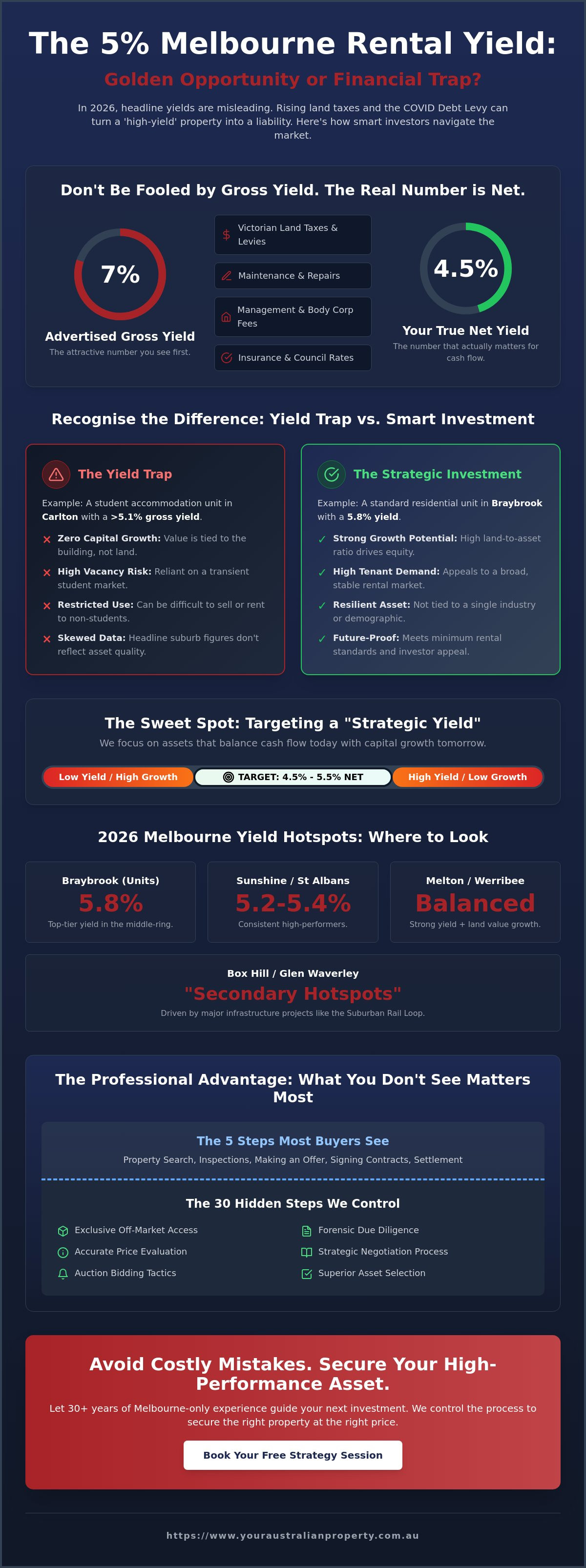
We see this all the time; an investor buys a property in Southbank or Travancore based on a high gross yield, only to realise their actual take-home return is significantly lower. Net rental yield is the annual rent minus all operating expenses, including management fees, insurance, maintenance, and the latest Victorian land tax levies, divided by the property value. This calculation is the only way to determine if a property truly "pencils out" in the 2026 tax environment.
This is where experience matters. A 4.5% net yield in a high-demand residential pocket often outperforms a 7% gross yield in a high-density tower where body corporate fees are skyrocketing. For a broader context on how these cycles play out, you can refer to this Australian property market overview. We prioritise assets that offer a buffer against rising holding costs while maintaining tenant appeal.
Why Suburb Data is Only Half the Story
Here’s where buyers get it wrong. They see Carlton listed with yields above 5.1% and jump in without realising those figures are often skewed by restricted student accommodation. These assets usually provide zero capital growth and carry high vacancy risks. In 2026, the real opportunities for property investment Melbourne wide are found in middle-ring suburbs like Braybrook, where unit yields are hitting 5.8% for standard residential titles.
The 2026 market differs from previous cycles because the "yield trap" has evolved. It’s no longer just about tiny apartments; it’s about properties that fail to meet the 2026 Victorian minimum standards or those burdened by the COVID Debt Levy. Success requires a disciplined look at the underlying asset type rather than just the postcode data. By focusing on quality over headline numbers, we ensure your portfolio remains resilient against future regulatory shifts.
Strategic Yield: Balancing Cash Flow and Capital Growth
Achieving a sustainable return requires a "Strategic Yield" mindset. We target the 4.5% to 5.5% bracket in high-demand residential zones because this range provides enough cash flow to service debt while leaving room for significant capital appreciation. Unlike basic search engines that prioritise gross percentages, our property investment Melbourne strategy looks at the total performance of the asset over a ten-year horizon. Securing high yield investment properties melbourne wide isn’t about finding the highest number on a screen; it’s about finding the smartest number for your portfolio.
Yield vs. Growth: The Investors Dilemma
Consider the difference between a high-density CBD unit showing a 6% yield and a balanced-yield townhouse in a suburb like Melton or Werribee. While the CBD unit looks better on a spreadsheet, the townhouse includes a land value component that drives equity. Controlling the process means choosing the asset that builds wealth, not just one that pays the bills. We prioritise properties where the land-to-asset ratio is high, ensuring your yield doesn’t come at the expense of your future capital gains.
Targeting the Right Tenant Profile
Yield stability depends entirely on who pays the rent. High-income professionals in suburbs like Fitzroy North or Richmond are less sensitive to cost-of-living pressures, ensuring your income remains consistent. Data from the Victorian Government Rental Report confirms that median rents are rising, but tenant quality varies wildly between postcodes. With Melbourne’s vacancy rate at a record low of 1.6%, you have the leverage to select premium tenants. If you want to see how these variables apply to your specific budget, feel free to speak with our advisors about your goals.
Securing High Yield Properties: The Professional Advantage
Securing high yield investment properties melbourne wide requires more than just a data subscription. While most buyers focus on the property itself, we focus on the acquisition process that determines your ultimate return. This is where experience matters. Identifying red flags like structural defects, high vacancy risks in specific pockets, or restrictive titles early prevents you from buying a high-yield asset that becomes a financial drain due to unforeseen maintenance issues.
The Power of Off-Market Access
Many of the best opportunities never reach public websites. Our off-market properties Melbourne service connects you with "silent listings" where vendors prioritise a discreet, efficient sale over a public campaign. This environment eliminates the emotional bidding wars that typically drive prices above market value. By accessing these unlisted assets, you gain a significant head start on yield-seekers who are limited to the same small pool of stock everyone else is fighting for.
Negotiation as a Yield-Booster
Yield isn’t just found; it’s manufactured through disciplined negotiation. Using a professional property negotiation service Melbourne wide allows you to shave significant amounts off the asking price. A lower entry price immediately boosts your cash-on-cash return. Here’s where buyers get it wrong: they assume the price on the portal is the price they must pay. While most buyers only see five steps in a purchase, we control the other 30 steps behind the scenes to ensure you don’t overpay.
Real-World Example: Creating Yield in a Tight Market
Last year, a client was struggling to find a property that met their 5% yield requirement in Melbourne’s competitive inner-north. Every auction they attended saw prices pushed 10% beyond their limit. We identified an off-market townhouse in a gentrifying pocket before it was photographed for listing. By leveraging our relationship with the agent and presenting a clean, unconditional offer with a 30-day settlement, we secured the asset for $45,000 below its projected auction reserve. The outcome was a 5.2% yield in a suburb where the average was 4.1%. The lesson learned is that yield is often won during the negotiation phase, not just through suburb selection.
If you’re ready to stop guessing and start building a portfolio based on proven data and exclusive access, you can Book a Strategy Session to map out your high-yield goals today.
Mastering Your Melbourne Investment Strategy
Securing high yield investment properties melbourne wide in 2026 requires a disciplined, data-led approach that prioritises net returns over headline figures. You now understand why net yield is the only metric that matters in the face of Victorian land taxes and why balancing immediate cash flow with capital growth is essential for your long-term security. Success doesn’t come from luck; it comes from controlling the 30 hidden steps of the acquisition process that most buyers never see.
This is where experience matters. With over 30 years as Melbourne’s leading independent buyer advocates, we act as your protective expert guide. We maintain an unwavering loyalty to you over the seller, providing exclusive access to a private tier of off-market opportunities that remain invisible to the general public. Our team is as invested in your outcome as you are, replacing financial anxiety with a sense of calm confidence and security.
Secure your next high-yield Melbourne investment with an expert buyer’s agent.
Take control of your financial future and start your journey toward a high-performance portfolio with total peace of mind today.
Frequently Asked Questions
What is considered a "good" rental yield in Melbourne for 2026?
A gross rental yield between 4.5% and 5.5% is considered a strong benchmark for residential assets in 2026. While some high-density pockets show higher headline figures, these often carry higher vacancy risks. We target the "Strategic Yield" sweet spot found in suburbs like Sunshine or St Albans, where yields currently range from 5.2% to 5.4%. This balance ensures you’re receiving consistent cash flow without sacrificing the potential for long-term capital appreciation.
How do the new Victorian land taxes affect my investment yield?
Victorian land taxes directly reduce your net return by increasing your annual holding costs and narrowing your profit margins. The ongoing COVID Debt Levy and adjusted thresholds mean that a property’s gross yield is no longer a reliable indicator of its performance. You must calculate your return after accounting for these specific levies and the Emergency Services and Volunteers Fund increase. This is why we prioritise net yield calculations to ensure your investment remains truly profitable.
Can I find high-yield properties off-market in Melbourne?
Exclusive off-market "silent listings" are frequently the source of the most lucrative high yield investment properties melbourne investors can access. By bypassing public auctions, you avoid the emotional bidding wars that typically inflate purchase prices. Securing a property for 5% to 10% less than its market value through professional negotiation immediately boosts your starting yield. These private opportunities provide a competitive edge that simply isn’t available on standard listing portals.
Is it better to invest in units or houses for high yield in Melbourne?
Units typically provide higher gross rental yields, while houses generally offer superior capital growth due to the higher land component. In the current market, Melbourne units are averaging yields of approximately 6.1%, significantly outperforming the 4.2% average for houses. However, you must be cautious. High body corporate fees in large complexes can quickly erode those gains. We often recommend townhouses or older villa units as they provide a better balance of yield and land value.
Article by
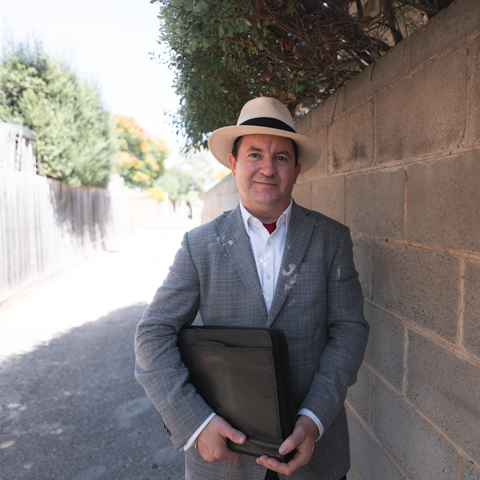
Zac Newbold – Founder & Managing Director – 30+ Years. Real Authority. Proven Results.
Zac Newbold is one of Melbourne’s most experienced Buyer’s Agents and a Fully Licensed Estate Agent since 2001.
With over 30 years inside the property market, Zac has seen exactly how buyers win – and exactly how they get overexposed, overbid, and overpay.
He’s worked across every layer of the industry – residential sales, boutique agencies, large franchise networks, property and asset management, corporate advisory, commercial real estate, and project management. That experience gives him a simple advantage: he knows how every player in the market thinks, moves, and negotiates.
At a certain point, he made a clear decision – stop working the system from all sides, and start working for one side only.
The buyer.
Because that’s where clarity matters. And that’s where deals are actually won.
Today, Zac represents buyers across Melbourne in residential and investment property, using a disciplined, strategy-led approach built on market intelligence, timing, and hard negotiation.
Through Your Australian Property Buyers Agents, Zac and his team give clients a real edge in the market – independent advice, structured strategy, and negotiation that’s designed to protect capital and win the deal.
His philosophy is simple: Treat every purchase like it’s your own money on the line – and never pay more than you have to.
Outside of property, Zac spends time with his wife and family and travels whenever the schedule allows.
If you’re serious about making your next property move, contact Zac Newbold and his team today to organise your confidential and complimentary Property Strategy Session.
Disclaimer
The information provided in this article is general in nature and is intended for educational and informational purposes only. It does not constitute financial, legal, or investment advice and should not be relied upon as such.
All property markets involve risk, and outcomes will vary based on individual circumstances. Readers should conduct their own due diligence and seek independent advice from qualified professionals before making any property or investment decisions.
While every effort has been made to ensure the accuracy of the information at the time of publication, Your Australian Property Buyers Agents makes no guarantees as to its completeness, reliability, or current relevance and accepts no responsibility for any loss or damage arising from reliance on this content.