

The obvious choice for interstate investors chasing yield has always been to stay local. But what if Melbourne’s rental market is quietly outperforming expectations in suburbs most Brisbane investors have never considered? That counterintuitive reality is exactly what’s driving a growing number of savvy Queensland investors across the border.
You already know the frustration. Finding high-yield rental suburbs in Melbourne for Brisbane investors sounds straightforward until you’re staring at gross yield figures that look impressive on a spreadsheet but collapse the moment Victorian land tax, Owners Corporation fees, and vacancy costs enter the picture. Melbourne is a net yield game. That distinction matters enormously, and most interstate buyers learn it the hard way.
This guide cuts through the noise. You’ll discover five to seven Melbourne suburbs where the numbers genuinely stack up, understand the true total cost of ownership in Victoria, and learn exactly how to secure a high-performing asset without boarding a single flight. We control the process from the ground up, so you don’t have to.
Key Takeaways
- Melbourne’s 2026 market cycle presents a genuine entry-point advantage for Brisbane investors, but only if you understand the critical difference between gross and net yield before committing capital.
- Identifying the best high-yield rental suburbs Melbourne for Brisbane investors requires looking beyond headline figures — suburbs like Broadmeadows and Carlton tell very different yield stories once total ownership costs are factored in.
- Owners Corporation fees and Victorian land tax thresholds are the two most common yield killers that interstate investors overlook, and understanding both can be the difference between a performing asset and a cash-flow drain.
- Melbourne’s inner-city unit market and outer-north growth corridors each offer distinct yield profiles — knowing which suits your investment strategy is what separates a calculated decision from an expensive guess.
- Controlling the acquisition process from Brisbane is entirely achievable, but it requires independent local representation that has no allegiance to the seller’s side of the transaction.
Why Brisbane Investors are Diversifying into Melbourne High-Yield Suburbs
Brisbane’s property cycle has been running hot. Entry prices have climbed sharply over the past three years, compressing yields to the point where cash-flow positive acquisitions are increasingly difficult to find without moving well outside the metro area. Melbourne tells a different story right now. A more subdued price growth cycle through 2023 and 2024 has created entry points that simply don’t exist in south-east Queensland anymore, and a tightening rental market is quietly pushing yields upward across specific suburban corridors.
That’s the timing argument. But timing alone doesn’t make a purchase intelligent.
Here’s where Brisbane investors consistently get it wrong: gross rental yield is the annual rent divided by the purchase price, expressed as a percentage, and in Melbourne’s unit market, it’s almost always a misleading starting figure because Victorian ownership costs can strip two to three percentage points from that headline number before you’ve paid a single bill.
The real opportunity in identifying high-yield rental suburbs Melbourne for Brisbane investors lies in understanding net yield after accounting for Victorian land tax, Owners Corporation fees, property management, and vacancy allowances. That calculation changes the suburb shortlist entirely.
Diversification is the other driver. A Queensland-heavy portfolio carries concentrated exposure to one economic cycle, one insurance market, and one legislative environment. Balancing that with Melbourne assets, which have historically demonstrated resilient rental demand through economic downturns, provides a genuine hedge. Melbourne’s diverse suburban landscape spans everything from high-density inner-city precincts to established outer-growth corridors, giving investors genuine optionality that a single-market strategy simply can’t replicate.
Melbourne vs. Brisbane Rental Dynamics in 2026
Melbourne’s inner-city vacancy rates have tightened considerably as international student enrolments have recovered strongly post-pandemic. Suburbs like Carlton sit adjacent to the University of Melbourne, creating structural tenant demand that’s largely independent of broader economic conditions. That tenant profile, students, young professionals, and healthcare workers, keeps turnover predictable and demand durable. Brisbane doesn’t have an equivalent inner-city rental dynamic at the same scale.
The Role of a Melbourne Buyer’s Agent for Interstate Success
Flying in for a weekend and attending two open homes isn’t due diligence. It’s guesswork with a plane ticket attached. Selling agents in Melbourne are skilled at creating urgency, and an out-of-town buyer without local representation is their ideal counterpart.
We control the thirty steps that happen before, during, and after the transaction while you stay in Brisbane. Independent property investment advisory means our loyalty sits entirely with you, not the vendor. That distinction is the difference between a calculated acquisition and an expensive lesson in interstate property.
Here’s how this plays out in the real world: A Brisbane-based investor identified a Carlton unit online showing a 5.8% gross yield. Impressed by the figure, he nearly proceeded without local representation. Our initial assessment revealed Owners Corporation fees of approximately $6,000 annually and a land tax liability that reduced his net yield to below 3.5%. We redirected his search to an outer-north suburb with a comparable gross figure but significantly lower ownership costs, securing an asset that genuinely performed to his cash-flow targets. The lesson: the suburb on the listing portal is never the whole story.
Identifying the best high-yield rental suburbs Melbourne for Brisbane investors requires suburb-level intelligence that no property portal provides. That’s exactly the advantage local, independent representation delivers.
Top Melbourne Suburbs for High Rental Yields in 2026
Not every Melbourne suburb belongs on your shortlist. The ones that do share three characteristics: structural tenant demand that doesn’t depend on economic conditions, entry prices that leave room for genuine net yield, and ownership cost profiles that don’t quietly erode your returns. Here’s where those suburbs actually are.
The Unit Market: Cash Flow vs. Capital Growth
Carlton remains the standout for 2026. Its proximity to the University of Melbourne creates a tenant pool that renews reliably each academic year, and ABS housing occupancy and rental cost data consistently shows Melbourne’s inner-city precincts among the nation’s tightest rental markets. That structural demand keeps vacancy low and rent growth steady.
Here’s where buyers get it wrong with Carlton specifically: not all units perform equally. The distinction between boutique blocks and high-density towers is critical, and it’s one most interstate investors miss entirely.
- Boutique blocks (typically under 20 units) carry lower Owners Corporation fees, stronger owner-occupier appeal, and better resale liquidity. They protect your capital.
- High-density towers often show impressive gross yields on paper, but Owners Corporation fees can run significantly higher, and resale competition from identical units in the same building compresses your exit options.
Southbank and Docklands tell a similar story. Gross yields in these precincts can reach the 6% to 8% range, but tower-heavy stock with high Owners Corporation levies and oversupply risk in certain building types demands careful filtering. The headline number is rarely the real number. Learn how we find off-market units in Melbourne that sit outside this oversupply risk entirely.
Family Houses: Security and Yield in the Outer Ring
The outer-north corridor is where the yield-to-entry-price equation shifts in your favour. Broadmeadows and Dallas offer house yields consistently above 4.5%, with median entry prices that remain accessible compared to inner-city alternatives. That combination is rare in Melbourne’s current market.
Infrastructure is the accelerant here. The North East Link project and ongoing upgrades to the Craigieburn rail corridor are actively improving connectivity between these suburbs and Melbourne’s CBD employment hubs. Tenant demand follows infrastructure. That’s not speculation; it’s a pattern this market has repeated across every major transport upgrade of the past two decades.
Identifying the best high-yield rental suburbs Melbourne for Brisbane investors in this corridor means looking at land-to-asset ratios, not just yield figures. A freestanding house on a genuine land holding in Broadmeadows carries a fundamentally different risk profile to a unit in Docklands, even if the gross yield looks similar on a comparison spreadsheet.
Regional Powerhouses: Geelong and Ballarat
Lower entry prices, stronger gross yields, and growing rental populations make Geelong and Ballarat legitimate alternatives for Brisbane investors with tighter acquisition budgets. Both cities have absorbed significant population growth from Melbourne’s post-pandemic decentralisation trend, and rental vacancy in both markets has remained tight as a result. The trade-off is reduced liquidity compared to metro Melbourne assets, which makes asset selection within these markets even more consequential.
Here’s how this plays out in the real world: A Brisbane investor came to us with a shortlist of three Carlton units, all showing gross yields above 6%. Two were in high-density towers with Owners Corporation fees exceeding $8,000 annually. The third was a boutique block of twelve with fees under $2,500 per year. Same suburb, same gross yield figure, completely different net yield outcome. We secured the boutique asset off-market, below comparable sales in the building, and the investor avoided a two-year wait on a tower resale that eventually sold at a loss. The lesson: the suburb is just the starting point. The asset type determines the result.
Knowing which suburb category suits your strategy is only half the equation. If you’re ready to move from research to a specific acquisition plan, book a strategy session and we’ll map the right suburb profile to your exact cash-flow targets.
The Melbourne ‘Yield Trap’: What Brisbane Investors Get Wrong
Gross yield is a vanity metric. Net yield is sanity. That single distinction is where most interstate investors lose money before they’ve collected a single week’s rent.
Three cost categories consistently blindside Brisbane buyers entering Melbourne for the first time. Understanding all three before you sign anything is non-negotiable.
Owners Corporation Fees: The Silent Yield Killer
In Melbourne’s high-rise sector, Owners Corporation fees are the most reliable way to destroy a yield figure that looked compelling on a listing portal. Annual levies in large towers can run from $6,000 to well above $10,000 depending on the building’s amenities, lift infrastructure, and maintenance reserves. That cost doesn’t appear in the gross yield calculation. It appears in your bank account, quietly, every quarter.
Here’s where buyers get it wrong: they compare gross yields across suburbs without ever requesting the OC fee schedule. Two units in the same street can show identical gross yields and produce net returns that differ by two full percentage points once OC fees are factored in. The building type matters as much as the suburb.
Victorian Land Tax: A Different Beast to Queensland
Victoria’s land tax structure applies to investment properties at thresholds and rates that differ meaningfully from Queensland’s framework. If you hold multiple Victorian properties, the cumulative land value calculation can push your liability into a higher bracket faster than most interstate investors anticipate. A single Melbourne investment might sit comfortably below the threshold. Add a second, and the combined assessment changes the picture entirely.
This isn’t a reason to avoid Melbourne. It’s a reason to model your land tax position accurately before committing capital, not after settlement.
Underquoting: Why the Sticker Price is Rarely the Sale Price
Melbourne’s underquoting culture is well-documented and genuinely problematic for interstate buyers making decisions remotely. A property quoted at $550,000 to $600,000 routinely sells above $680,000 at auction. If you’ve built your yield calculation on the quoted range, the numbers that justified the purchase no longer exist by the time the hammer falls.
Local representation isn’t a luxury in this environment. It’s the only reliable defence against a system designed to create competition and compress your negotiating position.
Due Diligence Checklist: Five Things to Check Before Signing
- Section 32 vendor statement: Read it in full. Upcoming special levies, cladding rectification notices, and building defect orders are disclosed here. They’re also easy to miss if you don’t know what you’re looking for.
- OC fee schedule and minutes: Request the last two years of Owners Corporation meeting minutes. Planned capital works, unresolved disputes, and deferred maintenance tell you far more than the annual fee figure alone.
- Land tax modelling: Calculate your Victorian land tax liability based on the assessed site value, not the purchase price. Your accountant needs this figure before you bid, not after.
- Comparable sales, not quoted ranges: Use actual sold prices from the past six months to establish a realistic price ceiling. Australian Bureau of Statistics housing occupancy and cost data provides a useful baseline for understanding rental cost benchmarks across Melbourne’s diverse submarkets.
- Vacancy history for the specific property: A suburb’s average vacancy rate doesn’t tell you about the unit on level fourteen that’s been relisted three times in eighteen months. Ask for the tenancy history directly.
Here’s how this plays out in the real world: A Brisbane investor came to us locked onto a Docklands unit showing a 7% gross yield. The Section 32 revealed two things the listing hadn’t mentioned: annual OC fees of $9,200 and a pending cladding rectification levy with an estimated owner contribution of $18,000. That single asset would have consumed years of rental income before generating a cent of genuine return. We redirected the search to a boutique Carlton block with twelve units, lower overheads, and no outstanding levies. The net yield landed at 6.5%, with better resale liquidity and zero hidden liabilities. The lesson: identifying the best high-yield rental suburbs Melbourne for Brisbane investors is only half the job. Identifying the right asset within that suburb is where the real work happens.
Securing the Deal: Negotiation and Bidding from Interstate
Never let a selling agent guide your interstate purchase. Their obligation is to the vendor. Their skill is creating urgency in buyers who don’t have local context to push back against it. That dynamic is even more pronounced when you’re operating from Brisbane with limited market visibility.
Melbourne auctions move fast. Bidding strategy, reserve intelligence, and competitor profiling are skills built over decades of standing in those rooms. Our auction bidding service for interstate buyers puts thirty years of Melbourne negotiation experience between you and a result that costs you more than it should. We control the bid. You stay in Brisbane.
This is where experience matters. Not in identifying a suburb, but in knowing exactly when to bid, when to hold, and when to walk away from a room that’s running against you. That discipline is what separates a well-priced acquisition from an expensive one.
If you’re ready to move from research to a specific acquisition plan, our property negotiation service gives you the independent representation Melbourne’s market demands. Book a strategy session and we’ll map the right approach to your exact targets.
Your Next Move in Melbourne Starts Here
Melbourne’s 2026 rental market rewards preparation, not impulse. The investors who win aren’t the ones who found the highest gross yield figure on a listing portal. They’re the ones who understood net yield, avoided the Owners Corporation traps, and secured the right asset type within the right suburb.
Three things determine whether identifying high-yield rental suburbs Melbourne for Brisbane investors translates into a genuinely performing asset: knowing which suburbs carry structural tenant demand, understanding the true cost of ownership before you commit, and having independent local representation that sits entirely on your side of the transaction.
That’s exactly what 30 years of Melbourne market experience, complete independence from sellers, and direct access to off-market listings delivers. You stay in Brisbane. We control the process, the negotiation, and the outcome.
Your next step is a conversation, not a commitment.
The right Melbourne asset is out there. Let’s find it together.
Frequently Asked Questions
What is a good rental yield in Melbourne for 2026?
A net yield of 4% to 5% is a realistic and genuinely strong target in Melbourne’s 2026 market, depending on the suburb and asset type. Gross yields in inner-city precincts can reach 6% to 8%, but ownership costs strip that figure down considerably. The benchmark that matters is what lands in your account after Victorian land tax, Owners Corporation fees, property management, and vacancy allowances are deducted. Chasing gross yield without modelling net return is where most investors go wrong.
How do Melbourne’s rental yields compare to Brisbane right now?
Brisbane’s entry prices have climbed sharply over the past three years, compressing net yields to a point where cash-flow positive acquisitions are increasingly difficult to find within the metro area. Melbourne’s more subdued price growth through 2023 and 2024 has created entry points that simply don’t exist in south-east Queensland anymore. That gap is exactly why identifying high-yield rental suburbs Melbourne for Brisbane investors has become a serious portfolio diversification strategy rather than a fringe idea.
Are there hidden costs for interstate investors buying in Victoria?
Yes, and three categories catch Brisbane buyers most often. Victorian land tax applies to investment properties at thresholds and rates that differ meaningfully from Queensland’s structure, and holding multiple Victorian assets can push your combined land value into a higher bracket faster than expected. Owners Corporation fees in high-rise buildings can run from several thousand dollars to well above ten thousand annually. Pending special levies, including cladding rectification costs, can appear in a Section 32 vendor statement and represent a significant unbudgeted liability. None of these appear in a gross yield figure.
Can a buyer’s agent help me find unlisted high-yield properties?
That’s precisely where independent local representation earns its value. A significant share of Melbourne’s best-performing assets never appear on listing portals at all. They transact through direct vendor relationships, agent networks, and off-market channels that are only accessible through sustained local presence. Our access to Melbourne’s silent market means you’re not competing with every other buyer who spotted the same listing on a Saturday morning. That competitive advantage is what allows us to secure assets at prices that reflect value, not auction-room urgency.
How do I know I’m not overpaying for a Melbourne investment property?
This is where experience matters. Melbourne’s underquoting culture means quoted price ranges are routinely set well below realistic sale prices, and interstate buyers without local context are the most exposed to that dynamic. The defence is straightforward: build your price ceiling from actual comparable sales over the past six months, not from the quoted range on the listing. Independent representation means your advocate’s only obligation is to your outcome, not to closing a transaction. We walk away from rooms that run against you. Selling agents don’t.
What does a buyer’s agent do in Melbourne for an interstate client?
We control the thirty steps that happen before, during, and after your transaction while you stay in Brisbane. That means suburb-level research, asset shortlisting, property inspections, due diligence on Section 32 documents and Owners Corporation records, comparable sales analysis, negotiation or auction bidding, and settlement coordination. You don’t board a flight. You don’t sit across from a selling agent whose loyalty sits entirely with the vendor. You get independent local representation with no allegiance to the seller’s side of the deal, and a process designed to protect your capital at every stage.
Article by
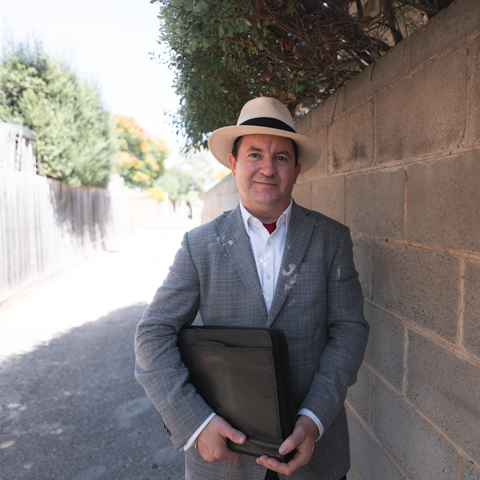
Zac Newbold – Founder & Managing Director – 30+ Years. Real Authority. Proven Results.
Zac Newbold is one of Melbourne’s most experienced Buyer’s Agents and a Fully Licensed Estate Agent since 2001.
With over 30 years inside the property market, Zac has seen exactly how buyers win – and exactly how they get overexposed, overbid, and overpay.
He’s worked across every layer of the industry – residential sales, boutique agencies, large franchise networks, property and asset management, corporate advisory, commercial real estate, and project management. That experience gives him a simple advantage: he knows how every player in the market thinks, moves, and negotiates.
At a certain point, he made a clear decision – stop working the system from all sides, and start working for one side only.
The buyer.
Because that’s where clarity matters. And that’s where deals are actually won.
Today, Zac represents buyers across Melbourne in residential and investment property, using a disciplined, strategy-led approach built on market intelligence, timing, and hard negotiation.
Through Your Australian Property Buyers Agents, Zac and his team give clients a real edge in the market – independent advice, structured strategy, and negotiation that’s designed to protect capital and win the deal.
His philosophy is simple: Treat every purchase like it’s your own money on the line – and never pay more than you have to.
Outside of property, Zac spends time with his wife and family and travels whenever the schedule allows.
If you’re serious about making your next property move, contact Zac Newbold and his team today to organise your confidential and complimentary Property Strategy Session.
Disclaimer
The information provided in this article is general in nature and is intended for educational and informational purposes only. It does not constitute financial, legal, or investment advice and should not be relied upon as such.
All property markets involve risk, and outcomes will vary based on individual circumstances. Readers should conduct their own due diligence and seek independent advice from qualified professionals before making any property or investment decisions.
While every effort has been made to ensure the accuracy of the information at the time of publication, Your Australian Property Buyers Agents makes no guarantees as to its completeness, reliability, or current relevance and accepts no responsibility for any loss or damage arising from reliance on this content.