

Table of Contents
- The Best Strategy for First Home Buyers Starts With Financial Clarity
- How Much Deposit Do You Actually Need for Your First Home
- Lenders Mortgage Insurance Explained: What It Costs and How to Avoid It
- First Home Buyer Grants Australia: Every Scheme Worth Knowing in 2026
- Stamp Duty Concessions by State: What First Home Buyers Can Claim
- Property Market Research, Location Analysis and the Hidden Costs of Buying
- Auction Versus Private Treaty: The Best Strategy for First Home Buyers at the Pointy End
- Common Bad Advice First Home Buyers Should Ignore
Last Updated: August 4, 2026
The best strategy for first home buyers is a sequence of decisions made in the right order, at the right time, with a clear financial picture from the start. At Your Australian Property Buyers Agents, we have guided buyers through Melbourne’s competitive market for over 30 years, and the pattern is consistent: buyers who build their strategy around financial clarity before inspecting properties make smarter decisions, move faster, and pay less.
Your deposit strategy, loan pre-approval, grant eligibility, and property research all need to happen in parallel. Buyers who struggle are those who spend six months saving, then discover they qualified for a scheme that could have had them in the market three months earlier.
The Best Strategy for First Home Buyers Starts With Financial Clarity
Financial clarity is the foundation of every successful first home purchase. Without it, you are essentially bidding blind, and Melbourne’s property market has no patience for indecision.
Understanding Your Borrowing Capacity
Borrowing capacity is the maximum amount a lender will loan you based on your income, expenses, existing debts, and dependants. Lenders apply a buffer rate above the current interest rate to stress-test your ability to repay if rates rise.
A common mistake is assuming the number a bank quotes you is what you should borrow. Lenders calculate the maximum they are willing to risk. Your actual budget should factor in your lifestyle, job security, and hidden costs. Borrowing at your ceiling leaves no room for rate increases, maintenance surprises, or life changes.
Start with ASIC’s MoneySmart borrowing power calculator to get an independent estimate before approaching any lender.
Factors that directly affect your borrowing capacity include gross income and employment type, existing liabilities, monthly living expenses, deposit amount, and the number of applicants on the loan.
Getting Home Loan Pre-Approval Right
Pre-approval is a lender’s conditional agreement to lend you a specified amount, subject to satisfactory property valuation and final verification. It is the difference between making a credible offer and losing a property to someone who moved faster.
The process typically takes between three and ten business days. A mortgage broker can run your application across multiple lenders simultaneously, which saves time and protects your credit score from multiple hard enquiries.
Pre-approval is valid for a set period, commonly 90 days, so time your application to align with when you plan to actively make offers.
How Much Deposit Do You Actually Need for Your First Home
The minimum deposit for most standard home loans in Australia is 20% of the purchase price, but first home buyers have multiple pathways that significantly reduce this threshold. The First Home Guarantee allows eligible buyers to purchase with as little as a 5% deposit without paying Lenders Mortgage Insurance, because the federal government guarantees the remaining 15% to the lender.
The Help to Buy Scheme, which opened applications in December 2025, allows eligible buyers to enter the market with as little as a 2% deposit. The government contributes between 5% and 30% of the purchase price for an existing home, or up to 40% for a new build, in a shared equity arrangement where the government holds a proportional stake in the property.
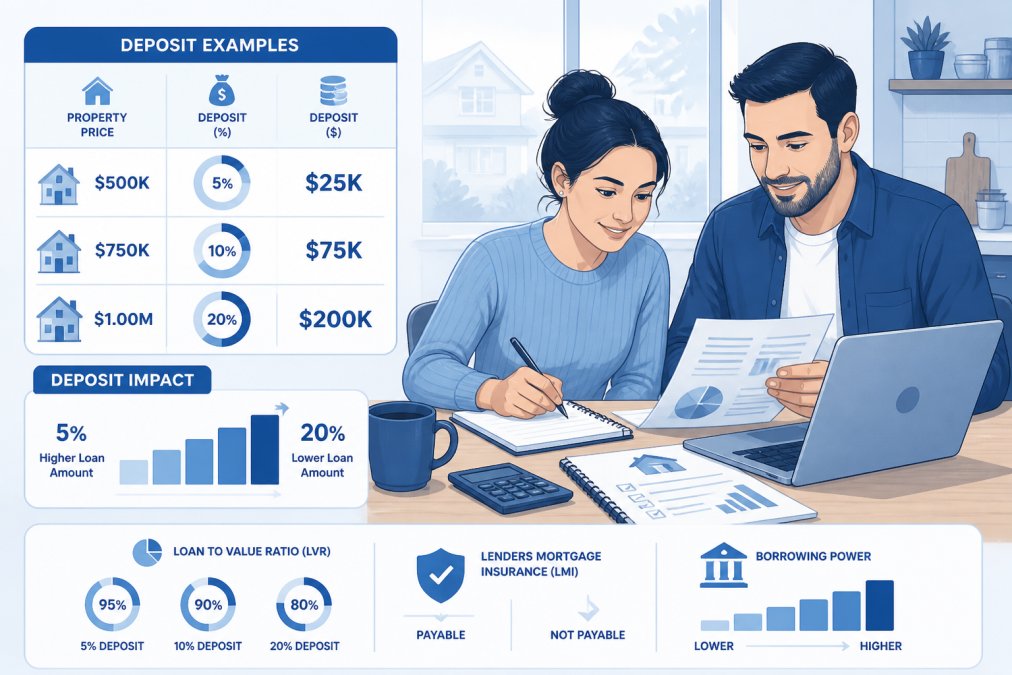
For buyers outside these schemes, the practical deposit target is 20% to avoid Lenders Mortgage Insurance costs.
Saving Faster With the First Home Super Saver Scheme
The First Home Super Saver Scheme allows first home buyers to make voluntary contributions into their superannuation fund and later withdraw those contributions, along with associated earnings, to use as a home deposit. Contributions are taxed at the concessional super rate of 15%, considerably lower than most buyers’ marginal income tax rate.
You can contribute up to $15,000 per financial year, with a total release cap of $50,000 across all years. According to the Australian Taxation Office’s FHSS Scheme guidance, you must apply to the ATO for a determination before requesting a release of funds, and the funds must be used to purchase or construct a home within 12 months of release.
Lenders Mortgage Insurance Explained: What It Costs and How to Avoid It
Lenders Mortgage Insurance is an insurance policy that protects the lender, not the borrower, if the borrower defaults on a loan where the deposit is less than 20% of the property’s value. Despite protecting the lender, the cost is passed directly to the buyer and is typically capitalised onto the loan, meaning you pay interest on it for the life of the loan.
The cleanest ways to avoid LMI include saving a 20% deposit, qualifying for the First Home Guarantee, accessing the Help to Buy Scheme’s shared equity arrangement, or using a guarantor loan where a family member’s property equity secures the shortfall.
First Home Buyer Grants Australia: Every Scheme Worth Knowing in 2026
Australia’s grant and incentive landscape for first home buyers is genuinely useful, but it is fragmented across state and federal governments, with eligibility rules that differ in ways that catch people out.
First Home Owner Grant by State
The First Home Owner Grant is a one-off payment from state and territory governments to eligible first home buyers purchasing or building a new home. It is not means-tested, but is restricted to new or substantially renovated properties in most states.
Current grant amounts vary considerably by jurisdiction. The Northern Territory offers up to $50,000 for new builds. Tasmania increased its grant to $20,000 from July 2026. Western Australia offers $10,000. Victoria’s FHOG applies to new homes in regional areas. For current Victorian amounts and eligibility criteria, refer directly to the State Revenue Office Victoria FHOG page.
First Home Guarantee and Help to Buy Scheme
The First Home Guarantee is administered by Housing Australia and allows eligible buyers to purchase with a 5% deposit without paying LMI. As of October 2025, income caps and place limits were removed, broadening access considerably. Property price caps apply and vary by region.
The Help to Buy Scheme is the federal government’s shared equity programme. The government takes a proportional stake in the property, reducing your upfront deposit requirement and ongoing mortgage repayments. CommBank is currently the only major lender participating. For full eligibility criteria and participating lenders, check the Housing Australia Help to Buy Scheme page.
Stamp Duty Concessions by State: What First Home Buyers Can Claim
Stamp duty is a state government tax on property transactions and represents one of the largest upfront costs for any buyer. Every Australian state and territory offers some form of concession or exemption for first home buyers, though thresholds and structures differ significantly.
| State / Territory | Key First Home Buyer Concession |
|---|---|
| Victoria | Full exemption on homes up to a set threshold; concession above that |
| New South Wales | Stamp duty exemption or reduced rate up to property value cap |
| Queensland | Concession available for owner-occupied first homes |
| Western Australia | Exemption or reduced duty depending on property value |
| South Australia | Stamp duty exemption for eligible first home buyers |
| Tasmania | Concession available; check current thresholds |
| ACT | Progressive concession scheme for eligible buyers |
| Northern Territory | First home owner discount available |
Because thresholds change with state budgets, always verify current figures with your state’s revenue office before budgeting. A conveyancer can confirm your eligibility and calculate the exact duty payable during the contract review stage.
Property Market Research, Location Analysis and the Hidden Costs of Buying
Choosing the right location is about identifying suburbs where fundamentals, infrastructure investment, population growth, rental demand, and proximity to employment hubs support long-term capital growth. A practical suburb analysis should include days on market for comparable properties, auction clearance rates, infrastructure projects and zoning changes, school catchment areas if relevant, and public transport access.
Building and Pest Inspections, Conveyancing and Settlement Costs
The hidden costs of buying a home extend well beyond the purchase price and stamp duty. Budget for building and pest inspection fees, conveyancing or solicitor fees, loan application and establishment fees, Lenders Mortgage Insurance if applicable, council rates and water rates adjusted at settlement, and moving costs.
A building and pest inspection is non-negotiable for any established property. It identifies structural defects, active pest infestations, and maintenance issues that a vendor has no obligation to disclose.
Post-Purchase Maintenance Budgeting: The Cost Nobody Warns You About
A reasonable maintenance reserve for a typical Australian home is between 1% and 2% of the property’s value per year, set aside specifically for repairs and upkeep. Buyers who do not budget for this end up using credit cards or redraw facilities, which undermines the equity they have worked to build.
Auction Versus Private Treaty: The Best Strategy for First Home Buyers at the Pointy End
Choosing between auction and private treaty is a strategic decision that affects your negotiating position, your access to cooling-off rights, and your ability to conduct due diligence before committing.
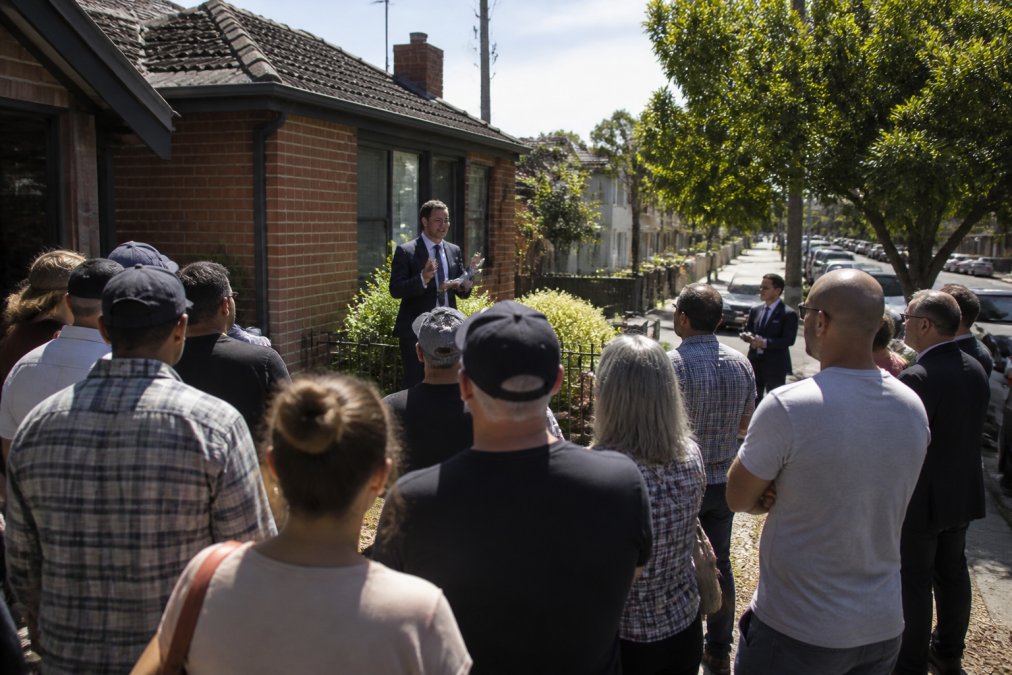
Private treaty sales offer a cooling-off period in most states, giving you time to conduct inspections, review the contract, and arrange finance after signing. Auctions offer no cooling-off period. If you bid and win, you are unconditionally committed from the fall of the hammer.
For first home buyers, private treaty is generally lower risk because it preserves the right to conduct due diligence before becoming legally bound.
Psychological Preparation for Bidding: How to Stay Rational Under Pressure
Auction psychology is real, and experienced agents exploit it. The competitive environment, crowd, auctioneer’s pace, and fear of missing out combine to push buyers past their limits. The practical defence is a hard limit set before you arrive, not a soft ceiling you are prepared to stretch. Write the number down and agree that neither you nor your co-bidder will exceed it without a deliberate conversation away from the auction floor.
Alternative Ownership Models Worth Considering
Co-ownership or co-purchasing: Buying with a friend, sibling, or partner to split the deposit and mortgage burden. This accelerates market entry but requires a legally binding co-ownership agreement that addresses what happens if one party wants to sell, refinance, or defaults.
Rentvesting: Purchasing an investment property in an affordable location while continuing to rent where you want to live. This builds equity and gives you a foothold in the property market without requiring you to compromise on where you live. The trade-off is that you do not access the First Home Owner Grant or most first home buyer concessions.
Common Bad Advice First Home Buyers Should Ignore
Some of the most repeated advice for first home buyers is either outdated, oversimplified, or actively harmful.
“Wait until you have a 20% deposit.” For many buyers in Melbourne, waiting for a 20% deposit means waiting years while prices move further out of reach. The First Home Guarantee exists precisely because the 20% threshold was creating a structural barrier.
“Buy the worst house in the best street.” This is a renovation strategy, not a first home strategy. Renovation projects carry cost blowouts, council approvals, and holding costs that are genuinely stressful for first home buyers with tight budgets.
“Use a real estate agent to help you buy.” A selling agent works for the vendor. Their legal obligation is to achieve the best outcome for the seller, not for you. This does not make them dishonest, but their interests are structurally misaligned with yours at every point in the negotiation.
The team at Your Australian Property Buyers Agents operates on the opposite model: fully independent, working exclusively for the buyer, with no financial relationship with any selling agent or developer. That independence is what makes objective advice possible. Most clients secure the right property within 60 days, and access to off-market and pre-market opportunities means the search is rarely limited to what is publicly listed.
According to the Real Estate Buyers Agents Association of Australia’s guidance on buyer representation, using an accredited buyer’s agent provides access to independent advocacy that a selling agent cannot legally offer.
Frequently Asked Questions
What government grants are available for first home buyers in Australia?
First home buyers in Australia can access several schemes in 2026. The First Home Owner Grant (FHOG) is a one-off state-administered payment, ranging from $10,000 in some states to $50,000 in the Northern Territory for new builds. The First Home Guarantee lets eligible buyers purchase with a 5% deposit without paying Lenders Mortgage Insurance. The Help to Buy shared equity scheme, open from December 2025, allows the federal government to contribute up to 40% toward a new build. The First Home Super Saver Scheme also lets you save your deposit inside superannuation at concessional tax rates.
How much deposit do I need to buy my first home in Australia?
The standard deposit is 20% of the purchase price, which avoids Lenders Mortgage Insurance. Through the First Home Guarantee scheme, eligible first home buyers can purchase with as little as 5% deposit without paying LMI, because the government guarantees the remaining portion to the lender. The Help to Buy shared equity scheme reduces the required deposit further, to as low as 2% for eligible buyers. Your actual deposit target depends on your target property price, the suburb, and which government scheme you qualify for.
How does stamp duty exemption or concession work for first home buyers in Australia?
Stamp duty concessions vary by state and territory. In Victoria, for example, eligible first home buyers purchasing a property below a set threshold may receive a full exemption or a reduced rate. Thresholds and concession amounts differ significantly across states, so the saving available in Queensland, New South Wales or Western Australia will not be the same as in Victoria. Your conveyancer or solicitor can confirm exactly what applies to your purchase, and most state revenue offices publish up-to-date eligibility tables on their websites.
What is the difference between home loan pre-approval and unconditional approval?
Pre-approval (also called conditional approval) is a lender’s preliminary assessment that you can borrow up to a certain amount, based on your income, expenses and credit history. It is not a guarantee of finance. Unconditional approval is issued after the lender has assessed a specific property and is satisfied with its valuation and your full application. Pre-approval is essential before you bid at auction or make an offer, because it confirms your budget and signals to agents and vendors that you are a serious buyer.
Is it better to buy a house or apartment as a first home buyer in Melbourne?
There is no single answer. Houses in Melbourne’s middle and outer rings have historically shown stronger capital growth over the long term, but apartments in well-located suburbs offer a lower entry price and lower maintenance burden. The best strategy for first home buyers is to evaluate both options against your borrowing capacity, target suburb profile, lifestyle needs, and long-term goals. A buyer’s agent with data-driven property analysis can help you weigh capital growth potential against affordability before you commit.
What are the hidden costs of buying a home that first home buyers often miss?
Beyond the deposit and stamp duty, first home buyers should budget for building and pest inspections, conveyancing fees, loan application fees, mortgage registration fees, and moving costs. Once you own the property, ongoing costs include council rates, water rates, landlord or home-and-contents insurance, and maintenance. A commonly overlooked item is post-purchase maintenance: setting aside roughly 1% of the property’s value per year for repairs and upkeep is a practical starting point for budgeting.
This article was written using GrandRanker