

Table of Contents
- What Does a Buyers Agent Cost in 2026
- Breaking Down What’s Included in Full-Service Engagement
- Factors That Influence Your Total Cost
- Is a Buyers Agent Worth It: ROI and Real Outcomes
- Benefits of Using a Melbourne Buyers Advocate
- How to Choose a Buyers Agent That Delivers Value
- Hidden Costs and GST: What You Actually Pay
- Conclusion
Last Updated: August 22, 2026

What Does a Buyers Agent Cost in 2026
A buyers agent typically charges between 1.2% and 2.75% of the purchase price, or a fixed fee ranging from $8,000 to $25,000 plus GST, depending on the engagement model and property value. But here’s what matters: the fee structure is only half the story. What determines whether you’re getting value is understanding what’s included, how fees are negotiated, and what return you’re likely to see.
At Your Australian Property Buyers Agents, we’ve spent over 30 years watching how buyers win and lose in Melbourne’s property market. We control the process, the negotiation, and the outcome. Most buyers only see five steps. We control the other 30. The difference happens behind the scenes, and that’s where a buyers agent cost becomes an investment, not an expense.
Here’s where buyers get it wrong: they focus on the fee number and miss the actual value. According to REBAA’s 2023 buyer satisfaction survey, 85% of buyers believed their buyers agent helped them secure a better deal than they could have achieved alone. That’s not luck. That’s experience, negotiation skill, and knowing how to avoid overpaying.
Percentage-Based Fees vs Flat Fee Structures
Percentage-based fees tie the agent’s earnings directly to the purchase price, aligning incentives with yours. Flat fee structures remove this tension entirely, you pay a fixed amount regardless of purchase price. Hybrid models are increasingly common, combining percentage and fixed components based on your criteria and budget.
What matters most: understand which model your agent uses and why. We see this all the time, buyers comparing agents on fee percentage alone and missing that a lower percentage on a higher purchase price costs more in absolute dollars than a higher percentage on a lower price. The real question isn’t the percentage; it’s the total investment and what you get for it.
Initial Retainers and Success Fees
Most buyers agents in Melbourne require an upfront engagement fee or retainer, typically 20% to 50% of the estimated total fee. This covers the agent’s time during the search phase, market research, property analysis, and due diligence before any purchase happens. It also signals buyer commitment.
Success fees are what you pay when the property settles. If you don’t purchase, you lose the retainer but don’t owe the success fee. This structure protects you: you’re not paying full fees for a failed search.
Here’s where experience matters: negotiate the retainer split. Some agents will reduce the retainer if you commit to a longer search window or agree to a higher success fee. The engagement agreement should be crystal clear on what happens if the search extends beyond your timeline or if you find a property yourself partway through.
Breaking Down What’s Included in Full-Service Engagement
A full-service buyers agent engagement typically covers five core areas: property search, negotiation, due diligence, strategy, and settlement.
Property search means the agent actively sources properties on and off-market, shortlists candidates against your criteria, and presents options with analysis. Off-market access is where independent agents earn their fee. These properties never appear on public portals. You get first look, less competition, and better negotiation position. Our Off-Market Properties Melbourne service gives you exclusive access to opportunities most buyers never see.
Negotiation is where most buyers underestimate the value. The agent structures your offer, manages counteroffers, knows the seller’s motivation and constraints, and uses market data to anchor discussions. We see this all the time, buyers negotiate themselves into bad positions because they don’t know what leverage they actually hold. Our Property Negotiation Service Melbourne handles this strategically on your behalf.
Due diligence covers pest and building inspections, title research, council records, zoning verification, and market comparable analysis. The agent coordinates inspectors, interprets reports, and flags risks. Our Property Due Diligence process ensures nothing is overlooked.
Strategy is the 30+ steps most buyers never see. It includes market timing, price positioning, contingency planning, and exit strategies if the deal falls through. We control the process. That control comes from strategy.
Settlement support means the agent liaisons with your solicitor, coordinates final inspections, and ensures nothing derails at the final hurdle.
Not all agents include all five phases. The engagement agreement should specify exactly what’s included and what costs extra.
Factors That Influence Your Total Cost
Five variables determine your final fee: property price, service scope, market conditions, property type, and agent experience level.
Property price is the obvious one. Service scope matters significantly, full-service costs more than negotiation-only. Market conditions influence urgency and complexity. In a tight seller’s market with high competition, agents charge more because the work is harder and the stakes are higher. Property type affects due diligence requirements. A new apartment requires less investigation than a 1970s weatherboard house with potential structural issues. Agent experience level creates a spectrum. A 30-year specialist with a track record of significant savings per client commands a premium that reflects proven results, market connections, and risk reduction.
This is how you avoid overpaying: understand which factors apply to your situation and negotiate accordingly.
Is a Buyers Agent Worth It: ROI and Real Outcomes
The ROI calculation is straightforward: subtract the agent fee from the savings you negotiated, then divide by the fee. But the calculation assumes the agent actually saved you money. You can compare the price you paid to recent comparable sales, ask the agent what they negotiated, and benchmark against similar properties in the same suburb.
What the data shows is this: according to Property Investment Professionals of Australia’s 2023 survey, 40% of buyers considered using an agent in 2023, up from 10% a decade ago. That growth reflects increasing confidence in the value proposition.
We see this all the time. A buyer finds a property they love, makes an offer, and the agent negotiates significant savings off the asking price. That’s not magic. That’s knowing how to read the market, understanding the seller’s timeline, and having the confidence to push when others would cave.
The ROI isn’t just about purchase price savings. An agent saves you time. An agent reduces risk by catching structural issues, zoning problems, or market timing mistakes before you commit. An agent gives you negotiation leverage you wouldn’t have alone.
Calculating Your Return on Investment
Here’s the framework: (Negotiated Saving – Agent Fee) / Agent Fee = ROI %.
Net gain equals saving minus agent fee. ROI equals net gain divided by agent fee. This is where agent selection matters. Not all agents deliver equal savings. The difference between a good agent and an excellent one is often significant on a single property. Over a lifetime of purchases, that compounds. property management costs.
How do you evaluate an agent’s track record? Ask for case studies. Ask what the average saving is on their transactions. Ask for references from buyers who purchased similar properties in similar markets. A confident agent will provide this. A vague agent won’t.
Real-World Savings Example
Sarah, a Melbourne doctor, wanted to build a portfolio of high-yield properties. She engaged a buyers agent firm to shortlist investment-grade properties.
The off-market opportunities are where the value emerged. One was a townhouse listed on the open market by the owner’s agent. The buyers agent knew the owner was motivated to sell quickly due to a job relocation. They negotiated directly with the owner and secured the property at a significant discount.
The lesson: the biggest savings often come from off-market access, not from negotiating down asking prices. An agent’s network and reputation determine how many off-market deals they can access. This is where experience matters most.
Benefits of Using a Melbourne Buyers Advocate
Independent advice is the foundation. A buyers advocate works exclusively for you. We work exclusively for buyers. No selling. No conflicts of interest. A real estate agent selling the property has an incentive to close fast at any price. A Buyer Advocates Melbourne service has an incentive to close smart at the right price.
Access to off-market properties is a tangible advantage. Sellers and their agents use trusted buyers agents to test buyer appetite before listing publicly. You get first look, less competition, and better negotiation position. Most buyers never see these properties.
Data-driven analysis replaces emotion. A buyers agent tells you whether a property is priced fairly, whether the suburb is appreciating, whether it’s a good investment, and what comparable properties sold for recently. This clarity prevents costly mistakes.
Negotiation expertise is where the fee pays for itself. An agent knows the seller’s motivation, understands market timing, reads counteroffers strategically, and knows when to push and when to accept.
Stress reduction is underrated. Property buying is emotionally and logistically exhausting. An agent handles inspections, due diligence, paperwork coordination, and settlement logistics.
Risk minimisation happens across dozens of small decisions. The agent flags zoning restrictions, identifies structural issues, spots market timing mistakes, and catches contractual red flags. One prevented mistake justifies the entire fee.
How to Choose a Buyers Agent That Delivers Value
Start with independence. Is the agent fully independent, or do they have ties to developers, real estate agencies, or lenders? Conflicts of interest undermine advice. We work exclusively for buyers. That independence is non-negotiable.
Verify experience in your specific market. A Melbourne specialist knows the micro-markets, which suburbs are appreciating, which are stalling, and which have upcoming infrastructure that will unlock value.
Ask for proof of results. What’s the average saving on their transactions? What’s the average time to purchase? Do they have case studies in your price range and property type? A confident agent provides this.
Check their network. Do they have relationships with off-market sources? Can they access properties before they hit public portals? This is where the value often emerges.
Evaluate their communication style. Do they explain their reasoning? Do they push back on your assumptions when the data suggests a different direction? Do they educate you throughout the process? A good agent makes you smarter about property.
Assess their fee structure clarity. Is the engagement agreement crystal clear on what’s included, what costs extra, what happens if the search extends, and what the retainer covers? Vague fee agreements lead to disputes.
Red Flags in Contracts and Fee Agreements
Non-refundable retainers with no clear success-fee structure are a red flag. You should know exactly how much you’ll owe upon settlement.
Percentage fees with no cap are problematic. Negotiate a maximum fee or tiered pricing that reduces percentage on higher values.
Vague service scope is a trap. "Full service" means different things to different agents. The agreement should specify every service included and every service that costs extra.
Long lock-in periods without exit clauses are unfair. What happens if you find a property yourself after three months? Negotiate a reasonable timeline with an exit option.
Conflicting incentive structures are warning signs. If the agent earns more on higher prices, that’s a potential conflict. If the agent is also a mortgage broker or property manager, that’s another conflict. Independence matters.
Hidden Costs and GST: What You Actually Pay
The fee you see isn’t the total cost. GST applies to the agent’s fee in Australia. This is standard and expected, but it surprises buyers who calculate ROI without including GST.
Other costs may apply depending on the engagement: due diligence costs for pest inspections, building reports, and council searches typically run $1,500 to $3,000. Auction bidding fees range from $500 to $2,000 plus a success fee. Property appraisal fees for independent valuations typically cost $400 to $800. Legal fees for your solicitor and lender’s valuation fees are separate from the buyers agent fee.
The engagement agreement should clearly separate what’s included in the buyers agent fee from what you’ll pay separately. Some agents bundle everything into one fee. Others itemise costs. Both approaches are fine as long as they’re transparent.
This is how you avoid overpaying: ask upfront what the total cost will be, including GST and all ancillary fees. Don’t just look at the agent fee in isolation.
Choosing a buyers agent isn’t just about finding someone to help you buy a property. It’s about controlling the process, the negotiation, and the outcome. The fee you pay is an investment in expertise, access, and results. The best agents deliver savings that far exceed their cost.
Your Australian Property Buyers Agents brings 30+ years of experience to every transaction. We know how buyers win and lose. We control the other 30 steps most buyers never see. We avoid costly mistakes and help you secure the right property at the right price.
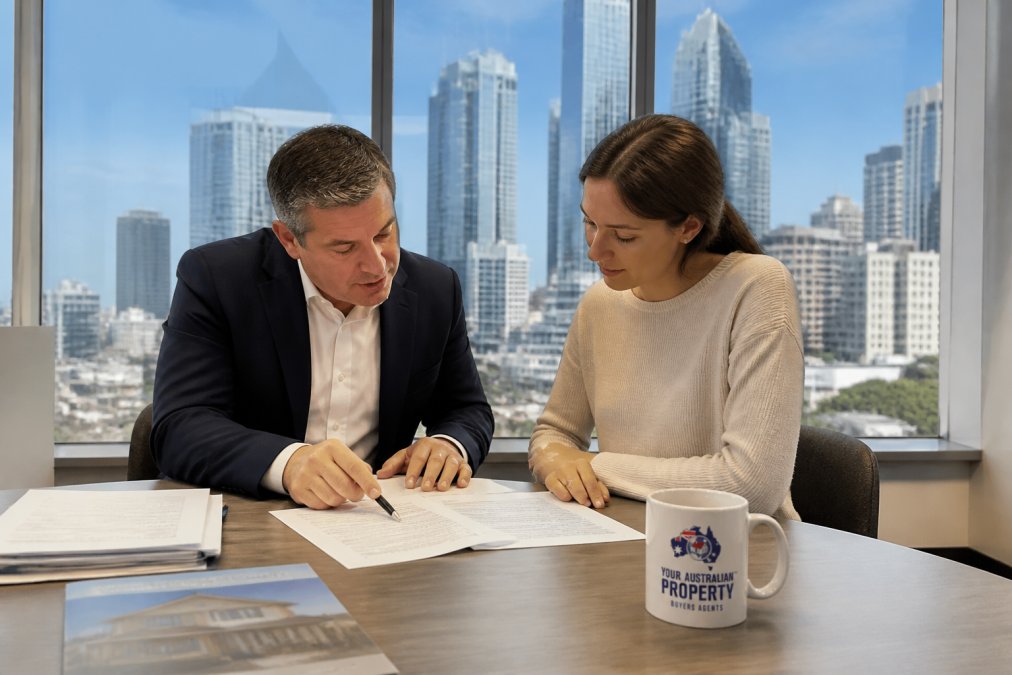
Book a free Strategy Session today. We’ll walk through your criteria, timeline, and budget. We’ll explain our process, answer your questions, and show you exactly how we help buyers like you avoid overpaying and secure the right property faster.
=== FAQ ANSWERS (audit these too, same rules) ===
[1] Q: Is a buyers agent worth the investment for property purchasers?
A: Yes, when structured correctly. Buyers surveyed in 2023 reported that 85% believed their agent helped them secure a better deal than they could alone. The key is selecting an agent aligned with your budget and timeline, and understanding exactly what services are included before you commit.
[2] Q: How are buyers agent fees typically structured in the property market?
A: Fees come in three main models: percentage-based (1.2-2.75% of purchase price), flat fees ($8,000-$25,000 depending on scope), or hybrid structures combining both. Most agents require an upfront retainer (typically 20% to 50% of the estimated total fee) deducted from the final fee upon purchase. Success fees may apply for negotiation-only or auction-bidding services. Always clarify what’s included, property search, due diligence, negotiation, settlement support, before signing.
[3] Q: How can a buyers agent help me avoid overpaying for a property?
A: Experienced agents control the negotiation process through market intelligence, comparable sales data, and vendor psychology. They identify structural issues, negotiate confidently without emotional attachment, and know when to walk away. A Melbourne agent with 30+ years of experience has seen thousands of sales and knows exactly where buyers typically overpay. They also access off-market properties, giving you options sellers haven’t marketed broadly.
[4] Q: What should I look for when choosing a buyers agent?
A: Prioritise independence (no selling conflicts), local market depth (especially for your suburb), transparent fee agreements, and a track record of negotiation wins. Ask for references from recent buyers in your price bracket. Avoid agents who push you toward higher-priced properties or rush the process. Check whether they offer post-settlement support and have access to off-market opportunities. Interview at least two agents before committing.
Frequently Asked Questions
Is a buyers agent worth the investment for property purchasers?
Yes, when structured correctly. Buyers surveyed in 2023 reported that 85% believed their agent helped them secure a better deal than they could alone. The key is selecting an agent aligned with your budget and timeline, and understanding exactly what services are included before you commit.
How are buyers agent fees typically structured in the property market?
Fees come in three main models: percentage-based (1.2-2.75% of purchase price), flat fees ($8,000-$25,000 depending on scope), or hybrid structures combining both. Most agents require an upfront retainer (typically 20% to 50% of the estimated total fee) deducted from the final fee upon purchase. Success fees may apply for negotiation-only or auction-bidding services. Always clarify what's included, property search, due diligence, negotiation, settlement support, before signing.
How can a buyers agent help me avoid overpaying for a property?
Experienced agents control the negotiation process through market intelligence, comparable sales data, and vendor psychology. They identify structural issues, negotiate confidently without emotional attachment, and know when to walk away. A Melbourne agent with 30+ years of experience has seen thousands of sales and knows exactly where buyers typically overpay. They also access off-market properties, giving you options sellers haven't marketed broadly.
What should I look for when choosing a buyers agent?
Prioritise independence (no selling conflicts), local market depth (especially for your suburb), transparent fee agreements, and a track record of negotiation wins. Ask for references from recent buyers in your price bracket. Avoid agents who push you toward higher-priced properties or rush the process. Check whether they offer post-settlement support and have access to off-market opportunities. Interview at least two agents before committing.
This article was written using GrandRanker