

Table of Contents
- Understanding the 2026 Property Market
- Stamp Duty Exemptions for First Home Buyers
- Getting Mortgage Pre-Approval and Knowing Your Borrowing Capacity
- Off-Market Property Opportunities: Where Buyers Win
- Auction Bidding Strategy for Competitive Markets
- Property Due Diligence Checklist: What to Inspect and Why
- Common Mistakes First Home Buyers Make
- Real-World Example: How Nathan and James Secured Their First Home
Last Updated: August 19, 2026
Most first home buyers focus on the property itself. They see the four walls, imagine themselves living there, and make an emotional decision. But here’s what we see all the time: the buyers who win aren’t the ones who fall in love with a house. They’re the ones who control the process, the negotiation, and the outcome. Your Australian Property Buyers Agents has spent 30+ years watching Melbourne buyers succeed and fail, and the difference isn’t luck, it’s strategy.
The 2026 market is fundamentally different from even two years ago. Interest rates have shifted borrowing capacity. Government grants have expanded. Prices have corrected. This guide covers what actually matters in 2026, not generic advice you’ll find everywhere else.
Understanding the 2026 Property Market
Melbourne’s property market has entered a critical phase. The median dwelling value sits at $826,132, with values rising 4.6% annually according to Cotality’s Home Value Index (2026). But here’s where most guides get it wrong: they focus on price movement and miss the real story.
The real story is about your borrowing capacity. According to Canstar’s 2026 first home buyer analysis, an average income earner’s maximum borrowing capacity had fallen by an estimated $35,400 since January 2026, whilst couples seeking to buy had theirs slashed by $70,700. Lower prices sound good until you realise you can borrow less.
This creates a two-tier market. Properties under $600,000 are moving faster because first home buyers can actually afford them. Properties above that are sitting longer. Suburbs matter more than ever, not because of lifestyle, but because of serviceability. A property in a growth corridor with strong transport links and employment density is easier to justify to a lender than an equivalent property further out.
We see this all the time: buyers get pre-approval for $650,000, fall in love with a $680,000 property in an outer suburb, and then can’t get the loan approved because the lender won’t service it. Here’s where experience matters: you need to understand not just what you can borrow, but what a lender will actually lend on. That’s different, and it changes your suburb strategy entirely.
| Market Factor | 2026 Reality | What It Means for Buyers |
|---|---|---|
| Median dwelling value | $826,132 | Entry point for established homes; new builds often cheaper |
| Annual growth rate | 4.6% | Modest growth; less pressure to rush |
| Days on market | 34 days | Faster sales; less time to negotiate |
| Borrowing capacity | Down $35-71k | Suburb and property type critical |
Stamp Duty Exemptions for First Home Buyers
Victoria’s stamp duty exemption for first home buyers applies to properties under $600,000 with a sliding concession up to $750,000. That’s a genuine saving, but only if you structure your purchase correctly.
Here’s where buyers get it wrong: they think the exemption applies automatically. It doesn’t. You need to claim it, and you must be a first home buyer, the property must be your principal place of residence, and it must be valued within the threshold.
Off-the-plan purchases get better treatment. If you’re buying a new apartment or townhouse off-the-plan, you get a First Home Owner Grant for new homes valued under $750,000 in Metro Melbourne, plus the stamp duty exemption. That’s substantial government support combined.
We see this all the time: buyers overlook off-the-plan opportunities because they’re worried about construction risk or settling in 12 months. But when you do the maths on the grants plus the exemption, plus longer settlement periods, the numbers change dramatically.
The federal Help to Buy scheme also opened in 2026, allowing eligible first home buyers to purchase with a 5% deposit instead of 10% or 20%. Combined with state grants, the total government support available is substantial.
This is how you avoid overpaying: understand what government support you actually qualify for, then build your strategy around it. Most buyers don’t.
Getting Mortgage Pre-Approval and Knowing Your Borrowing Capacity
Mortgage pre-approval isn’t optional in 2026. It’s the foundation of your entire buying strategy. Without it, you’re competing blind. With it, you know exactly what you can afford, which suburbs are realistic, and which properties to pursue.

Pre-approval tells you three things: how much you can borrow, what interest rate you’ll pay, and how long the approval is valid. Most pre-approvals last 90 days, which means you need to find and make an offer within that window.
Here’s where experience matters: lenders assess serviceability differently. One lender might approve you for $700,000. Another might approve you for $650,000. Get pre-approval from at least two lenders. Compare not just the amount, but the conditions.
We see this all the time: buyers get pre-approval, find a property, make an offer, and then the lender pulls the approval because the property doesn’t meet their lending criteria or the valuation comes in lower than expected. You’ve lost the property and damaged your negotiating position.
This is how you avoid this: get pre-approval conditional on a valuation, not unconditional. Understand exactly what the lender will and won’t lend on. Ask about property type restrictions. Know your limits before you start bidding.
Your borrowing capacity isn’t your maximum offer. It’s your ceiling. Your actual offer should be 10-15% lower, which gives you negotiating room and a buffer if the valuation comes in soft.
Off-Market Property Opportunities: Where Buyers Win
This is where most buyers lose without realising it. They search online, attend open houses, and bid at auctions. They’re competing against everyone. But the properties that generate the best outcomes often never hit the market publicly.
Off-market properties are listed privately before (or instead of) going public. The seller’s agent might contact a handful of qualified buyers directly. Why does this matter? Competition. When a property goes to auction, you’re competing against 20, 30, sometimes 50 other bidders. When you’re one of three qualified buyers being shown a property privately, you’re negotiating, not competing.
We see this all the time: a property sells for $680,000 at auction. Three months later, an identical property in the same street sells for $620,000 off-market. The difference isn’t the property. It’s the process.
Access to off-market properties requires relationships. Real estate agents need to know you’re a serious buyer. They need to trust that you’ll move fast and close the deal. Most first home buyers don’t have these relationships, which is why they never see these opportunities.
This is how you avoid overpaying: get access to off-market properties before they hit the public market. This requires working with someone who has those relationships. Your Australian Property Buyers Agents has 500+ real estate connections across Melbourne specifically because off-market access is where the real wins happen.
Auction Bidding Strategy for Competitive Markets
Auctions are theatrical. They’re designed to trigger emotion, create urgency, and push prices higher. Most first home buyers walk in unprepared, get caught up in the moment, and bid beyond their limit. tips for moving house.
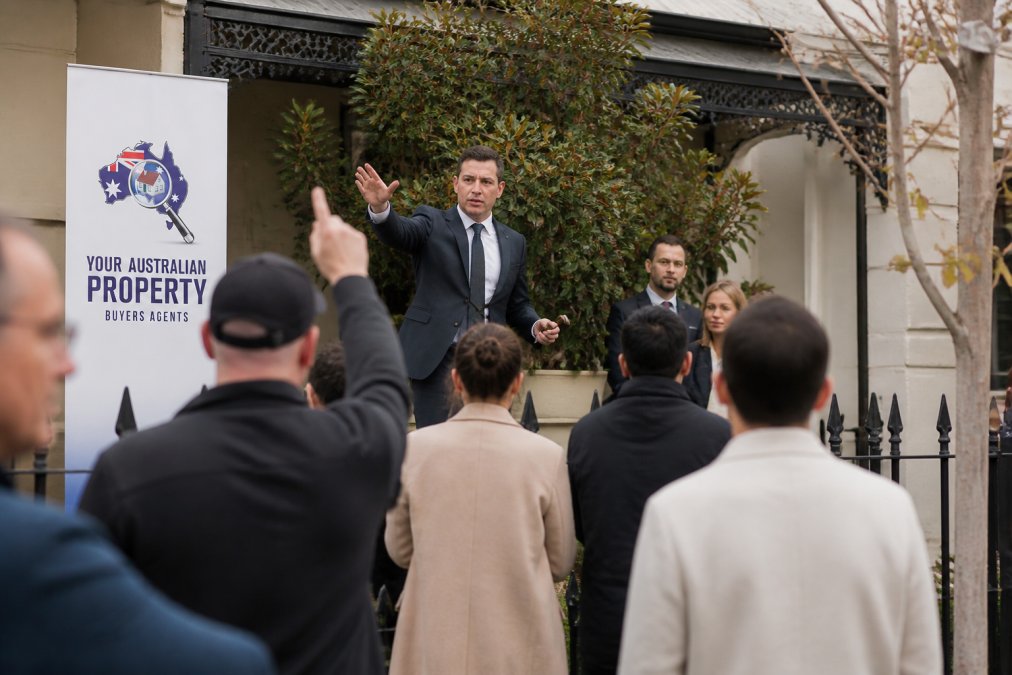
Here’s where buyers get it wrong: they think the auction starts when the auctioneer opens the bidding. It doesn’t. The auction starts weeks before, when the property is being marketed and your research is happening. By the time you’re in the auction room, you should already know your maximum bid and your walk-away price.
Set your limit before the auction. Write it down. Don’t negotiate with yourself in the room. If the bidding goes past your limit, you’re out. We see this all the time: buyers tell themselves they’ll only go to $680,000, then in the heat of the moment they go to $710,000. They win the auction. They lose financially.
Understand the reserve. The reserve is the lowest price the seller will accept. If bidding doesn’t reach the reserve, the property is passed in and can be negotiated privately. This is actually an opportunity. Passed-in properties often sell for less because the seller has lost momentum.
Bid strategically. Don’t bid in small increments. Bid in larger increments to signal strength and discourage other bidders. If you’re the only serious bidder, bid smaller increments to keep the price down.
This is how you avoid overpaying: treat the auction as a negotiation, not a competition. Your goal isn’t to win the auction. It’s to secure the property at the right price. Sometimes that means walking away.
Property Due Diligence Checklist: What to Inspect and Why
Due diligence separates buyers who win from buyers who regret. Most first home buyers do a basic building inspection and assume they’ve done their research. They haven’t. There are 30+ factors that determine whether a property is actually a good buy.
Start with the building inspection. Hire a licensed building inspector, not a handyman mate. A proper inspection identifies structural issues, roof condition, plumbing, electrical, and major defects.
Get a pest report. Termites and borers cost thousands to treat. We see this all the time: buyers skip the pest report to save money, then discover thousands in termite damage after settlement.
Check the Section 32. This is the seller’s disclosure statement. It lists known defects, council notices, planning restrictions, and easements. Read it carefully.
Research the neighbourhood. Walk the streets at different times of day. Talk to neighbours. Check crime statistics. Understand traffic patterns, noise, and flood risk. A property might be structurally sound but in a declining area.
Check council records. Has the property had multiple planning applications? Are there development applications nearby? Has the council issued any notices?
Understand the market position. Is the property overpriced for the suburb? Underpriced? How long are comparable properties sitting on the market? If this property is priced significantly below comparable sales, there’s usually a reason.
Here’s where experience matters: most of these checks take hours, not minutes. You need to do them before you make an offer, not after. Once you’ve made an offer, you’re emotionally invested.
| Due Diligence Item | Why It Matters | Red Flags |
|---|---|---|
| Building inspection | Identifies structural defects | Major repairs needed, old roof, plumbing issues |
| Pest report | Identifies termites, borers | Active infestation, previous treatment |
| Section 32 | Seller’s legal disclosure | Undisclosed defects, planning restrictions |
| Council records | Planning and compliance history | Multiple notices, development nearby |
| Neighbourhood research | Long-term viability | High crime, declining values, poor schools |
| Market positioning | Price accuracy | Significantly under or overpriced |
Common Mistakes First Home Buyers Make
We’ve watched thousands of first home buyers move through the market. The successful ones share common patterns. The unsuccessful ones share common mistakes.
Mistake 1: Falling in love with the property. Emotion is the enemy of good buying decisions. You’re not buying a home, you’re making a financial investment that happens to be where you’ll live. If you fall in love, you’ll overpay. We see this all the time: buyers walk into a property, imagine themselves living there, and suddenly the price doesn’t matter. It does. Control emotion. Make decisions on data.
Mistake 2: Not understanding your real borrowing capacity. Pre-approval doesn’t equal what you can actually afford. Lenders are willing to lend more than you should borrow. Calculate your actual serviceability. Can you comfortably pay the mortgage if interest rates rise? If not, you’re borrowing too much.
Mistake 3: Ignoring interest rate sensitivity. Interest rates won’t stay where they are now. If you’re borrowing at the absolute maximum of your capacity, what happens if rates rise? Your repayments jump significantly. Build a buffer into your borrowing.
Mistake 4: Skipping due diligence to save time. The market moves fast, and first home buyers feel pressure to move faster. But skipping inspections, pest reports, or council checks to save a week is false economy. One missed termite infestation costs more than a year of faster buying.
Mistake 5: Not negotiating. Most first home buyers accept the asking price or bid the asking price at auction. They don’t negotiate. But negotiation is where experience matters. A skilled negotiator can save thousands on a purchase.
Mistake 6: Choosing the wrong suburb. First home buyers often choose based on lifestyle without understanding market fundamentals. Some suburbs are growing. Others are declining. Choose based on data, not vibe.
Mistake 7: Not understanding the settlement process. Settlement is when you actually own the property. Most first home buyers don’t understand what happens between contract and settlement, which is why they get surprised by costs, delays, or conditions they didn’t anticipate.
This is how you avoid these mistakes: work with someone who’s seen them a thousand times before. Your Australian Property Buyers Agents has guided thousands of first home buyers through this process. We know where buyers get it wrong because we see it all the time.
Real-World Example: How Nathan and James Secured Their First Home
Nathan and James were first home buyers in Melbourne’s competitive market. They’d been saving for three years and were pre-approved for $580,000. Their combined income was solid, but their borrowing capacity had been cut by rising interest rates.
Their problem: they wanted to buy in an inner suburb they loved, but properties there were selling for $680,000 to $750,000. They couldn’t qualify for that amount.
Their strategy: they shifted suburbs. Instead of chasing lifestyle, they focused on fundamentals: transport, employment density, growth trajectory, and rental demand. They identified three suburbs where properties were priced $580,000 to $620,000, had strong transport links, and were experiencing 5-7% annual growth.
They got access to off-market properties in these suburbs through a buyer’s agent. They saw three properties before they were publicly listed. They negotiated on two of them. One was passed in at auction; they negotiated directly with the seller and secured it below the reserve.
Their outcome: they purchased a three-bedroom townhouse in a growth corridor with strong equity position and room to grow. Within six months, comparable sales had increased. More importantly, they avoided overpaying and secured a property in a fundamentally sound location.
Their lesson: the best outcome isn’t the most beautiful property or the most fashionable suburb. It’s the property that’s correctly priced, in a location with strong fundamentals, negotiated strategically.
The difference between buyers who win and buyers who regret comes down to one thing: process. Most buyers focus on the property. We focus on everything that determines whether it becomes a successful purchase: the market, the timing, the negotiation, the due diligence, the strategy.
This is what 30+ years of Melbourne property experience teaches: the property itself matters less than the process you use to buy it. Get the process right, and the property takes care of itself. Get it wrong, and even a great property becomes a poor investment.
Your Australian Property Buyers Agents controls the process. We control the negotiation. We control the outcome. Book a free strategy call to discuss your situation and learn how we can help you avoid costly mistakes and secure the right property at the right price.
Frequently Asked Questions
Is there a First Home Owner Grant in Victoria for 2026?
Yes. Eligible first home buyers in Victoria can access a $10,000 First Home Owner Grant (FHOG) for new homes valued under $750,000 in Metro Melbourne, or $20,000 in Regional Victoria. You'll also receive stamp duty exemption for properties under $600,000, with a sliding concession up to $750,000. Combined with federal schemes like the First Home Guarantee and Help to Buy, eligible first home buyers can access over $50,000 in combined government savings in 2026.
How much do I need to earn to borrow $500,000 for a home loan?
Borrowing capacity depends on your income, expenses, interest rates and the lender's serviceability calculations. However, higher interest rates have reduced borrowing power significantly. An average income earner's maximum borrowing capacity fell by an estimated $35,400 since January 2026, while couples seeking to buy had theirs slashed by $70,700. You'll need mortgage pre-approval to know your exact borrowing capacity. A broker can help you understand what you can realistically borrow given current rates.
What's the difference between off-market and auction properties?
Off-market properties are sold privately before being listed publicly, giving you a head start and less competition. Auction properties are sold to the highest bidder on a set day, creating time pressure and competitive bidding. Off-market opportunities often allow for negotiation and cooling-off periods, while auctions are unconditional and final. We see first home buyers win more often and pay less when they access quality off-market opportunities early, before the market sees them.
What should I check during a property inspection?
Your property due diligence checklist should cover structural integrity (cracks, dampness, foundation issues), roof condition, plumbing and electrical systems, pest damage, drainage and water pressure, heating and cooling systems, and any signs of previous flooding. Always order a professional building inspection and pest report before committing. Check the Section 32 (disclosure document) carefully for any issues the seller has declared. This is where experience matters, hidden defects can cost tens of thousands to fix after purchase.
How can a buyer's advocate help me avoid overpaying?
A buyer's advocate controls the process, negotiation and outcome on your behalf. We have access to confidential sales data, off-market opportunities and 500+ real estate connections across Melbourne. We know how buyers win and lose. Most buyers only see 5 steps; we control the other 30. We negotiate strategically, bid with confidence at auctions, and help you avoid costly mistakes like emotional bidding, poor due diligence or paying above market value. The difference happens behind the scenes.
Will house prices drop further in Melbourne in 2026?
Melbourne's median dwelling value is $826,132, still below its March 2022 peak. Recent data shows values rose 0.3% in November, 1.6% over the quarter, and 4.6% annually. Independent forecasters are tipping price growth of 5-9% through 2026, with KPMG predicting 6.6% growth for houses and 7.1% for units. Melbourne's improved affordability compared to other capitals, rising population growth and tight housing supply are driving this outlook. However, interest rates remain a key variable.
This article was written using GrandRanker