

Sydney is for vanity, but Melbourne is for profit. While the harbour city captures the headlines, the smart money is focused on the massive $600,000 price gap that has opened up between these two markets. When you analyse Melbourne vs Sydney property investment returns in 2026, the data is clear; Sydney is hitting a price ceiling while Melbourne offers a tactical entry point with significantly lower capital requirements. We see this all the time; investors get blinded by prestige and miss the actual margin.
We know the hesitation. You’re likely worried about overpaying in a peaking Sydney market or feeling stuck in analysis paralysis over Victorian land tax changes. It’s a common hurdle, but you either control the deal or get controlled by the market. This article cuts through the noise to show you why Melbourne’s $995,000 median house price creates a superior total return profile. We will identify the specific suburbs with the highest growth potential and show you how our 30 years of independent advocacy secures the assets that never hit the public portals. It’s time to stop guessing and start executing with confidence.
Key Takeaways
- Leverage the $600,000 price gap to enter the Melbourne market at a tactical discount while Sydney prices reach an unsustainable peak.
- Analyse Melbourne vs Sydney property investment returns to see how higher rental yields and lower entry costs create a superior total return profile for 2026.
- Navigate Victorian land tax changes like a professional by focusing on sustainable price to income ratios and long-term asset selection.
- Discover how independent advocacy and off-market access allow you to bypass auction fever and secure exclusive assets before they hit the public market.
- Master the A-grade asset rule to identify specific Melbourne suburbs that offer the best resilience and future capital growth potential.
Table of Contents
The $600,000 Gap: Why Melbourne is the Tactical Choice in 2026
Sydney prices are gasping for air while Melbourne is primed for a marathon. The gap between these two cities has stretched to a staggering $600,000. This isn’t just a rounding error; it’s a fundamental shift in how the Australian property market overview reveals tactical opportunities for the next decade. When you analyse Melbourne vs Sydney property investment returns, you see that Sydney has hit a psychological and financial ceiling. Investors chasing Sydney growth often find themselves with zero cash flow and a massive mortgage. We see this all the time; people buy for vanity and pay for it in liquidity. Melbourne is currently deeply undervalued relative to its population trajectory and infrastructure pipeline.
Analysing the Median Price Arbitrage
The numbers are clear. As of June 2026, the Melbourne median house price sits at $995,000. In Sydney, you are looking at significantly higher entry points for comparable assets. This $600,000 difference represents a once in a decade entry point for portfolio builders. It allows you to secure high quality assets without the crippling debt levels seen north of the border. Here’s where buyers get it wrong; they wait for the "perfect" time and miss the value window. That $600,000 in saved capital could easily fund the deposits for additional investment properties in high growth corridors, effectively doubling your market exposure for the same initial outlay.
Population Growth and Demand Fundamentals
Melbourne is on track to become Australia’s largest city by 2031. This isn’t speculation; it’s a demographic certainty fueled by massive interstate migration and a robust infrastructure pipeline. Projects like the Metro Tunnel are physically reshaping the city, creating new high yield pockets in suburbs that were previously overlooked. The price to income ratio in Melbourne is far more sustainable than in Sydney. This means more room for capital growth as wages catch up. You either control the deal by buying where the value is, or you get controlled by a market that has already peaked. Our Buyer Agents Service focuses on these high demand fundamentals to ensure long term security.
Here’s how this plays out in the real world:
Buyer: Sarah, an interstate investor with a $1.6 million budget.
Problem: She originally wanted a single house in Sydney’s inner west but found the yields were sub 3 percent and the competition was fierce.
Strategy: We pivoted her strategy to Melbourne. We identified two separate $800,000 houses in high demand growth corridors using our off market network.
Outcome: Sarah now holds two appreciating assets with a combined rental yield of 4.4 percent, significantly outperforming the single Sydney asset.
Lesson: Tactical arbitrage between cities can double your portfolio footprint while improving cash flow.
Total Returns Breakdown: Sydney Growth vs Melbourne Yield
Total return is the only metric that matters in this game. It is the simple sum of capital gain and rental yield. While Sydney often offers prestige capital growth, it typically suffers from sub-3 percent yields that can cripple a portfolio’s momentum. Melbourne provides a superior cash flow cushion, with house yields frequently exceeding 3.7 percent and certain unit pockets reaching much higher. You either control the cash flow or the market controls your lifestyle. When assessing Melbourne vs Sydney property investment returns, the smart money looks past the glamour of the harbour and focuses on the bottom line.
The Reality of Sydney’s Low Yield Environment
Low yields make Sydney properties incredibly difficult to hold during periods of high interest rates. When the official cash rate sits at 4.35 percent, a 2.5 percent yield leaves a massive financial gap that you must bridge out of your own pocket every single month. This is the classic negative gearing trap that catches amateur investors in expensive metropolitan Sydney suburbs. They bet everything on speculative growth while their monthly liquidity bleeds out. This volatility is often exacerbated by government housing market interventions that can shift tax benefits or supply overnight. Relying purely on capital gains is not a strategy; it is a hope. And hope is not a plan for wealth.
Melbourne’s Rental Surge and Cash Flow Advantage
Vacancy rates in Melbourne are at record lows, which is driving aggressive rent increases across the city. We see this all the time; investors are shocked to find house yields of 4.3 percent in suburbs like Wollert and Coolaroo, while units in the CBD or Travancore can hit 7.26 percent and 7.86 percent respectively. These numbers provide a genuine shield against rate hikes. Over a 10 year cycle, a 4 percent yield in Melbourne consistently outperforms a 2.5 percent yield in Sydney because it protects your borrowing capacity. Banks look at your ability to service debt. If your property pays for itself, you can go again and buy property number two, three, and four. If you are stuck subsidising a Sydney mortgage, your journey ends at one. You can reach out to our team to see how we identify these high yield opportunities before they hit the open market.
Here’s how this plays out in the real world:
Buyer: David, a high income professional looking to expand his portfolio.
Problem: He was looking at a blue chip Sydney unit, but the sub-3 percent yield meant he would be out of pocket $1,500 every month after expenses.
Strategy: We pivoted him to a Melbourne CBD asset with a 7.26 percent yield. We utilised our 30 years of experience to vet the building for structural integrity and high tenant demand.
Outcome: David secured a cash flow neutral asset that doesn’t rely on his salary to survive. His borrowing capacity remained intact for his next purchase.
Lesson: When comparing Melbourne vs Sydney property investment returns, yield is the engine of a property portfolio. Without it, you aren’t an investor; you’re just a homeowner with two mortgages.
The Melbourne Value Window: Risks and Tax Reforms
Here’s where buyers get it wrong: they see a tax increase and run away from a bargain. While the mainstream media screams about Victorian land tax changes, savvy investors recognise this as a sentiment-driven discount. When the crowd flees, the smart money moves in. Analysis of Melbourne vs Sydney property investment returns proves that capital growth in high-demand pockets far outpaces the additional tax burden. Professional due diligence identifies properties where the growth trajectory remains untouched by legislative shifts. Smart money buys when sentiment is soft and sells when the crowd eventually returns.
Navigating Victorian Land Tax and Tenancy Laws
Let’s look at the facts without the hysteria. The Victorian land tax threshold for 2026 is $50,000, which is significantly lower than the NSW threshold of $1,075,000. The COVID-19 Debt Temporary Surcharge adds a fixed fee and an additional percentage to your tax bill until 2033. This increases holding costs, but it also suppresses competition from amateur buyers who can’t do the maths. RBA data on housing investors shows that sophisticated owners focus on long-term equity rather than minor cash flow fluctuations. We see this all the time; pro-tenant laws actually increase the value of high-quality, well-maintained assets because they attract stable, long-term tenants. High-grade properties in Melbourne are currently selling at a relative discount because of these hurdles, creating a massive tactical advantage for those who see past the next financial year.
Avoiding the Underquoting Trap
You either control the deal or get controlled by the selling agent. Melbourne is notorious for underquoting hotspots where the ‘statement of information’ is often a work of fiction. These figures skew your return calculations and lead to wasted weeks on properties you can’t afford. You must ignore the agent’s guide and rely on independent data. We use 30 years of experience to identify the real selling price before the auction starts. Our Property Negotiation Service Melbourne strips away the marketing fluff to reveal the true market value. This ensures you don’t overpay in a market that is currently offering genuine value.
Here’s how this plays out in the real world:
Buyer: Mark, an investor spooked by the Victorian land tax surcharge.
Problem: He was ready to walk away from a prime asset because of increased holding costs.
Strategy: We provided a detailed 10-year forecast comparing the tax cost against the $200,000 price advantage this property held over comparable Sydney assets.
Outcome: Mark secured the property with zero competition, locking in a high-growth asset at a cyclical low.
Lesson: A hurdle is not a wall; professional analysis turns tax scares into buying opportunities.
Suburb Selection Strategy: Where the Best Returns Hide
Buying the market is a rookie mistake. Serious investors don’t buy averages; they buy scarcity. When you analyse Melbourne vs Sydney property investment returns, the real advantage lies in your ability to secure A-grade assets in suburbs that are simply out of reach for most in the Sydney market. Location is the only factor you cannot change. We see this all the time; buyers get seduced by shiny new builds in the middle of nowhere and wonder why their capital growth is stagnant. In Melbourne, the smart money is flowing into established pockets where demand is high and supply is physically capped.
The Blue-Chip Powerhouses: Toorak and Armadale
Toorak is the benchmark for a reason. It remains the ultimate capital growth hedge in Australia because prestige is permanent. A Toorak asset doesn’t just grow; it protects your wealth during market fluctuations. Nearby, Armadale offers a unique combination of high-end retail and prestigious residential demand. In these zones, period homes on substantial land always outperform modern, high-density apartments. The land-to-asset ratio is the only metric that guarantees long-term dominance. If you aren’t buying land in these postcodes, you aren’t playing the same game as the elite.
High-Growth Corridors: Fitzroy North and Brunswick
Gentrification is a predictable wave if you have the data to read the signs. The transformation of Fitzroy North has pushed rental yields and capital values into a new tier. It appeals to a high-income demographic that demands lifestyle, culture, and proximity to the CBD. Brunswick follows a similar trajectory. The demand for well-located townhouses among young professionals is relentless. To spot the next ripple effect suburb, you look for where the overflow from these established hubs is landing. You either control the entry point now or you pay the premium later when the crowd arrives.
Strategic Opportunities in Elsternwick and Caulfield
Family demand is the most resilient driver in the Melbourne market. The family-friendly appeal of Elsternwick is built on elite school zones and premium transport links. It offers a much safer risk-adjusted return than many equivalent suburbs in Sydney’s inner west because the entry price is more grounded. Caulfield North provides large land holdings with significant subdivision potential. These are the assets that provide multiple exit strategies. If you want to secure an A-grade asset in these competitive zones before they hit the open market, talk to our Melbourne buyer advocates today.
Here’s how this plays out in the real world:
Buyer: James and Elena, looking for a $1.5 million investment.
Problem: They were looking at generic new-build houses in the outer suburbs because they wanted the maximum "house" for their money.
Strategy: We redirected them to a period cottage in Brunswick with renovation potential. We focused on the scarcity of the land and the proximity to the city.
Outcome: They secured the property off-market. Within 18 months, the asset grew by 15 percent, significantly outperforming the outer-suburb averages.
Lesson: Scarcity always beats size. Buy the best location you can afford, not the biggest house.

Winning the Deal: How Independent Advocacy Secures Returns
You either control the deal or get controlled by the selling agent. This is the final and most critical hurdle in the investment journey. While the data shows that Melbourne vs Sydney property investment returns favour the southern capital in 2026, those returns only materialise if you buy at the right price. Disciplined negotiation is where your first $100,000 of profit is made. Melbourne property is a contact sport; we make the hits so you don’t have to. We see this all the time; investors do the research but crumble when they face a seasoned agent in a high stakes negotiation.
The Off-Market Advantage
In a flat market, the best assets often never see a public listing. Our deep relationships with local agents grant us access to "silent listings" that are shielded from the general public. Sellers often choose to sell off-market properties Melbourne to avoid high marketing costs or to ensure a discreet transaction. This benefits your bottom line by eliminating the "auction fever" premium. You aren’t competing with 50 emotional buyers on a Saturday morning; you are negotiating in a controlled environment where we hold the leverage. This access is the proprietary key to securing value while others are fighting for scraps on realestate.com.au.
Tactical Auction Bidding and Negotiation
Eliminating emotion from the bidding process is the only way to avoid overpaying. We use the psychology of negotiation to force the seller to meet your price, not the other way around. Our auction bidding service Melbourne is designed to protect your capital. We control the room, set the pace, and read the body language of the competition to ensure you never bid against yourself. Here’s where buyers get it wrong: they think they can handle the pressure, but they end up paying a "prestige tax" that eats into their future returns. We provide a necessary shield against the tactics of opposing market representatives.
Here’s how this plays out in the real world:
Buyer: An interstate investor looking for a high-yield house in Melbourne’s south-east.
Problem: The property was quoted at $1,600,000 but had significant interest and multiple registered bidders.
Strategy: We identified a structural defect during our property due diligence and used it as a tactical lever to negotiate a pre-auction offer before the competition could react.
Outcome: Secured the property for $1,400,000 while similar homes in the area sold for $1,555,000 at auction.
Lesson: Expert due diligence is a profit-making tool, not just a safety check. It provides the leverage needed to win the deal on your terms.
Master the Melbourne Value Window
The data is undeniable. Sydney has reached a price ceiling while Melbourne’s $600,000 median price gap offers a tactical entry point that only comes around once a decade. When you weigh up Melbourne vs Sydney property investment returns, the combination of higher yields and lower entry costs creates a clear path to portfolio expansion. You either control the asset selection process now or you get controlled by a market that has already peaked. Here’s where buyers get it wrong: they wait for the "perfect" headline while the smart money is already moving into high-demand corridors.
Success in 2026 requires more than just reading data; it requires aggressive execution. We provide the protective shield you need against the tactics of selling agents through our 30 plus years of deep Melbourne market experience. Our independent advocacy ensures there are zero seller conflicts; our loyalty remains strictly with you. By gaining exclusive access to off-market silent listings, you bypass the auction fever and secure assets based on logic, not emotion. Don’t let analysis paralysis or fear of tax changes cost you the next growth cycle. It’s time to stop watching the market and start owning it.
Secure your Melbourne investment advantage, contact us today and let’s build your wealth with total confidence.
Frequently Asked Questions
Is Melbourne property a better investment than Sydney in 2026?
Yes, Melbourne offers a superior tactical entry point due to the $600,000 price gap between the two cities. While Sydney prices are reaching a ceiling, Melbourne’s $995,000 median house price allows for better capital allocation. When you analyse Melbourne vs Sydney property investment returns, Melbourne wins on sustainability and entry value. You either buy at the bottom of the cycle or pay the prestige tax in a peaking market.
What is the average rental yield for Melbourne houses vs Sydney?
Melbourne houses are currently recording yields of 4.3 percent in high demand suburbs like Wollert, Coolaroo, and Hastings. This significantly outperforms many metropolitan Sydney suburbs where yields often struggle to clear 3 percent. For investors focused on cash flow, Melbourne units are the clear winners, with Travancore hitting 7.86 percent and the CBD recording 7.26 percent. We see this all the time; investors ignore yield and find themselves unable to service their debt when rates hold at 4.35 percent.
How much does a buyer’s agent cost for an investment property in Melbourne?
We operate on a fair and transparent percentage based success fee model that aligns our interests with your financial outcome. This model ensures we are incentivised to secure the best possible asset at the lowest possible price. You aren’t just paying for a service; you are investing in 30 years of market expertise and negotiation power. The profit is usually made at the buying table, and our fee reflects the value of the hundreds of thousands of dollars we save our clients through due diligence and off market access.
Can I buy off-market properties in Melbourne without an agent?
It is technically possible but highly unlikely in practice. Selling agents guard their "silent listings" for trusted advocates who have a proven track record of closing deals quickly and without fuss. Here’s where buyers get it wrong: they think they can find these deals on public portals or by cold calling. Without the established relationships we have built over three decades, you will only see the stock that no one else wanted. You either have the network or you don’t.
What are the best suburbs in Melbourne for capital growth in 2026?
Focus on suburbs with capped supply and high lifestyle appeal like Toorak, Armadale, and Fitzroy North. These blue chip areas act as a hedge against market volatility and consistently attract high income tenants. For those seeking the "ripple effect," Brunswick and Elsternwick offer strong growth profiles driven by family demand and gentrification. Don’t buy averages; buy scarcity. Assets in these zones are physically limited, which is the only guaranteed driver of long term capital appreciation.
How do Victorian land tax changes affect property investment returns?
Victorian land tax changes increase holding costs but also create a "value window" by thinning out amateur competition. The $50,000 threshold and the COVID 19 Debt Temporary Surcharge have made some investors nervous, leading to softer sentiment. This is exactly when the smart money moves in. We identify properties where the capital growth trajectory and rental increases far outweigh the tax surcharge. A hurdle is not a wall; it’s a filter that rewards sophisticated investors who understand the math.
Is it worth buying an investment property in Melbourne right now?
Absolutely, because Melbourne is currently undervalued relative to its massive population growth and infrastructure pipeline. The city is on track to become Australia’s largest by 2031, yet it remains significantly cheaper than Sydney. Buying now allows you to exploit the current market slowdown before the next growth cycle begins. You either control the deal while sentiment is low, or you get controlled by the crowd when prices start to climb again. Our Buyer Agents Service ensures you pick the winners and avoid the duds.
What is the difference between a buyer’s advocate and a buyer’s agent?
The terms are used interchangeably in the industry, but both represent the buyer exclusively with zero seller conflicts. We prefer the term "advocate" because it more accurately describes our role as your protective shield in a contact sport. While a selling agent’s job is to get the highest price for the vendor, our job is to secure the lowest price and the best terms for you. We provide independent advocacy, total transparency, and a client first philosophy that prioritises your long term security.
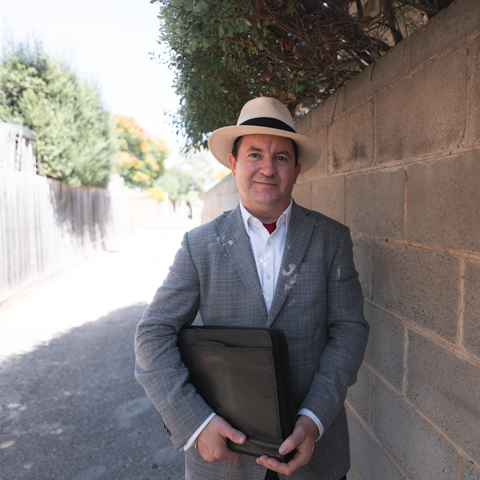
Article by
Zac Newbold – Founder & Managing Director – 30+ Years. Real Authority. Proven Results.
Zac Newbold is one of Melbourne’s most experienced Buyer’s Agents and a Fully Licensed Estate Agent since 2001.
With over 30 years inside the property market, Zac has seen exactly how buyers win – and exactly how they get overexposed, overbid, and overpay.
He’s worked across every layer of the industry – residential sales, boutique agencies, large franchise networks, property and asset management, corporate advisory, commercial real estate, and project management. That experience gives him a simple advantage: he knows how every player in the market thinks, moves, and negotiates.
At a certain point, he made a clear decision – stop working the system from all sides, and start working for one side only.
The buyer.
Because that’s where clarity matters. And that’s where deals are actually won.
Today, Zac represents buyers across Melbourne in residential and investment property, using a disciplined, strategy-led approach built on market intelligence, timing, and hard negotiation.
Through Your Australian Property Buyers Agents, Zac and his team give clients a real edge in the market – independent advice, structured strategy, and negotiation that’s designed to protect capital and win the deal.
His philosophy is simple: Treat every purchase like it’s your own money on the line – and never pay more than you have to.
Outside of property, Zac spends time with his wife and family and travels whenever the schedule allows.
If you’re serious about making your next property move, contact Zac Newbold and his team today to organise your confidential and complimentary Property Strategy Session.
Disclaimer
The information provided in this article is general in nature and is intended for educational and informational purposes only. It does not constitute financial, legal, or investment advice and should not be relied upon as such.
All property markets involve risk, and outcomes will vary based on individual circumstances. Readers should conduct their own due diligence and seek independent advice from qualified professionals before making any property or investment decisions.
While every effort has been made to ensure the accuracy of the information at the time of publication, Your Australian Property Buyers Agents makes no guarantees as to its completeness, reliability, or current relevance and accepts no responsibility for any loss or damage arising from reliance on this content.