
Table of Contents
- Why a Property Inspection Checklist Matters
- Structural Integrity and Foundation Checks
- Roofing, Drainage and Weatherproofing
- Electrical, Plumbing and Water Systems
- Windows, Doors, Interior and Flooring
- Pest and Termite Inspection Essentials
- Questions to Ask Real Estate Agents at Inspections
- How to Negotiate After a Bad Building Inspection
- Frequently Asked Questions
Last Updated: September 1, 2026
Why a Property Inspection Checklist Matters
A thorough property inspection checklist is the difference between a smart purchase and a costly mistake. Here’s where buyers get it wrong: 55% of Australian home buyers didn’t discover hidden problems until after they’d moved in, according to Entry Conveyancing’s 2026 survey. By then, it’s too late.
We see this all the time. A buyer walks through a property for 20 minutes, falls in love, makes an offer, and six months later they’re staring at a $40,000 foundation repair bill. The inspection was rushed. The checklist was incomplete. The warning signs were missed.
This is how you avoid overpaying and protect your investment. A structured checklist catches defects before you sign the contract, gives you negotiation leverage, and reveals which problems are cosmetic versus costly. According to ComtyLink’s 2025 pre-occupancy data, 70% of newly built Australian homes contain defects at handover. For established properties, the figure is even higher.
Below, we’ll walk you through exactly what to check, what questions to ask, and how to use your findings to negotiate with confidence.
Structural Integrity and Foundation Checks
Structural problems are expensive and the hardest to fix once you own the property. This is where experience matters.
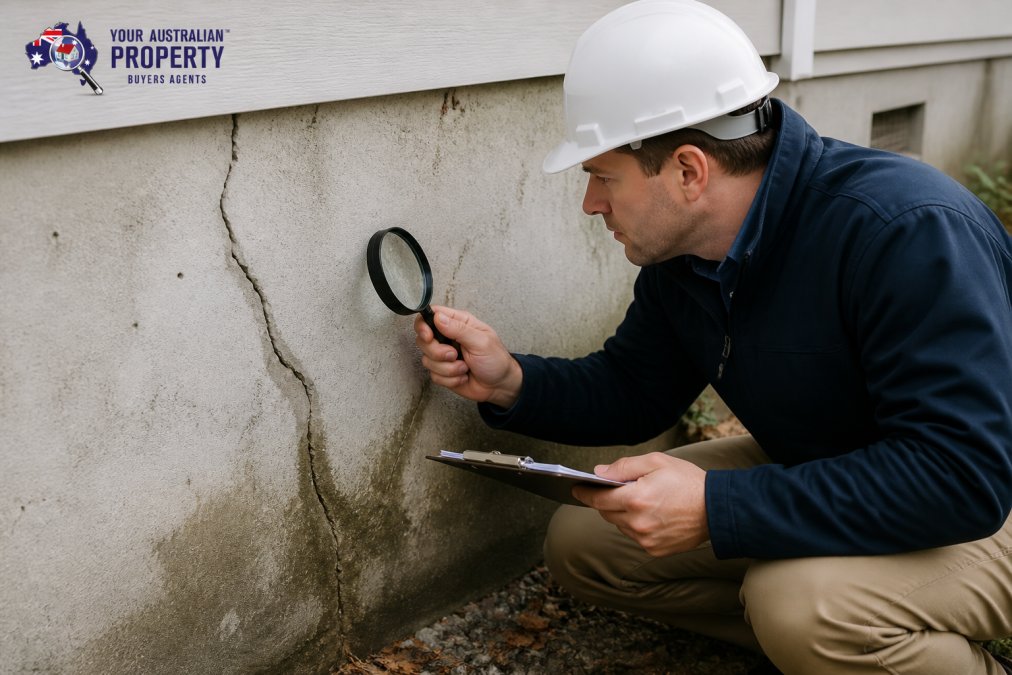
Start by examining the foundation and external walls for visible cracks. Look for:
- Horizontal cracks running across brickwork (these indicate movement and are more serious than vertical cracks)
- Cracks wider than 3mm (these suggest structural settlement)
- Stair-step cracking in brick mortar (a classic sign of foundation movement)
- Cracks that follow a diagonal pattern (often caused by foundation settling)
Walk around the entire perimeter. Take photos. Document everything. Multiple cracks across different walls suggest foundation movement, a red flag.
Foundation movement and cracks
Foundation movement happens when the ground beneath the property shifts or settles unevenly. This is one of the most expensive problems to repair.
Look for cracks inside the home as well. Check corners of doorways and windows, these are stress points where cracks first appear. If doors or windows are sticking or won’t close properly, that’s another indicator. As Myles Clark, Director at the Victorian Association of Home Inspectors, notes: “Doors or windows that stick or do not close properly indicate movement. This can be seasonal and very normal.” But document it anyway.
Check the roof line from outside. Is it sagging? A sagging roofline suggests the structure is settling. Inside, look at ceilings for cracks that radiate from corners, these follow stress patterns and indicate movement.
A professional building inspector will assess whether cracks are structural or cosmetic, whether movement is ongoing or historical, and what repairs might be needed. Get this assessment in writing before you commit.
Rising damp and water intrusion
Rising damp is water that travels up through the foundation and into the walls. It damages plaster, causes paint to peel, and creates an environment where termites and rot thrive.
Look for:
- Discoloured patches on walls, typically 1-1.5 metres above floor level
- Peeling paint or wallpaper
- A musty smell in lower rooms
- Efflorescence (white, powdery deposits on brickwork)
- Soft or crumbling plaster at the base of walls
Check the weep holes, small gaps in the brickwork designed to allow moisture to escape. If they’re blocked or missing, water can’t drain properly. According to [Property Due Diligence(/property-due-diligence-checklist-melbourne/) guidance | propertychecklist.com.au], poor drainage and water pooling around the property indicates inground drainage damage.
Walk around the exterior. Is water pooling near the foundation? Are gutters overflowing? Does water run toward the house or away from it? Proper grading should slope away from the building. If it doesn’t, water will accumulate and cause problems.
Roofing, Drainage and Weatherproofing
The roof protects everything underneath. If it fails, the damage cascades into the ceiling, walls, insulation, and structure. A compromised roof can be costly to replace.
Roof condition and cavity inspection
Start from the ground. Use binoculars to look for missing, broken, or slipped tiles. Check for sagging sections or areas where the roof line dips. Look at the flashing around chimneys, vents, and skylights, these are common leak points.
If the roof is accessible, climb up and inspect it directly. Look for:
- Missing or cracked tiles
- Broken or corroded metal sheeting
- Gaps in flashing or sealant
- Moss, lichen, or debris accumulation (which traps moisture)
- Damaged guttering or downpipes
Check the roof cavity from inside the home if you can access it safely. Look for water stains on the underside of the roof, mould growth, or daylight coming through gaps. These indicate leaks.
Modern inspections often use drone technology for safety. According to RBI’s 2026 inspection guidance, drone roof inspections check for missing, broken, or slipped tiles and reveal sagging roof lines and damaged flashing that are hard to see from the ground.
Ask the real estate agent when the roof was last replaced or repaired. If it’s over 25 years old, budget for replacement soon.
Drainage systems and weep holes
Drainage failures cause foundation problems, rising damp, and structural damage.
Walk the perimeter and observe:
- Do gutters overflow during rain?
- Are downpipes connected to underground drains or do they discharge onto the ground?
- Does water pool near the foundation?
- Are there visible signs of erosion or soil subsidence?
- Are weep holes clear and unobstructed?
Weep holes are critical. These small openings in the brickwork (typically near the base of walls) allow moisture to escape. If they’re blocked by soil, paint, or debris, water accumulates and causes damp. Check each one.
Look at the ground slope around the property. Ideally, ground should slope away from the building at a gradient of at least 1:20. If the ground slopes toward the house, water will collect against the foundation.
Electrical, Plumbing and Water Systems
Electrical and plumbing issues can be expensive and dangerous. A faulty electrical system creates fire risk. Leaking pipes cause water damage and mould.
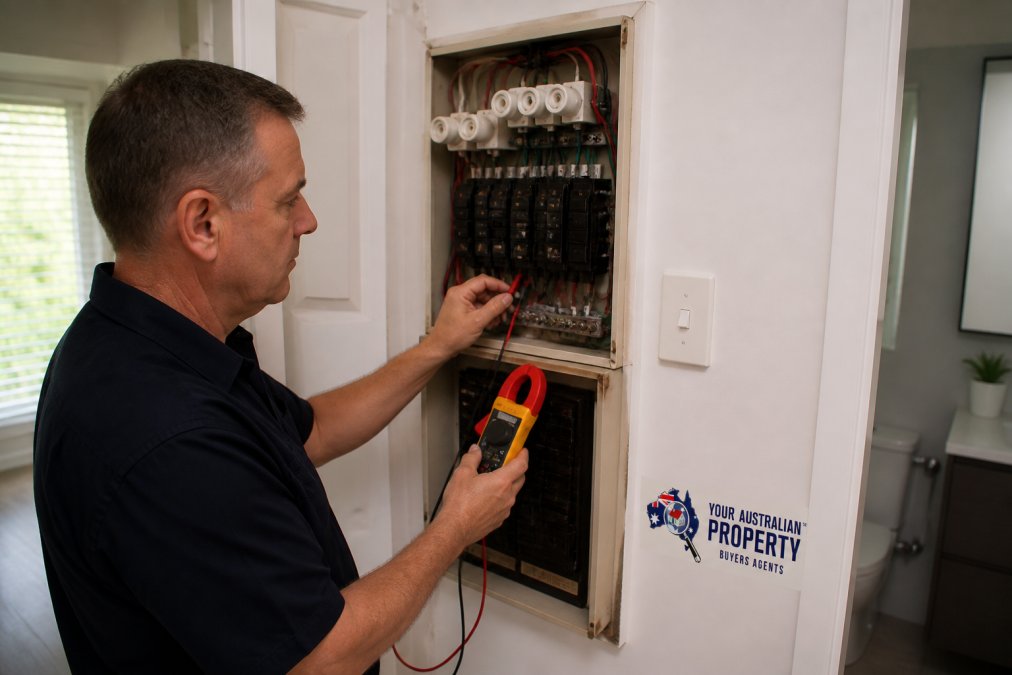
Electrical safety and meter board
Look at the meter board. Is it:
- Accessible and clearly labelled?
- Free of corrosion or damage?
- Equipped with a safety switch (RCD, Residual Current Device)?
- Showing signs of arcing or burning?
Check that all circuits are labelled. If the meter board is a mess of unlabelled switches, that’s a warning sign, the property may have been modified by non-licensed electricians.
Look for outdated wiring. Older properties may have:
- Knob and tube wiring (pre-1950s, extremely dangerous)
- Cloth-wrapped wiring (deteriorates over time)
- Insufficient grounding
Test light switches and power outlets. Do they work? Are any outlets warm to the touch? Are there burn marks around switches? These indicate electrical faults.
Ask when the electrical system was last upgraded. If it’s original to a 40-year-old house, budget for rewiring.
Plumbing leaks and water pressure
Turn on taps throughout the property. Check:
- Water pressure in each room
- Water temperature consistency
- Discoloured water (indicates rust or corrosion in pipes)
- Slow drains
Listen for running water when all taps are off. If you hear water flowing, there’s a leak somewhere, possibly in the walls or under the house.
Check under sinks and behind toilets for water stains or damp. These indicate slow leaks. Look at the water meter; if it’s running when no water is being used, there’s a leak.
Inspect the hot water system. Is it leaking, making unusual noises, or showing signs of rust or corrosion? Ask when it was installed. Most hot water systems last 10-15 years. If it’s older, budget for replacement.
Check the toilet cistern for leaks. Put food colouring in the cistern and wait 15 minutes without flushing. If the colour appears in the bowl, the cistern is leaking.
Windows, Doors, Interior and Flooring
Interior condition often reveals underlying problems. Damage to windows, doors, walls, and flooring can indicate moisture, movement, or poor maintenance.
Assess:
Windows and doors:
- Do they open and close smoothly?
- Are there gaps around frames?
- Is glazing intact or cracked?
- Do locks work properly?
Interior walls and ceilings:
- Are there cracks, especially radiating from corners?
- Is plaster soft or crumbling?
- Are there water stains or discolouration?
- Is there evidence of mould or mildew?
Flooring:
- Is it level or does it slope?
- Are there cracks in concrete slabs?
- Is timber flooring cupped, crowned, or warped?
- Are tiles cracked or loose?
These observations often point to deeper issues. A sloping floor might indicate foundation settling. Water stains suggest leaks. Mould indicates moisture problems.
Pest and Termite Inspection Essentials
Termites cause more damage to Australian homes than fire, flood, and storm combined. Around one in three homes has had termite activity or damage at some point, according to Property Due Diligence [guidance on(/benefits-of-using-buyers-agent-melbourne/) termites | propertychecklist.com.au]. A termite inspection isn’t optional, it’s essential.
Look for:
- Mud tubes on walls or foundations (termites build these as highways)
- Timber that sounds hollow when tapped
- Frass (termite droppings, small pellets)
- Damaged or weakened timber
- Visible termites (usually only seen when disturbing infested areas)
Check the subfloor if accessible. Crawl spaces are termite highways. Look for mud tubes, damaged timber, and evidence of activity.
Ask the real estate agent if there’s a history of termite treatment. If the property has been treated, get copies of the reports. If it hasn’t been treated in the last 5 years, budget for preventative treatment after purchase.
The inspection report should note any evidence of termite activity, the extent of damage, and recommendations for treatment or prevention. Use this information in your negotiation.
Questions to Ask Real Estate Agents at Inspections
Real estate agents can provide valuable context about the property. Ask:
- When was the roof last replaced or repaired?
- Has the property had any major renovations? (Ask for council approval documentation)
- Are there any known issues with the property?
- Why is the owner selling?
- How long has the property been on the market?
- Has the property ever flooded or had water damage?
- Are there any disputes with neighbours?
- What’s the council’s flood risk rating for this address?
- Has the property had a building or pest inspection? (Ask to see the reports)
Take notes. If the agent seems evasive or contradicts the building report, that’s a red flag. Remember: the agent represents the seller, not you. Get answers in writing where possible.
How to Negotiate After a Bad Building Inspection
A bad building inspection doesn’t mean you have to walk away. It means you have leverage.
First, get the inspection report in writing. Quantify the problems. “The roof needs replacement” is vague. “The roof requires replacement at an estimated cost of $18,000 based on quotes from two licensed roofers” is specific. Specificity drives negotiation.
Categorise the problems:
- Critical (structural, safety, immediate): Foundation cracks, electrical hazards, gas leaks, termite damage
- Major (expensive, requires professional repair): Roof replacement, replumbing, rewiring, rising damp treatment
- Minor (cosmetic, low cost): Paint, carpet, minor repairs
Focus your negotiation on critical and major issues. Calculate the total cost of repairs using quotes from licensed tradespeople.
Now you have three options:
- Renegotiate the price. Use the repair costs to justify a lower offer.
- Request repairs as a condition of sale. Ask the seller to complete specific repairs before settlement.
- Walk away. If the problems are too serious or the seller won’t negotiate, walking away is the smartest move.
Most buyers choose option 1, renegotiating the price. This works because you have concrete evidence, the seller knows other buyers will see the same problems, and a lower price compensates you for the risk and cost of repairs.
Be prepared to walk away. This is your strongest negotiating position. Sellers know that buyers with inspection reports are serious. If you’re willing to walk, they’re more likely to negotiate.
A property inspection checklist is your roadmap to a successful purchase. It catches problems before you sign. It gives you negotiation leverage. It protects your investment. Most buyers only see five obvious steps: find property, make offer, get finance, settle, move in. We control the other 30. The difference happens behind the scenes, in the inspection, the report, the negotiation, and the strategy that determines whether you win or lose.
Your Australian Property Buyers Agents has guided buyers through this process for over 30 years. We’re Melbourne’s leading independent buyer advocates. We know which questions to ask, which problems matter, and how to negotiate with confidence. Our independent buyer advocacy service focuses on everything that determines a successful purchase, not just the property itself, but the process, the negotiation, and the outcome. If you’re buying in Melbourne and you want expert guidance on inspections, due diligence, and negotiation strategy, book a free strategy session with our team to discuss your property goals.
Frequently Asked Questions
Q: What is the biggest red flag in a property inspection checklist?
A: Structural movement is the most serious red flag. This includes foundation cracks, foundation movement, and signs of rising damp. These issues are expensive to fix and can worsen over time. Termite activity and damage is another critical issue, around one in three homes has had termite activity at some point. Water damage, electrical safety problems, and asbestos also rank high. These aren’t cosmetic fixes; they affect the property’s safety and value significantly.
Q: How does a professional building inspection differ from a buyer’s walkthrough?
A: A buyer’s walkthrough is a visual scan of the property. A professional building inspection is comprehensive, systematic and documented. Inspectors use specialist equipment, check hidden areas like roof cavities and sub-floor spaces, and produce a detailed report. They assess structural integrity, electrical safety, plumbing, drainage, pest activity and compliance. Most buyers only see what’s obvious during a walkthrough. A professional inspection uncovers defects that cost tens of thousands to repair.
Q: What should I include in a pre-purchase building inspection report checklist?
A: Your pre-purchase building inspection report should cover structural integrity, foundation condition, roofing and roof cavity, drainage systems, electrical systems and meter board, plumbing and water pressure, windows and doors, internal walls and ceilings, flooring, kitchen and bathroom fixtures and fittings, ventilation and insulation, external cladding and weatherboards, and pest activity. The report should be thorough, itemised and include photographs. It’s your due diligence document, use it to negotiate or walk away.
Q: What are the most common reasons a property fails a building inspection?
A: Rising damp, structural cracks, roof damage, faulty electrical systems, plumbing leaks, pest damage, and asbestos are the most common failures. Weatherboard decay, peeling paint, and poor drainage also fail properties regularly. Many of these issues are discoverable only during a professional inspection. Seventy per cent of newly built homes contain defects at handover. Fifty-five per cent of buyers discover hidden problems only after moving in, problems they could have avoided with proper due diligence.
Q: Can a buyer’s agent help identify structural issues during an inspection?
A: Yes. Experienced buyer’s agents understand building defects, structural issues, and what repairs cost. They attend inspections, ask the right questions, and interpret the inspection report strategically. They know which issues are deal-breakers and which are negotiable. This is where experience matters, we’ve seen the costly mistakes buyers make when they inspect alone.
Q: How can I use inspection findings to negotiate a lower price?
A: Get a professional building and pest inspection before making an offer. If defects are found, use the report to negotiate. Request the seller fix the issues, reduce the price, or contribute to repairs. Structural issues, termite damage, and electrical problems are strong negotiation points. Cosmetic issues are weaker. The key is knowing which issues justify a price reduction and how much they’ll actually cost to fix. This is where negotiation strategy determines the outcome.
This article was written using GrandRanker