Finding affordable investment properties Melbourne investors can build wealth with is about more than spotting a bargain. It’s about understanding market fundamentals, recognising growth signals, and executing a disciplined buying strategy. According to Property Investment Professionals of Australia’s April 2026 research, suburbs like Armadale are scoring 88.4 on investment potential, signalling where smart money is moving. At Your Australian Property Buyers Agents, we help investors navigate this exact challenge, finding properties that deliver both rental yield and capital growth within tight budget constraints. Most buyers focus on the property itself. We focus on the 30 hidden steps that determine whether it becomes a profitable investment or a costly mistake.
The $600k price point is critical. It’s where affordability meets opportunity. Below this threshold, entry-level investors can still access solid properties in growth corridors. Above it, the market becomes congested and competition intensifies. But here’s what most buyers don’t see: the property price is only one variable. Rental demand, strata fees, body corporate health, comparable sales data, and negotiation strategy determine whether you actually make money.
This guide walks you through the exact process we use to find affordable investment properties Melbourne investors can build wealth with, not just buy.
Why Finding Affordable Investment Properties Under $600k Matters
The difference between a property that pays for itself and one that drains your savings comes down to preparation. Most buyers see five steps: find, inspect, offer, negotiate, settle. We control the other 30.
Investment properties under $600k are entry points for serious investors. They’re affordable enough to service on modest rental income, yet positioned in suburbs with genuine growth potential. OpenAgent’s 2026 report on affordable suburbs identifies that investors are increasingly targeting this price bracket because it’s where supply is tightening and rental demand remains strong.
The risk of getting this wrong is real. Overpay by $30k and you’ve wiped out three years of rental profit. Buy in the wrong suburb and capital growth stalls while interest rates climb. Choose a property with hidden defects and your renovation budget explodes. This is where experience matters. We understand the risks investors face, including properties that look right on paper but have structural issues, poor tenant appeal, or strata complications that can make them effectively unsellable.
The strategy is simple: facts before photos. Data before emotion. Every property deserves scrutiny, and not every property deserves an offer.
Step 1: Know Your Financial Baseline and Investment Goals
Before you search for a single property, you need to know exactly what you can afford and what you’re actually trying to achieve.
Calculate your borrowing capacity
Your borrowing capacity isn’t just about your income. It’s about how much debt a bank will lend you against the rental income the property generates. This is the critical difference most first-time investors miss.
Banks assess investment property loans differently than owner-occupied mortgages. They calculate serviceability based on the rental income the property will generate, not your personal income. If a property rents for $400 per week, the bank typically counts that as $20,800 annual income. Your own salary matters, but the property’s income is the primary factor.
Get a pre-approval from your lender. This tells you your actual borrowing limit, not a theoretical maximum. It also identifies any obstacles early, poor credit history, existing debt, or income verification issues, before you waste time searching.
Define your rental yield and capital growth targets
You’re buying for two reasons: weekly cash flow (rental yield) and long-term wealth growth (capital appreciation). You need targets for both.
Gross rental yield is simple: annual rent divided by property price. A $600k property renting for $24,000 per year has a 4% gross yield. Net yield accounts for expenses, rates, insurance, maintenance, vacancy, body corporate fees. Most investors target 3-4% net yield minimum on properties under $600k. Below that, you’re relying entirely on capital growth, which is riskier.
Capital growth depends on suburb selection, infrastructure investment, and population trends. Properties in established growth corridors with new transport links, schools, or employment hubs typically appreciate 3-5% annually over 10 years. Properties in stagnant areas appreciate 1-2% or not at all.
Be honest about your strategy. Are you buying for yield (needing rental income now)? Or capital growth (holding 10+ years for appreciation)? These require different suburb selections and property types.
Step 2: Identify High-Growth Suburbs Within Budget
This is where most investors go wrong. They search by price, not by fundamentals.
Use median house price data to shortlist suburbs
Start with median house price data for suburbs in your budget range. This tells you where the market sits and whether you’re looking at realistic entry points.
Median prices vary significantly across Melbourne. Inner suburbs command premiums. Outer growth corridors offer affordability. Your job is finding the intersection: suburbs where median prices sit near $600k, where rental demand is strong, and where infrastructure investment signals future growth.
Research recent sales data. How many properties sold in the past three months? What was the clearance rate at auction? If only two properties sold in a suburb in three months, liquidity is poor, you’ll struggle to sell later. If clearance rates are below 60%, the market is soft and prices may be under pressure.
Screen for infrastructure, transport and gentrification signals
Here’s where the deal changes. Infrastructure is the hidden driver of capital growth. A suburb with a new train station, school, or major employer headquarters will outperform one without it.
Check the Victorian Government’s planning databases. Are there approved developments? New commercial precincts? Schools expanding? These signal future demand. A property 500 metres from a new train station will appreciate faster than one 2km away.
Transport connectivity matters for rental demand. Properties within 800 metres of a train station or major bus route rent faster and command higher yields. Tenants value commute time. Investors should too.
Population growth is another signal. Suburbs with growing populations attract investment and drive capital appreciation. Check ABS data for population trends. Is the suburb growing faster than Melbourne average (typically 2-3% annually)?
Gentrification indicators matter too. Look for signs of neighbourhood change: new cafes, restaurants, galleries, younger demographic moving in, property renovations increasing. These signal rising demand and future price growth. But be careful, gentrification can stall or reverse. Don’t bet your investment on it alone.
Professional analyzing suburb data to find affordable investment properties Melbourne on a laptop screen
Here’s where you gain an edge. Most investors search the major portals. Smart investors access properties before they hit the market.
Find Affordable Investment Properties Under $600k
Off-market properties are listed through selling agents’ networks, not publicly advertised. They’re often sold within days of becoming available, to investors who have relationships with agents. This means less competition, better negotiation use, and often better value.
Building relationships with selling agents is essential. Tell them what you’re looking for: price range, suburb, property type, yield target. Good agents will call you when something matches your criteria, often before it’s advertised. You get first look. You get to negotiate without 50 other buyers competing.
Your Australian Property Buyers Agents has extensive connections across Melbourne’s selling-agent network. We access properties that never reach the public portals, properties that sell within days of listing, often to investors who move fast and negotiate strategically.
The advantage is real. Off-market properties can offer better value because there’s often less competition. You have time to conduct proper due diligence.
Step 4: Build Your Property Due Diligence Checklist
Not every property deserves an offer. Many should be rejected outright.
Building and pest inspection essentials
A building and pest inspection is non-negotiable. It can save you tens of thousands. Skip it and you’re gambling.
Assess strata fees, body corporate and rental demand
For units and townhouses, strata fees and body corporate health are critical. High fees directly reduce your net yield. An unhealthy body corporate signals future special levies.
Step 5: Compare Comparable Sales and Avoid Overpaying
This is where facts determine price, not emotion.
Comparable sales analysis is essential. It tells you what similar properties actually sold for, not what they’re listed for. Listing prices are aspirational. Sale prices are reality.
Step 6: Negotiate with Confidence and Strategy
The property price is negotiable. Most buyers don’t realise this until it’s too late.
When to Walk Away
Here’s the hardest lesson: sometimes the best advice is to walk away.
Frequently Asked Questions
What are the best suburbs in Melbourne for an investment property under $600k?
Armadale stands out with a strong investment score of 88.4 according to Property Investment Professionals of Australia (2026). High-growth suburbs under $600k typically combine affordability with infrastructure projects, transport connectivity and rental demand. Look for areas with upcoming council investment, employment hubs and gentrification signals. The best suburbs for you depend on your capital growth targets versus rental yield priorities. We assess each suburb against your specific investment strategy to identify genuine opportunities.
How do you conduct due diligence on low-budget investment properties?
Build a property due diligence checklist covering: building and pest inspection results, strata fees and body corporate costs, rental vacancy rates in the area, comparable sales data for true market value, local infrastructure projects and transport improvements, and neighbourhood risk factors. Low-price properties often hide issues—structural problems, high vacancy rates, or poor location fundamentals. Never skip inspection or assume the price reflects true value. This is where experience matters most.
What’s the difference between median house price and rental yield when evaluating affordable investment properties?
Median house price tells you the market baseline for a suburb, helping you spot undervalued properties and avoid overpaying. Rental yield shows your annual return on investment—the gross rental income divided by property value. A property at median price with strong rental yield is different from a bargain-priced property with poor tenant demand. Both metrics matter: median house price anchors your negotiation, rental yield determines your cash flow. Use them together to identify properties that deliver both capital growth and income.
How can a buyer’s advocate help secure off-market properties under $600k?
A buyer’s advocate with established networks across selling agents, developers and private sellers can access off-market properties before they hit public listings. These opportunities often represent better value because they avoid auction competition and marketing costs. We work with 500+ real estate connections across Melbourne to identify investment-grade properties that align with your criteria. Off-market access is particularly valuable under $600k, where quality stock moves fast and negotiation leverage is higher.
Why Preparation Matters Before Your Building Inspection
Learning how to prepare for a pre-purchase building inspection starts long before the inspector arrives. Most buyers treat it as a box-tick exercise. They schedule it, show up, and hope for the best. That’s where costly mistakes happen.
How you prepare for a pre-purchase building inspection shapes what the inspector finds and how useful the report becomes. It determines whether you spot red flags early or discover expensive problems after you’ve signed. It’s the difference between walking away from a bad deal and overpaying for someone else’s problem.
According to RubyHome’s 2026 analysis of home inspection findings, 86% of home inspections reveal at least one item that requires repair. Nearly half of buyers then use those findings to negotiate a lower purchase price. But that only works if the inspection was thorough and you know how to act on the results.
At Your Australian Property Buyers Agents, we’ve seen what separates buyers who negotiate confidently after an inspection from those who panic or overpay. The difference isn’t luck. It’s preparation.
Key Takeaway Preparation transforms an inspection from a formality into a negotiation weapon. Know what to expect, what to look for, and how to use the findings to protect your investment.
Gather Your Documents and Property History
Before your inspector arrives, collect every piece of information about the property. This isn’t optional. It’s your foundation.
Start with the contract of sale and any seller disclosure documents. These reveal what the seller already knows about the property’s condition. If they’ve disclosed previous water damage, termite activity, or structural repairs, the inspector will look harder at those areas.
Request the original building plans and any renovation or repair records from the seller. If the property has had work done, new roof, plumbing upgrades, extension, you need documentation. Plans show you what was built and how. Repair records show you what’s failed before and what’s been fixed.
Ask your conveyancer for the title documents. These flag easements, covenants, or restrictions that affect the property. A covenant might prevent you from extending. An easement might give neighbours access through your land. The inspection won’t catch these, but they matter for your decision.
Look up council records for any building permits or complaints. The council website holds this information. Permits show what work was approved. Complaints flag problem areas, water damage, structural issues, or disputes with neighbours.
What to gather:
Contract of sale and seller disclosures
Original building plans and specifications
Previous inspection reports (if available)
Maintenance logs and repair records
Council permits and building history
Title documents and easements
Photos of past damage or repairs
If the seller won’t provide documents, that’s a warning sign. It suggests they’re hiding something. Push back through your conveyancer or consider walking away. This is where Property Due Diligence becomes critical, a thorough assessment of what’s been disclosed, what’s been hidden, and what the property’s actual condition tells you about its real value.
Common Building Defects in Melbourne Homes
Melbourne’s climate and older building stock create predictable problems. Knowing these helps you spot what the inspector should be checking.
Rising damp is endemic in older properties. Water travels up from the ground through brick and concrete. It damages plaster, rots timber, and creates mould. You’ll see it as dark staining at the base of walls, peeling paint, or a musty smell. Rising damp is expensive to fix properly.
Termite activity thrives in Melbourne’s humidity. Termites eat timber from the inside out. By the time you see damage, structural integrity may be compromised. The inspector will look for mud tubes, hollow timber, and evidence of past treatment. If termites are present, remedial work and ongoing prevention add significant cost.
Asbestos is found in homes built before the 1980s. It’s in insulation, floor tiles, roofing, and pipe lagging. Asbestos itself isn’t dangerous if undisturbed, but removal is expensive and regulated. If the inspector suspects asbestos, you’ll need a specialist assessment before deciding to proceed.
Roof and guttering problems are common. Rusted gutters, missing tiles, or poor drainage cause water infiltration. Water damage spreads fast, it rots timber, damages insulation, and creates mould. Roof repairs can be costly.
Electrical safety issues include outdated wiring, missing safety switches, or non-compliant installations. Old knob-and-tube wiring or aluminium wiring poses fire risk. Upgrading to modern standards is costly and disruptive.
Plumbing leaks hide behind walls and under floors. Slow leaks cause structural damage before you notice them. Burst pipes or corroded copper require replacement. Water damage remediation is expensive and time-consuming.
Sub-floor and foundation problems develop over decades. Poor site drainage causes water pooling under the house. Concrete cracks indicate settling or movement. Timber decay in floor joists compromises structural integrity.
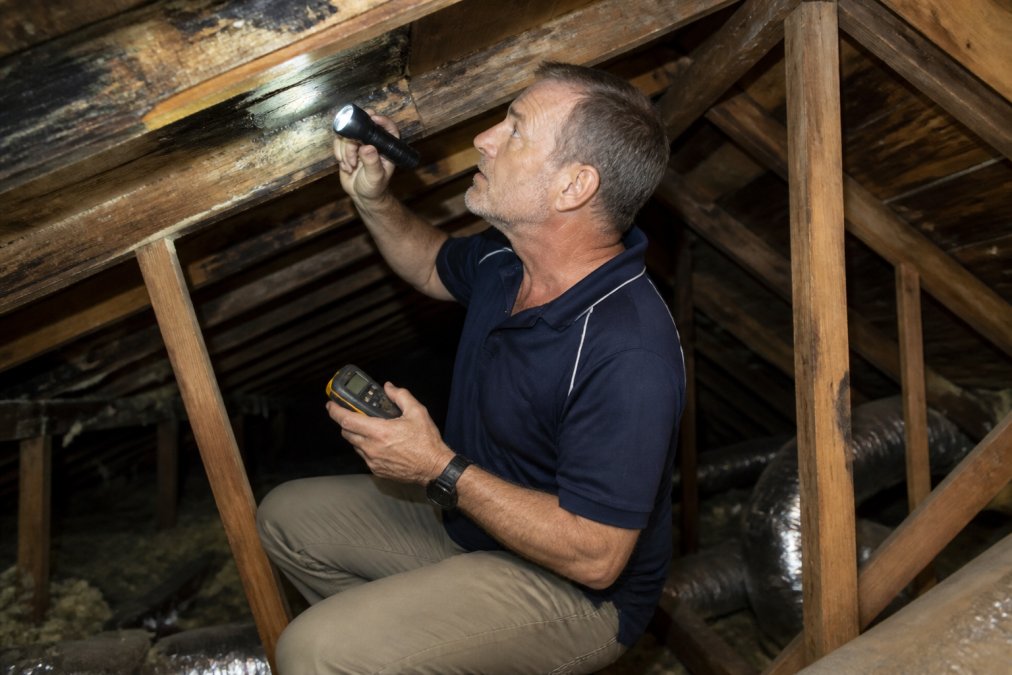
Moisture detection is critical. Excess moisture promotes mould, rot, and pest activity. The inspector uses moisture meters to identify problem areas before visible damage appears.
Watch Out Don’t ignore “minor” defects noted in the report. A small roof leak becomes major water damage in six months. A minor electrical issue becomes a safety hazard. Act on findings early or negotiate the seller’s liability.
What to Expect During the Inspection
Understanding how to prepare for a pre-purchase building inspection means knowing that a thorough inspection takes 2 to 4 hours. The inspector examines accessible areas systematically. Understanding the process helps you know what’s being checked and why.
The inspector starts outside. They assess the roof from ground level (and sometimes from above if safe), check guttering and downpipes for damage or blockages, examine the external walls for cracks or water staining, and evaluate site drainage and grading. Poor drainage is a major red flag, water pooling around the foundation causes structural problems.
Next, they move inside. They test electrical outlets and switches, check for safety switches and circuit breakers, examine visible wiring, and assess the condition of the switchboard. They look at plumbing, taps, toilets, showers, and check for leaks under sinks and around pipes. They inspect the hot water system and its age.
They examine all accessible roof cavities and sub-floors. This is where serious defects hide. Rising damp, termite damage, asbestos, poor ventilation, and structural issues become visible here. They check insulation condition and look for evidence of pest activity.
They assess walls and ceilings for cracks, water staining, or movement. They examine doors and windows for operation and weather sealing. They check the condition of timber, flooring, architraves, window frames, for rot or insect damage.
The inspector documents findings with photos and detailed notes. Modern reports include thermal imaging to detect moisture and heat loss that’s invisible to the eye.
Professional building inspector examining ceiling cavity and roof structure with torch and moisture meter in hand, checking for water damage and termite activity in dim attic space
What inspectors can and cannot assess:
Can: Structural integrity, building and pest defects, electrical safety, plumbing condition, roof condition, moisture detection
Cannot: Asbestos identification (requires specialist), precise cost of repairs, code compliance for future work, pest risk assessment
Inspectors work to building standards and codes. In Victoria, building compliance is governed by the Building Act 1993 and the Building Code of Australia which sets minimum standards for safety, accessibility, and performance. The inspector checks whether the property meets these standards.
How to Read a Building Inspection Report
The report is your negotiation document. Understanding it means understanding your use.
Most reports structure findings by category: roof, external, internal, electrical, plumbing, structural, and pest. Each section lists observations and defects. Defects are typically rated by severity: minor maintenance items, major structural issues, or safety hazards.
Minor maintenance items are cosmetic or wear-and-tear issues. Peeling paint, worn carpet, or loose tiles fall here. These are expected in older properties. They’re negotiating points but not deal-breakers.
Major defects require repair or replacement. Rising damp, roof leaks, electrical rewiring, or plumbing issues cost money and time. These affect your offer price and your decision to proceed.
Safety hazards are non-negotiable. Missing safety switches, asbestos in friable form, or structural movement that threatens safety must be addressed before settlement. Some buyers walk away here.
Read the report critically. Look for patterns. Multiple moisture issues suggest a systemic drainage problem, not isolated leaks. Evidence of past repairs suggests the seller knew about problems and tried cheap fixes.
Check what the report doesn’t say.
Pro Tip Request a sample report from your chosen inspector before hiring them. Ensure it’s comprehensive, includes photos, and explains findings in plain language. A vague report is useless for negotiation.
Negotiating After a Bad Building Report
A bad report isn’t the end. It’s your negotiation starting point.
Your Next Steps After the Inspection
Once you have the report, you have decisions to make.
Frequently Asked Questions
What documents should I gather before a building inspection?
Collect the contract of sale, any previous building or pest reports, council records, maintenance logs, original construction drawings if available, and evidence of past repairs or remedial work. If the property is strata or multi-story, get copies of body corporate minutes and any defect rectification notices. These documents help the inspector understand the property’s history and identify patterns of recurring issues. Professional surveyors typically recommend providing this information upfront so they can focus on structural integrity and hidden defects during the physical inspection.
How long does a building inspection typically take?
A standard building inspection usually takes 2 to 4 hours, depending on the property size and complexity. Older homes, multi-story properties, or those with known issues may take longer. Most contracts provide a cooling-off period after you sign, which gives you time to commission the inspection, receive the report, and decide whether to proceed. Plan to have the inspection completed well before this window closes so you can review findings and negotiate if needed.
What are the most common building defects found in Melbourne properties?
Rising damp, termite activity, roof leaks, and electrical safety issues are frequent findings in Melbourne homes. Older properties often show asbestos in insulation or floor tiles, while newer builds may have moisture detection problems in sub-floors or inadequate site drainage. According to industry data, 86% of home inspections reveal at least one item requiring repair. The key is understanding which defects are minor maintenance issues versus structural problems that affect the property’s long-term viability and value.
Can I use inspection findings to negotiate a lower price?
Yes. About 46% of buyers use inspection results as negotiation leverage to secure a lower purchase price. Once you have the report, you can request the seller fund remedial work, provide a price reduction, or offer a repair allowance. The strength of your negotiation depends on the severity of defects and current market conditions. Some defects are deal-breakers; others are negotiable. This is where independent advice matters, knowing which issues justify walking away versus which ones you can negotiate on.
Why Melbourne’s 2026 Auction Market Rewards Discipline, Not Emotion
Melbourne’s auction clearance rate has slipped into the low-to-mid 50% range, a sharp signal the market has shifted in buyers’ favour. Knowing how to avoid overpaying at Melbourne auction is now less about beating the crowd and more about out-preparing it. At Your Australian Property Buyers Agents, we’ve watched this shift across hundreds of negotiations. The buyers who win aren’t the loudest in the room, they did the work before the auctioneer opened their mouth.
What a Falling Clearance Rate Actually Means for Buyers
A clearance rate above 60% generally signals a balanced market, according to ABC News reporting on 2026 auction conditions. Below that, vendors are chasing the market rather than setting it. For buyers, this is use. It’s also a trap if you misread it.
Watch OutTreating a soft market as blanket permission to bid low is a costly mistake. Vendors with strong equity still hold firm on quality stock, and lowballing the right property can lose it to a more disciplined buyer.
Comparable Sales Analysis: Finding the Real Market Value Before Auction Day
Comparable sales analysis matches recent, genuinely similar sales to a subject property to establish true market value, independent of the agent’s price guide. It’s the single most important number you’ll bring to auction day.
How to Avoid Overpaying at a Melbourne Auction in 2026
How to Read a Price Guide and Spot Underquoting
Underquoting happens when a price guide sits well below a realistic reserve to attract bidders. Compare the guide against your comparable sales data. If it’s more than 10-15% below recent comparable results, treat it as a marketing figure, not a valuation.
Signal
What It Suggests
Your Move
Guide 10-15% below comparables
Likely underquoting
Verify with recent sales
Guide matches comparables
Realistic pricing
Proceed to due diligence
Guide above comparables
Vendor expectation gap
Prepare to negotiate hard
Your Due Diligence Checklist Before You Bid
Due diligence is the verification work that confirms a property is worth bidding on at all. Skip it and you inherit structural problems, title issues or planning surprises after the hammer falls.
Section 32 reviewed by a solicitor or conveyancer
Building and pest inspection booked and completed
Comparable sales analysis finalised
Title search and encumbrances checked
Council planning overlays and zoning confirmed
Finance pre-approval confirmed and current
Building and Pest Inspection Timing and Section 32 Review
Book your building and pest inspection at least a week before auction day. Most auctions are unconditional, you can’t walk away if something surfaces. The Section 32 vendor statement must be reviewed before you bid, not after. If either raises concerns, that’s your signal to walk away, not negotiate harder.
Pro TipOrder your building and pest inspection the moment you’re seriously considering a property, not the week of auction. Good inspectors book out fast, and a rushed inspection misses the things that cost you most.
Setting a Walk-Away Price You Will Actually Honour
Your walk-away price is the maximum figure you’ll bid, calculated from comparable sales and your budget, and committed to before you enter the room. Most buyers set one and abandon it within ninety seconds of competitive bidding. That’s not a willpower problem. It’s a process problem.
How to Calculate a Defensible Walk-Away Price
Work through this in order, and write each figure down. The discipline is in the sequence.
Establish the adjusted comparable sales figure. Pull three to five genuinely similar sales from the last three to six months. Match on land size, bedroom count, condition, street position and orientation, then adjust each up or down for differences, a renovated kitchen, a second bathroom, a busier road, a north-facing yard. That’s your base market value.
Add a defined premium for genuine lifestyle or location factors. School-zone catchment, walkability to transport, a quiet court position. Define this as a percentage, not a feeling, a few per cent is defensible; anything beyond needs a specific, evidenced reason.
Subtract your risk buffer. Anything unresolved in due diligence, an older roof, a non-compliant extension, a planning overlay you haven’t fully understood, comes off the top. Most buyers forget this number, and it’s the one that protects you when the building report lands after the hammer.
The Psychological Triggers That Break Your Ceiling
Auction fever isn’t a character flaw. It’s a predictable physiological response to competition, time pressure and public commitment. Understanding the triggers is how you neutralise them.
The sunk-cost spiral. Once you’ve spent weekends inspecting and paid for a building report, walking away feels like wasting that effort. It isn’t. The money is already spent either way.
The rival-bidder story. You invent a narrative about the person bidding against you, they must really want it, they must know something you don’t. They usually don’t. They’re running the same script.
The auctioneer’s rhythm. A skilled auctioneer controls pace deliberately, using the fall of the hammer, vendor bids and well-timed pauses to compress your thinking time. The faster the increments, the less rational the room becomes.
Public commitment. Once you’ve bid aloud, backing down feels like losing face. It isn’t losing. It’s the exact decision you prepared for.
The Physical Reset That Actually Works
When you feel the ceiling slipping, do something physical. Step back from the crowd. Stop bidding. Let a beat pass. Hand the bidding to someone who isn’t emotionally invested, a partner, a friend, or an independent advocate whose only job is to hold the number you agreed.
Watch OutIf you can’t explain your walk-away price out loud, in one sentence, using comparable sales, you don’t have a walk-away price. You have a hope. Hope is what overpays at auction.
What Happens If You Do Overpay
It happens. Even disciplined buyers occasionally misjudge a market or a vendor’s resolve. What matters is what you do next.
Key TakeawayThe property may look right, but the numbers still need to stack up. A disciplined walk-away price, calculated from comparable sales and committed to before auction day, is the single best protection against overpaying, and the only one you fully control.
Pre-Auction Offer Strategy: When to Move Before the Hammer Falls
A pre-auction offer is a written, often conditional or unconditional offer made before the scheduled auction, your best tool when you’ve identified a motivated vendor. In a buyer-leaning market, vendors facing rate pressure are more open to a strong early offer than they were two years ago.
Auction Bidding Strategy: Controlling the Room Without Overpaying
An effective auction bidding strategy is about controlling pace and perception, not just price. Strong, early, odd-numbered bids signal conviction and can unsettle less prepared competitors. Silence, then a decisive counter, does the same job. But the tactics only work if you understand the mechanics underneath them.
Buyer’s advocate holding a bidding limit on a clipboard to avoid overpaying at a busy Melbourne property auction.
How the Auctioneer Actually Controls the Room
The auctioneer’s job is to extract the highest price the room will bear, using tools most buyers never notice.
Vendor bids. The auctioneer can place bids on behalf of the vendor, up to the reserve, to keep momentum and push the price toward it. These are legal and must be announced. When you hear “a bid on behalf of the vendor”, the reserve hasn’t been met.
Bidding increments. The auctioneer sets the increment and can change it mid-auction. A sudden drop from large to small increments usually signals the reserve is close. A sudden jump upward is designed to rattle hesitant bidders.
The pause. A long pause after a bid is a pressure tactic. It invites someone to fill the silence. Don’t be the one who does.
The refer-to-vendor break. When bidding stalls below reserve, the auctioneer may pause to “refer to the vendor”. This is where the reserve can be adjusted down in real time. What happens in that break determines whether the property sells or passes in.
Reading the Room Before You Bid
Before the auctioneer opens their mouth, you should already know:
How many registered bidders there are, if the agent has disclosed it.
Whether the price guide has been revised upward during the campaign, a common underquoting tell.
Which bidders are genuine and which are spectators. Genuine bidders stand close, hold their ground, and don’t flinch at increments.
Whether the vendor is in the crowd. If they are, the reserve is more likely to be firm.
Bidding Tactics That Actually Move the Price
Open strong, but not first. Let someone else set the floor, then come in with a decisive bid that jumps the increment. It signals you’re not here to play.
Use odd numbers. An unusual figure rather than a round one suggests you’ve calculated a precise ceiling and won’t be nudged past it.
Slow your responses. A quick counter signals eagerness. A measured one signals resolve.
Never bid against yourself. If the auctioneer asks for more and no one responds, wait. The silence is doing your work.
Know when to stop. The moment bidding passes your written ceiling, you’re done. No exceptions, no “just one more”.
What Happens When a Property Passes In
If the property passes in and you’re the highest bidder, the auction is over but the negotiation has just begun. You now hold the upper hand. The vendor’s reserve is known to the auctioneer, and the gap between your bid and that reserve is the negotiating space.
Managing Auction Fever in Real Time
Auction fever is the emotional escalation that pushes buyers past their walk-away price. The antidote is a bidder who isn’t emotionally invested in winning, only in buying correctly.
Pro TipIf you’re bidding on a property you’ve never inspected in person, or one where you haven’t seen the Section 32, you’re not bidding. You’re gambling. Walk away before the auctioneer opens.
Key TakeawayControlling the room isn’t about being the loudest bidder. It’s about understanding the auctioneer’s mechanics, reading the other bidders, holding your ceiling, and knowing that a passed-in property is an opportunity, not a defeat.
Frequently Asked Questions
What is the 3-minute rule at a Melbourne property auction?
When a property passes in, the auctioneer typically invites the highest bidder to negotiate first. Some buyers use a self-imposed three-minute limit to agree terms before walking away. The idea is to hold your walk-away price under pressure. If the vendor’s reserve sits above that number, no amount of extra time changes the maths. Set the limit before the auction, not in the moment, and be prepared to leave the negotiation if the vendor will not move toward genuine market value.
Should I set a hard limit before bidding at an auction?
Yes, and write it down before you leave home. Your maximum budget should come from comparable sales analysis and your own financial pre-approval, not from what the agent’s price guide suggests. Melbourne clearance rates have slipped into the low-to-mid 50% range, which means more properties pass in and more vendors negotiate after auction day. A documented limit protects you from emotional overpaying when competitive bidding starts and the auctioneer’s rhythm pulls the crowd along.
How can a buyer’s advocate help me avoid overpaying?
An independent buyer’s advocate assesses market value from confidential sales data, not just advertised results, then bids on your behalf while you stay out of the emotional pressure of the crowd. They also handle the due diligence checklist, review the section 32 and contract of sale, and negotiate terms such as settlement date and deposit. Because they represent the buyer only, there is no conflict with the selling agent’s goal of pushing the price higher.
What happens if I get caught in a bidding war?
Bidding wars push buyers past their walk-away price, and the cost usually shows up later at valuation or resale. If competition escalates, pause and ask whether the property still stacks up against your comparable sales evidence. If it does not, let it go. In the current market, where clearance rates sit below the 60% mark considered balanced, another suitable property will come up. Walking away is a strategy, not a failure.
What First Home Buyer Schemes Actually Offer in 2026
First home buyer schemes are government-backed programs that reduce the upfront cash needed to enter the market, primarily through a deposit guarantee and stamp duty relief. The question of whether first home buyer schemes are worth it has become sharper in 2026, because the data now shows a clear trade-off between saving on entry costs and paying more for the property itself.
Here’s the uncomfortable part most guides skip: a scheme that saves you tens of thousands at settlement can cost you more over five years if it pushes you into a capped, inflated segment of the market.
The deposit guarantee: how it changes your upfront costs
The deposit guarantee lets eligible buyers purchase with a smaller deposit without paying lenders mortgage insurance. That’s the headline benefit, and it’s real. LMI is a genuine upfront cost that does nothing for your equity.
The catch is the loan-to-value ratio. A smaller deposit means a bigger loan, which means higher mortgage repayments and more interest over the life of the loan. You’ve traded an upfront cost for a long-term one.
Scheme stacking: what you can combine
Scheme stacking is the practice of combining multiple government initiatives, such as a deposit guarantee with a first home owner grant and stamp duty concessions, to reduce total upfront costs. Not every scheme stacks cleanly, and eligibility criteria often overlap in ways that disqualify you from one when you claim another.
This is where buyers get it wrong most often. They assume all support is additive. It isn’t.
Scheme type
What it reduces
Can usually stack with
Deposit guarantee
LMI and deposit size
First home owner grant
Stamp duty exemption
Transfer duty
Deposit guarantee
First home super saver
Tax on voluntary contributions
Most state concessions
Stamp Duty Exemptions for First Home Buyers: Where the Real Savings Sit
Stamp duty exemptions for first home buyers deliver the largest single upfront saving available, because transfer duty on a typical entry-level purchase runs into five figures. Unlike the deposit guarantee, this is money you never pay rather than money you defer.
Are First Home Buyer Schemes Worth It? Melbourne 2026
The exemption is threshold-based. Below the full exemption threshold you pay nothing; between that and the concession ceiling you pay a reduced rate. Cross the ceiling by even a small margin and you can lose the entire concession, which creates a genuine pricing trap.
Watch OutBuying a property just above the stamp duty concession ceiling can wipe out the concession entirely and add a full duty bill to your settlement. We’ve seen buyers lose more on duty than they saved by stretching their budget.
Property Price Caps for Government Schemes and What They Mean for Your Search
Property price caps are the eligibility ceiling for each scheme. Cross the cap and you lose access, not partially, but entirely. In Melbourne, those caps don’t just define who qualifies. They define where the demand goes, and that has consequences most buyers never see coming.
Couple reviewing property price caps for first home buyer schemes on a laptop with budget calculation tools
Here’s the mechanism. When a scheme caps eligible purchases at a certain price, every buyer using that scheme is funnelled into the same band of the market. In Melbourne, that band is heavily concentrated in the middle and outer rings, think certain pockets of the west, the north, and the south-east, plus a large volume of older units and townhouses closer in.
The result is predictable. Thousands of buyers, all with the same borrowing capacity, all competing for the same stock. Prices in that band rise faster than the broader market. The scheme helps you enter, then helps push the entry price up.
The stamp duty trap that sits just above the cap
This is where the deal can change, and where we see buyers lose more than they save.
Stamp duty concessions for first home buyers in Victoria are threshold-based. Below the full exemption threshold, you pay no transfer duty. Between that threshold and the concession ceiling, you pay a reduced rate. Cross the ceiling by even a small margin and the concession disappears entirely.
So you have two thresholds interacting: the scheme price cap and the stamp duty ceiling. They don’t always align. A property priced just above the stamp duty ceiling can trigger a full duty bill, and that bill can wipe out the entire benefit of the deposit guarantee in one hit.
Buyers can stretch their budget by a small margin to secure a property they loved, only to discover the duty bill adds a significant sum to their settlement. The scheme may save on LMI, but the stretch can cost far more in duty, potentially leaving them worse off.
Watch OutBefore you make an offer, confirm the exact stamp duty position for that specific price with the State Revenue Office Victoria or your conveyancer. Don’t rely on a general threshold figure you read online. The thresholds change, and the calculation is not always linear.
The opportunity cost nobody runs
Here’s the gap in almost every guide on this topic. They tell you what the caps are. They don’t tell you what the caps cost you.
Option A, Buy inside the cap now. You enter the market sooner. You use the scheme. But you’re limited to a narrower pool of stock, often older units, smaller floor plans, or suburbs further from transport, schools and amenity. Your capital growth may lag the broader market for years because you bought in the segment the scheme inflated.
Option B, Save longer and buy outside the cap later. You pay rent for another 12 to 24 months. You don’t get the scheme. But you open up better stock, stronger locations, and a property with a clearer growth trajectory.
Most buyers never run this comparison. They see the scheme as free money and stop thinking. That’s the mistake.
The right answer depends on three variables: how fast your target segment is appreciating, how much you can realistically save each month, and how long you intend to hold. If the segment is running hot and you’re a long-term holder, Option A can win. If the segment is flat and you can save aggressively, Option B usually wins.
This is where experience matters. Running this comparison for buyers is crucial, and the answer is never generic. It’s specific to the suburb, the property type, and the buyer’s timeline.
What the caps mean for your search strategy
If you’re buying inside the cap, your search has to be sharper than the average buyer’s. You’re competing in the most crowded band of the market. That means:
Comparable sales analysis on the specific segment, not just the property
A clear walk-away price before you attend any auction
Willingness to look at properties that need work, where the crowd thins out
Off-market access, because the best stock in a capped segment often never hits the open market
Discipline on condition, a cheap property with structural issues is not a bargain
The property may look right. The numbers still need to stack up. And in a capped segment, the numbers are tighter than anywhere else in the market.
The exit question
One more thing most guides skip.
The Data: Are First Home Buyer Schemes Worth It When Prices Rise?
The evidence in 2026 is genuinely mixed, and anyone telling you otherwise is selling something.
The opportunity cost of a capped budget
A capped budget forces a choice: buy inside the cap now, or save longer and buy outside it later.
Exit strategy and refinancing: the question nobody asks
Here’s what almost no guide covers: what happens when you sell or refinance.
Pro TipBefore you accept any scheme, model the exit. Ask what the property needs to be worth in five years for the purchase to make sense, and whether comparable sales in that segment support it.
The Downsides: FOMO, Stretched Budgets and Hidden Costs
The psychological impact of FOMO buying is the most underrated risk in this entire conversation.
How to Decide: A Framework for Melbourne Buyers
Use this framework before you commit to any scheme.
Confirm your eligibility across every scheme, not just the one you’ve heard of
Check whether the property sits below the relevant price cap and duty threshold
Model the full loan: repayments, interest over 30 years, and your debt-to-income ratio
Run comparable sales on the segment you’re targeting, not just the property
Stress-test your budget against a rate rise of at least 1%
Define your exit: hold period, expected capital growth, refinance point
Decide in advance what price you’ll walk away from
Frequently Asked Questions
What are the downsides of the first home guarantee scheme?
The main downside is price pressure. Cotality data from 2026 shows eligible homes rose 6.7% in the six months after scheme changes, nearly double the 3.6% growth in the broader market. You also face strict property price caps, limited lender choice, and a smaller equity buffer if values dip. The scheme helps you enter the market, but it does not guarantee you buy well.
How do property price caps impact the effectiveness of these schemes?
Price caps determine which properties you can buy with government support. In high-demand Melbourne suburbs, caps often sit below the median house price, pushing buyers towards units, townhouses or outer-ring locations. That can mean compromising on land size, school zones or capital growth potential. Always check current caps before you shortlist, because a property above the cap loses all scheme benefits.
Is a government guarantee scheme better than a traditional deposit?
It depends on your situation. A guarantee lets you buy sooner with a smaller deposit and avoid lenders mortgage insurance, which protects your borrowing capacity. A traditional deposit gives you more equity, lower repayments and fewer restrictions on property choice. If you can save a larger deposit without delaying too long, that path often costs less over the life of the loan.
Do these schemes limit my property choices in the current market?
Yes, they do. Price caps and eligibility criteria narrow your search to specific property types and locations. In Melbourne, that often means townhouses, units or homes further from the CBD. Some buyers find the trade-off acceptable; others prefer to wait and buy without scheme constraints. Run the numbers on both scenarios before committing.
Why First Home Buyers Are Turning to a Buyers Agent
The benefits of using a buyers agent for first home buyers start with one uncomfortable fact: the market rewards preparation, not enthusiasm.
At Your Australian Property Buyers Agents, we’ve spent more than 30 years watching buyers win and lose in Melbourne. First home buyers fall for the photos and the auction-day theatre. What decides whether a purchase is a good one happens long before the hammer falls.
Data from HousingWire’s 2026 market analysis shows 88% of buyers now use an agent to secure property, and half of all buyers specifically sought professional help to find the right home. That shift is not about convenience. It’s about risk.
Young couple reviewing property listings with a buyers agent process flowchart on their laptop at home.
Here’s where buyers get it wrong. They assume the selling agent is helping them. That agent works for the vendor, full stop. A buyers agent works only for you.
Key TakeawayThe single biggest advantage of independent representation isn’t finding the property. It’s having someone whose only job is to stop you overpaying for it.
What a Buyers Agent Actually Does for a First Home Buyer
A buyers agent is a licensed professional who searches, assesses, negotiates and secures property for the buyer, not the seller, full representation from shortlisting to settlement.
Most people only see five steps: search, inspect, offer, auction, sign. We control the other thirty. Comparable sales analysis, building and pest coordination, contract review, title checks, negotiation strategy, bidding tactics and settlement timing all sit behind the scenes. That’s where the outcome is decided.
The practical work breaks down like this:
Brief and budget: what you can genuinely afford, not just what a lender will approve
Property search: filtering on-market, pre-market and off-market listings against your criteria
Due diligence: building and pest, contract review, zoning and planning checks
Valuation analysis: comparable sales that show what a property is actually worth
Negotiation: private treaty strategy or auction bidding representation
Settlement: coordinating with your conveyancer and lender through to handover
That list looks simple. Executing it well under pressure is not.
Access to Off-Market Properties Melbourne Buyers Never See
Off-market properties are sold without public advertising, usually through a selling agent’s private network. They never hit the major portals, so most first home buyers never know they existed.
Benefits of Using a Buyers Agent for First Home Buyers
This is where a buyers agent earns their keep quietly. Our selling-agent relationships across Melbourne mean we hear about properties before they hit the market, often before the vendor has settled on a price expectation. For a first home buyer competing against cashed-up investors, that early access changes the game.
Research from Redfin in 2025 identified the typical first-time buyer age profile at 35, which tells you something important. First home buyers are often competing against established purchasers with equity, experience and faster decision-making. Off-market access levels that playing field.
Pro TipWhen a property is sold off-market, there’s usually less competitive pressure and more room to negotiate. The vendor wants a clean, certain sale. That’s use you can use.
Property Negotiation Strategies That Protect Your Budget
Negotiation isn’t about being tough. It’s about knowing exactly what the property is worth and holding that line when emotion pushes you past it.
Every negotiation we run starts with comparable sales, genuine recent sales of similar properties in the same suburb, adjusted for land size, condition, orientation and street appeal. That data tells us the ceiling, and once we know the ceiling, we know when to push and when to walk.
Here’s where first home buyers get it wrong. They negotiate on price alone and ignore terms. Settlement length, deposit structure, finance conditions and building and pest clauses all carry value. A vendor who needs a longer settlement will often accept less money. That’s a trade most buyers never think to offer.
Scenario
Common Buyer Move
Experienced Strategy
Likely Impact
Vendor wants a fast sale
Offer full asking price
Trade price for shorter settlement
Keeps budget intact
Property passed in at auction
Wait for the vendor to call
Negotiate immediately post-auction
Avoids competing bids
Strong comparable sales
Match the highest sale
Argue condition and land differences
Reduces overpayment risk
Multiple interested parties
Increase your offer fast
Hold firm, verify real interest
Prevents panic buying
The property may look right. The numbers still need to stack up.
First Home Buyer Due Diligence: What Most Buyers Miss
Due diligence is verifying everything about a property before you commit, and it’s the step first home buyers skip most often. The cost of skipping it runs into tens of thousands.
Building and pest is the obvious one, but it’s not the whole picture. We check contract terms for unusual clauses, verify title and encumbrances, review owner-builder warranties, confirm zoning and overlays, and assess structural or planning issues that affect resale or insurance.
What concerns us most is what buyers don’t ask about. Renovations completed without permits. Retaining walls on the boundary. Flood or bushfire overlays. Easements through the backyard. None of it shows up in a glossy listing.
The due diligence layer most first home buyers never check: their own eligibility
Here’s where buyers get it wrong. They treat due diligence as a property-only exercise. For a first home buyer, the bigger risk sits on the buyer’s side, the government schemes and concessions that decide whether the numbers work.
Victoria runs a layered system of first home buyer support, and the rules interact in ways that catch people out. Verify these before you sign anything:
First home buyer duty exemption or concession, administered by the State Revenue Office Victoria. Eligibility depends on the dutiable value, whether it’s your first home, and whether you’ll live in it. Cross the threshold and the concession changes or disappears.
First home owner grant, for eligible new homes below the relevant value cap. Established homes generally don’t qualify.
First home buyer land transfer duty concession for off-the-plan purchases, separate rules, thresholds and timing tests.
Federal schemes, the First Home Guarantee and related low-deposit programs have their own price caps that vary by location.
What we verify before you commit
Property checks
Purchaser checks
Building and pest inspection
First home buyer duty eligibility
Contract of sale review
Grant eligibility and value caps
Title, plan and encumbrances
Guarantee scheme price caps
Zoning, overlays and planning
Lender pre-approval conditions
Owner-builder warranty and permits
Deposit and settlement capacity
Easements, covenants, boundary issues
Concessions for off-the-plan or new builds
Insurance and resale risk
Timing of occupancy requirements
Watch OutDuty concessions and grant eligibility are governed by legislation and thresholds that change. Always confirm your position with the State Revenue Office Victoria, your conveyancer or your lender before you sign. We verify, we don’t advise on tax, but we make sure the question gets asked before it’s too late.
State Revenue Office Victoria, first home buyer duty information
Housing Australia, First Home Guarantee scheme details
Why an Auction Bidding Service Melbourne Buyers Trust Changes the Outcome
Watch OutThe most expensive mistake at auction is bidding past your limit because a rival pushed you there. That extra amount comes straight out of your equity, and you carry it for the life of the loan.
The Real Cost of Getting It Wrong Without Independent Advice
How to vet a buyers agent before you trust them with your deposit
1. Licensing and registration
Consumer Affairs Victoria, estate agent licensing and public register
2. Who pays them, and how
3. Conflict-of-interest policy in writing
If they hesitate, that’s your answer.
4. Track record you can verify
5. Scope of service in the agreement
6. References from first home buyers specifically
The red flags we’d tell a family member to watch for
Key TakeawayThe word ‘independent’ is doing a lot of work in this industry. Independence isn’t a marketing line, it’s a fee structure, a disclosure policy and a licence you can verify. Check all three before you trust anyone with the biggest purchase of your life.
Conclusion
Frequently Asked Questions
Is it worthwhile for a first home buyer to use a buyers agent?
For most first home buyers, yes. A buyers agent brings market knowledge, comparable sales analysis and negotiation experience that most buyers simply do not have. They can identify overpriced properties, flag risks during due diligence and negotiate terms that protect your budget. The value is not just in finding a property; it is in avoiding costly mistakes and overpaying. First home buyers benefit most because they are navigating the process for the first time.
What are the downsides of hiring a buyers agent?
The main downside is cost. Buyers agents charge a fee, which can feel significant when you are already saving for a deposit. Some buyers also prefer to search themselves and may feel less involved in the process. However, a good buyers agent keeps you informed and involved at every decision point. The real question is whether the fee is outweighed by the savings from avoiding overpayment, poor due diligence or a property that does not suit your long-term plans.
Can a buyers agent help me access off-market properties in Melbourne?
Yes. Off-market properties Melbourne buyers never see on major portals are often shared through selling-agent networks. A buyers agent with 30+ years of local relationships can access pre-market and off-market listings before they are publicly advertised. This gives you a significant advantage, especially in competitive suburbs where good properties sell quickly. It also means less competition and more room to negotiate on your terms.
What due diligence should a first home buyer perform before bidding?
First home buyer due diligence should include a building and pest inspection, a review of the contract of sale with a solicitor, checking comparable sales in the area, confirming the property’s zoning and any planned infrastructure nearby, and verifying your finance pre-approval is current. A buyers agent can coordinate this process, flag concerns you might overlook and ensure you are not bidding on a property with hidden issues. Skipping due diligence is one of the most expensive mistakes a first home buyer can make.