
Table of Contents
- Why Off-Market Property Matters
- How to Approach Real Estate Agents for Off-Market Listings
- Building Relationships with Real Estate Agents
- Can a Buyer’s Agent Help with Negotiations
- Off-Market Property Due Diligence Checklist
- Negotiating Off-Market Property Prices
- Preparing Your Finances and Making the Offer
- Conclusion
Last Updated: August 20, 2026
Why Off-Market Property Matters
Approximately 20% of homes are sold off-market each year in Australia, according to the Real Estate Buyers Agents Association of Australia (REBAA). For buyers in a fast-moving market, this hidden inventory represents genuine opportunity, but only if you know how to access it.
Properties that never hit the public market are often the best deals. Less competition. More time to negotiate. Better value. But accessing them requires a completely different approach than traditional buying.
At Your Australian Property Buyers Agents, we’ve spent over 30 years building the networks and strategies that unlock these opportunities. We see this all the time, buyers who go it alone miss 95% of what’s actually available. The ones who win have a system. They know which agents to contact. They understand what sellers actually want. They move fast when the right property appears.
Off-market doesn’t mean cheap. It means less visible. The real advantage is negotiation room, fewer competing offers means you can structure a deal that suits your situation, not just throw money at it.
How to Approach Real Estate Agents for Off-Market Listings
Real estate agents control access to off-market stock. If you want to secure off-market property, you need agents actively thinking of you when something comes in.
Most buyers approach this wrong. They call an agent, ask about off-market properties, and expect a response. Agents get dozens of these calls weekly. You’ll be forgotten in 48 hours.
The right approach is direct relationship building. Identify agents who handle the property types and suburbs you’re targeting. Call them directly. Tell them exactly what you’re looking for: property type, suburb, price range, timeline.
The conversation should include your budget (and proof you can access it), your timeline, your non-negotiables, and your flexibility. Then ask directly: "If something matching this comes to you off-market, will you contact me first?" Get their email and follow up in writing confirming what you discussed. This creates accountability.
According to research from the Real Estate Buyers Agents Association of Australia, 60% of off-market purchases happen because buyers have pre-qualified relationships with agents. You need to be that buyer.
Lowballing at first contact kills the relationship. Agents won’t call you back if your opening offer insults the seller. Show you’re serious with realistic pricing based on comparable sales data.
Building Relationships with Real Estate Agents
Relationships with agents are how you secure off-market property consistently. Not one-off calls. Actual relationships where agents think of you when opportunities appear.

This is where experience matters. Agents have relationships with 50+ buyers at any given time. The ones they prioritise are the ones who’ve proven they’re serious, professional, and ready to transact quickly.
Meet agents in person where possible. A 15-minute coffee conversation builds more trust than five phone calls. Explain your buying strategy. Show them your finance pre-approval letter. Let them know you’re working with a buyer’s agent, this signals you’re organised and serious.
Stay in regular contact every 4-6 weeks. "Still looking for properties in this range. Anything come through that might suit?" This keeps you top of mind without being annoying.
The agents worth building relationships with specialise in your target suburbs. They know the local market intimately. They have access to properties before they’re listed. They understand vendor motivations and what terms might work.
We see this all the time: buyers who build genuine relationships with 3-4 key agents in their target area get first access to everything. The ones who don’t end up competing in the open market against everyone else.
Agents remember buyers who are professional, responsive, and ready to move. Respond to calls within hours. Have your finance sorted. Make decisions quickly.
Can a Buyer’s Agent Help with Negotiations
Yes. A buyer’s agent fundamentally changes how you negotiate off-market property deals.
Here’s where buyers get it wrong: they think negotiation is just about price. It’s not. Negotiation is about structure, timing, conditions, settlement terms, and use. A buyer’s agent controls all of these.
When you negotiate alone, you’re operating from a position of weakness. The seller knows you probably don’t understand the market. They know you’re emotionally attached to the property. They know you’ll likely accept whatever terms they offer.
A buyer’s agent acts as a buffer between you and the seller. They bring market data to every conversation. They know what comparable properties sold for. They understand what terms are reasonable. They know how to structure an offer that protects you while remaining attractive to the seller.
More importantly, a buyer’s agent has access to off-market opportunities you’d never find alone. According to CoreLogic market analysis, off-market properties in high-demand areas move quickly, often within days. A buyer’s agent with established agent networks gets called first.
The negotiation itself becomes more strategic. Instead of "I’ll offer $X," it becomes "Here’s what comparable sales support, here’s what your timeline allows, here’s what financing terms make sense, here’s what we can structure to work for everyone." That’s a conversation a seller takes seriously.
Your Australian Property Buyers Agents brings 30+ years of negotiation experience to every deal. We know what works. We know how to read a seller’s actual position versus their opening stance. That expertise translates directly into better outcomes, better price, better terms, better protection.
Buyers who want to secure off-market property without negotiating directly with the seller. Investors purchasing multiple properties. First-home buyers unfamiliar with market conditions. Anyone buying in an unfamiliar suburb.
Off-Market Property Due Diligence Checklist
Off-market properties require more rigorous due diligence than listed properties. You don’t have public comparable sales. You don’t have agent marketing materials highlighting condition issues. You’re working with limited information. real estate underwriting.
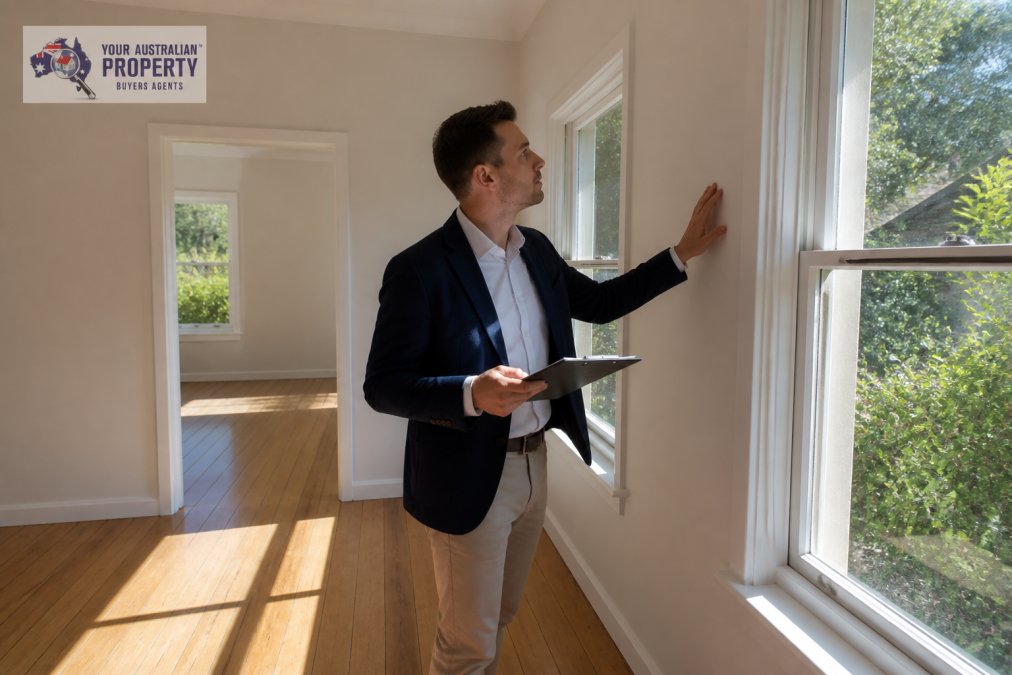
This is critical. Sellers often sell off-market because they want to avoid the scrutiny that comes with public listing. That doesn’t mean the property has problems, but it means you need to look harder.
Building and Pest Inspection
Get a comprehensive building inspection. Off-market doesn’t mean you skip this. It means you need it more because you haven’t had months of public scrutiny revealing problems. The inspection should cover structural integrity, roof condition, electrical systems, plumbing, and pest damage.
Title Search and Legal Review
Check the title for easements, covenants, or restrictions that might affect use or resale. Some properties have heritage overlays, planning restrictions, or shared access arrangements that aren’t obvious. A conveyancer should review this before you commit.
Market Comparables
Without public listings, you need to build your own comparable sales data. Look at recent sales of similar properties in the same suburb. Check what comparable properties are currently listed for. If the off-market price is significantly lower than comparables, understand why. If it’s higher, that’s a red flag.
Council Records and Planning
Check the local council website for planning permits, building approvals, and any outstanding issues. Some properties have unpermitted additions or modifications. Know what you’re actually buying.
Finance Pre-Approval
Before making an offer on any off-market property, have finance pre-approval in place. Lenders assess off-market properties differently, they want proof of value through comparable sales data. Get this sorted early so you’re not scrambling after you’ve made an offer.
Vendor Motivation
Understand why the property is being sold off-market. Is the seller relocating? Downsizing? Facing financial pressure? The reason matters. It tells you what terms might work.
Here’s the due diligence checklist:
| Task | Timeline | Priority |
|---|---|---|
| Finance pre-approval | Before offer | Critical |
| Building and pest inspection | Within 7 days of offer | Critical |
| Title and legal review | Within 7 days of offer | Critical |
| Market comparables research | Before offer | High |
| Council records check | Within 7 days of offer | High |
| Vendor motivation assessment | Before negotiation | High |
| Cooling-off period review | Before contract | Critical |
Off-market transactions in Australia typically include a cooling-off period (usually 5 business days) that allows you to withdraw from the contract. Understand this period before you sign.
Negotiating Off-Market Property Prices
Price negotiation on off-market property is fundamentally different from negotiating on listed properties. There’s no auction. There’s no public competition driving prices up. There’s just you, the seller, and a negotiation.
Here’s where buyers get it wrong: they anchor on the asking price. They assume it’s a real number. Often it’s not. Off-market asking prices are frequently inflated because there’s no market feedback to ground them in reality.
The right approach is to anchor on evidence. Comparable sales. Current listings. Market data. When you say "Properties in this condition and location sold for $X last month," that’s a conversation the seller has to take seriously.
Start by understanding what comparable properties actually sold for. Not what they’re listed for, what they sold for. This is your anchor point. Then structure your offer strategically. Off-market sellers often care about things beyond price: settlement timeline, conditions (building and pest contingencies), chattels (furniture, appliances), and terms (deposit timing).
A smart negotiation uses these levers. "I’ll offer $880,000 with a 10-week settlement and standard building and pest conditions" is more attractive to a seller than "$870,000 unconditional, settlement in 4 weeks."
Don’t negotiate emotionally. If you fall in love with a property, you lose leverage. Know your walk-away price before you start negotiating. If the seller won’t move below that, walk. There will be other properties.
The negotiation itself should happen through your buyer’s agent or through a conveyancer. This creates distance between you and the seller, which keeps negotiations professional.
Preparing Your Finances and Making the Offer
Before you make an offer on any off-market property, your finances need to be bulletproof. Sellers of off-market properties want certainty. They want to know you can actually complete the purchase.
Start with finance pre-approval. Not a general approval. A pre-approval that specifically covers the property type, price range, and suburb you’re buying in. Lenders assess off-market properties more conservatively than listed properties because there’s less public comparable data.
Then understand your actual borrowing capacity. Pre-approval doesn’t mean you should borrow the maximum. Your actual offer should be based on your deposit, your borrowing capacity, your serviceability, and your buffer for interest rate rises.
Most buyers skip this analysis and end up overleveraged. We see this all the time. They secure a property, then realise they can’t actually afford it once settlement happens.
When you make an offer on an off-market property, include your finance pre-approval letter. This signals to the seller that you’re serious and capable. It also protects you, if finance doesn’t come through, you have grounds to withdraw (assuming you’ve included appropriate conditions in your contract).
The offer itself should be in writing. Include purchase price, proposed settlement date, conditions (building and pest inspection, finance, title review), deposit amount and timing, any chattels included or excluded, and special terms or requests. Have your conveyancer or buyer’s agent draft this. It protects you legally and signals professionalism to the seller.
Settlement typically occurs 6-12 weeks after contract. During this period, you’ll have your building and pest inspection, finance finalisation, and title review completed. If anything material comes up, you have grounds to renegotiate or withdraw (depending on your conditions).
The cooling-off period in Australia typically lasts 5 business days from contract signing. Use this time to have your conveyancer review the contract and title thoroughly. Once the cooling-off period ends, you’re committed.
Securing off-market property requires strategy, preparation, and relationships. Most buyers only see the property. They focus on whether they like it, whether the price seems reasonable, whether they can get finance approved. That’s 5 steps.
We control the other 30.
We know which agents have inventory. We know how to build relationships that get us first access. We know how to structure negotiations that work. We know what due diligence actually matters. We know how to read a seller’s position and move accordingly.
The difference between a buyer who secures the right property at the right price and one who overpays is process. It’s experience. It’s knowing what happens behind the scenes.
Your Australian Property Buyers Agents brings 30+ years of that experience to every transaction. We’ve negotiated hundreds of off-market deals. We know Melbourne’s market intimately. We have relationships with real estate agents across every suburb. We know how to structure offers that sellers actually accept.
If you’re serious about securing off-market property, book a free Strategy Session and let’s discuss your specific situation. We’ll walk through your target suburbs, your budget, your timeline, and exactly how we’d approach finding and securing the right property for you.
Frequently Asked Questions
Why do vendors choose to sell off-market?
Vendors choose off-market sales for privacy, control and speed. They avoid public exposure, reduce open house disruptions, and can negotiate directly with qualified buyers. In low-stock environments like Melbourne, vendors often receive strong interest without advertising. However, this approach typically results in lower sale prices, houses sold off-market achieved prices 4.3% lower on average nationally, equating to close to $30,000 less in Melbourne. This is why working with a buyer's agent who understands seller motivations gives you negotiation leverage.
What information should you request before making an off-market offer?
Request the contract of sale, title documents, building and pest inspection reports, council records, planning permits, and any easements or restrictions. Ask about the property's condition, recent renovations, and settlement terms the vendor prefers. Understand the cooling-off period and any conditions (finance pre-approval, unconditional contract). A buyer's agent will stress-test these details and flag legal or structural risks before you commit. This due diligence prevents costly mistakes that buyers often overlook when moving quickly on off-market deals.
How can a buyer's agent help with negotiations for off-market deals?
A buyer's agent acts exclusively in your interest, no conflicts. They analyse comparable sales data, establish fair market value without public listings, identify vendor motivation, and present offers strategically. They negotiate settlement terms, deposit requirements, and contract conditions. They also manage the emotional side: building rapport with the selling agent, timing offers to match vendor readiness, and knowing when to hold firm. Most buyers only see the property. We see the 30 steps that determine whether the deal wins or loses.
What are the main risks of buying off-market property?
Off-market transactions carry specific risks: limited comparable sales data makes valuation tricky, you may overpay without market feedback, the vendor may not be fully committed (deals can fall through), and unclear pricing expectations complicate negotiations. Legal risks include hidden easements, planning restrictions, or structural issues that public listings often expose through multiple inspections. Without auction deadlines, deals drag on. A thorough due diligence checklist and independent legal advice protect you. This is where experience matters, we've seen the pitfalls most buyers miss.
This article was written using GrandRanker